
Overview
How Atomgigs works: sources, catalysts and buyers
Atomgigs does not build machines. It helps makers go to market, advises buyers and delivers work done and data.
- Go-to-market: where, how and to whom
- Gigs: jobs for their machines and talent
Paid by Makers: GTM fees; buyers: per gig
- Advice and investor diligence
- Project bidding and execution
Paid by Catalysts: advice, projects
- Hyperscalers
- Colocation providers
- Neoclouds
- AI labs
- Enterprise and edge
- Automakers
- Other manufacturers
- 3PLs (logistics firms)
- Carriers
- Warehouse operators
- Builders and owners
- Program managers
- Energy and power
- Mining, oil and gas
- Transit and telecom
- Public works
- Police, fire and rescue
- EMS
- Security operators
- Corrections and border
- Military installations
- Defense primes
- Healthcare
- Hospitality
- Real estate, facilities
- Food service
- Retail and agriculture
- Waste and recycling
- Data to train robots
- Real-site task data
- Video and sensor data
- Labs pay for the data
- Buyers get a discount
We offer Advice and work done for buyers; data for physical AI labs. Paid by Buyers: advice, capacity; labs: data
Numbers 01 to 12 are primer numbers: each box has its own detailed primer.
Ten facts that frame the talent opportunity.
The gap in people, the rise of machines, and the role of experts who lead them.
349,000 construction workers
U.S. construction must add 349,000 net new workers in 2026 and 456,000 in 2027.
1.9M manufacturing jobs
Up to 1.9 million U.S. manufacturing jobs could go unfilled by 2033.
522,000 factory openings
U.S. manufacturing job openings stood at 522,000 in August 2026.
Over half of operators
Data center operators who struggle to find qualified candidates.
300,000+ electricians
The U.S. needs this many new electricians over the next decade.
603,000 robots in 2025
Industrial robots installed worldwide in 2025, a record; 5.08M now at work.
~250,000 service robots
Professional service robots shipped in 2025, up 24%.
~493,000 drone pilots
FAA-certificated remote pilots in the U.S. at end-2025.
307 robots per 10,000
U.S. factory robot density, eighth in the world; South Korea has 1,220.
Humans in the lead
Every robot has a designated human manager. Physical AI works in the loop.
The opportunity
The talent gap in numbers, from doing to leading, what a gig looks like, why now.
The talent gap in numbers
Five industries short of skilled people, in current figures.
Construction
Manufacturing
8
9
Robots and drones
Five industries, one gap
11
12
Data centers
10
Construction needs 349,000 more workers in 2026.
More than half of the need comes from replacing retirees.
- More than half of the 2026 need is replacing retirees
- Data centers and megaprojects absorb electricians and mechanical trades
- Nonresidential trades added ~100,000 jobs in the year to Oct 2026
What is driving the gap
- Skilled people choose among projects, not the reverse
- Machines take on the heavy, repeated tasks
- Experts who can lead machines are the scarcest of all
What it means for experts
The construction gap is structural. It does not close by itself.
Manufacturing could leave 1.9 million jobs unfilled by 2033.
Up to 3.8 million new employees are needed between 2024 and 2033.
Retirements
2.8M
Industry growth
0.76M
Public investment
0.23M
Public investment covers infrastructure, energy and chips programs.
Factories are adding automation. They need people who can lead it.
Data centers are short of people as well as power.
The hardest hiring is for the hands-on roles that keep sites running.
Over 50%
of data center operators struggle to find qualified candidates
- Electricians
- Pipefitters and mechanical technicians
- HVAC and controls specialists
- Commissioning and critical-facility technicians
Hardest roles to fill
- Staffing is now a top concern, alongside power and capital
- AI sites are larger and more power-dense
- Delays in people become delays in capacity
Why it matters
AI infrastructure is limited by hands as well as by power.
Every new machine creates work for people.
Robots, service robots and certificated drone pilots, in current numbers.
- Integrators and technicians
- Electricians and controls engineers
Install and commission
- Remote operators and pilots
- Site leads who manage fleets
Operate and supervise
- OEM-certified field technicians
- Data and fault analysts
Maintain and service
Every new machine creates work for someone who can lead it.
Five industries share the same gap.
Where the shortage is, and which roles are in demand.
| Industry | The gap | Roles in demand |
|---|---|---|
| Construction | 349,000 net new workers needed in 2026 | Electricians, mechanical trades, controls |
| Manufacturing | 1.9M jobs could go unfilled by 2033 | Robot technicians, controls engineers, maintenance |
| Data centers | Over half of operators short of qualified staff | Critical-facility technicians, electricians |
| Robotics and automation | 603,000 robots installed in 2025 | Integrators, programmers, service technicians |
| Drones and aerial | ~493,000 certificated remote pilots | Pilots, visual observers, data analysts |
Machines are arriving faster than the people who can lead them.
From doing to leading
How the work changes when people lead machines.
Humans in the lead
14
Who does what
16
From doing to leading
15
Humans in the lead, physical AI in the loop.
The operating model behind every Atomgigs project.
HUMANS IN THE LEAD
- Set the plan and the standards
- Decide, approve and take responsibility
- Stop work when safety calls for it
PHYSICAL AI IN THE LOOP
- Do the repeated, heavy and hazardous work
- Sense, move and report back
- Hand exceptions to a person
directs
reports
Every robot has a designated human manager.
One manager per robot
One person may oversee a small fleet.
Several machines per person
Trained people hold stop authority at all times.
Safety first
The machine does the task. The person owns the outcome.
Roles keep their skill and change their work.
Illustrative examples of how four roles evolve with machines.
| Role | Work by hand today | Work with machines |
|---|---|---|
| Electrician | Pulls and terminates cable by hand | Directs install robots, inspects, handles exceptions |
| Warehouse technician | Walks aisles keeping carts running | Monitors a fleet from a screen, clears faults |
| Inspector | Climbs and photographs structures | Plans drone missions, reviews the findings |
| Maintenance technician | Repairs after a failure | Services equipment guided by sensor data |
The skill stays. The work moves from doing to leading.
Machines take the hard, hazardous and repetitive work.
How work divides between machines and people.
- Heavy lifting
- Repetitive motion
- Work at height
- Hazardous or confined spaces
- Round-the-clock monitoring
Machines
- Inspection and survey
- Material handling
- Installation
- Commissioning and testing
Shared
- Judgment and exceptions
- Safety authority
- Client and site relationships
- Tuning and improving the system
People
Hard, hazardous and repetitive work moves to machines.
What a gig looks like
The path from match to next gig, and who you work with.
A gig in five steps
18
Your team
20
A typical gig
19
A gig with Atomgigs in five steps.
From the first match to the next gig.
1 Match
Your profile is matched to a gig by skills and certifications.
2 Mobilize
Short onboarding, site and machine briefing.
3 Work
You join a small pod and work alongside the machines.
4 Learn
OEM training and certifications on the job.
5 Next gig
Repeat gigs and new projects follow.
You choose the gigs. Atomgigs does the matching.
Every gig is defined before you start.
Six things you know up front.
Data center, plant, warehouse, construction site or campus
The site
Robots, drones, IoT and automation from leading OEMs
The machines
A small senior pod plus other experts
The team
A defined role with a clear manager
Your role
Scope and dates agreed before you start
The scope
New skills, certifications and a stronger profile
What you take away
Every gig is defined before you start.
You work inside a small senior pod.
Who leads, who does the work, and which machines are involved.
SITE POD LEAD · SAFETY OFFICER · PROJECT MANAGER
Robot and automation technicians
Controls and software engineers
Operators, pilots and trades
ROBOTS · DRONES · IoT DEVICES · AUTOMATION
Small senior pod, specialist experts, and machines, working as one team.
Why now
Four forces that make this the moment to join.
Record robot demand
22
Where Atomgigs fits
24
Four forces
23
Robots are arriving at record scale.
Annual industrial robot installations worldwide, in thousands.
806K
603K
655K
542K
254K
2015
2024
2025
2026 (forecast)
2029 (forecast)
Capable machines are arriving now. People close the gap to general autonomy.
Four forces make this the moment.
Retirements, investment, AI infrastructure and machines at scale.
- More than half of construction’s 2026 need replaces retirees
- 2.8M of manufacturing’s 3.8M need
Retirements
- U.S. installed 38,400 robots in 2025, up 12%
- U.S. passed Japan as the second-largest market
Reshoring and investment
- Over half of data center operators are short of staff
- 300,000+ electricians needed over a decade
AI infrastructure
- 603,000 robots installed in 2025
- 655,000 forecast for 2026
Machines at scale
Four forces point the same way: more machines, and a need for more experts.
Atomgigs brings machines and talent together.
Three sources, one team, your project.
Every robot type for every application
Drones, VTOL, IoT and automation
Contract experts, gig by gig
ATOMGIGS · source, staff, integrate, deploy, scale up and operate
YOUR PROJECT · data centers, plants, warehouses, construction, infrastructure and more
Atomgigs brings the machines and the talent to the same table.
The projects you can work on
Robotics, OEMS, drones and VTOL, data centers, manufacturing and logistics, construction and infrastructure, public safety and defense.
Robotics
Robots across industry, and the experts who put them to work.
Robots at work
27
Robot types
28
Robots are now a mainstream workforce.
Installed base and annual demand, worldwide and in the U.S.
- Factories, warehouses and logistics hubs
- Construction sites and data centers
- Hospitals, hotels, farms and public spaces
Where the work is
- Install, program and commission
- Supervise fleets and handle exceptions
- Maintain, repair and train
Where experts come in
More robots in more places means more projects for experts.
Go deeper: Primer 01 Robotics
Each robot type needs a different expert.
Typical work by robot type.
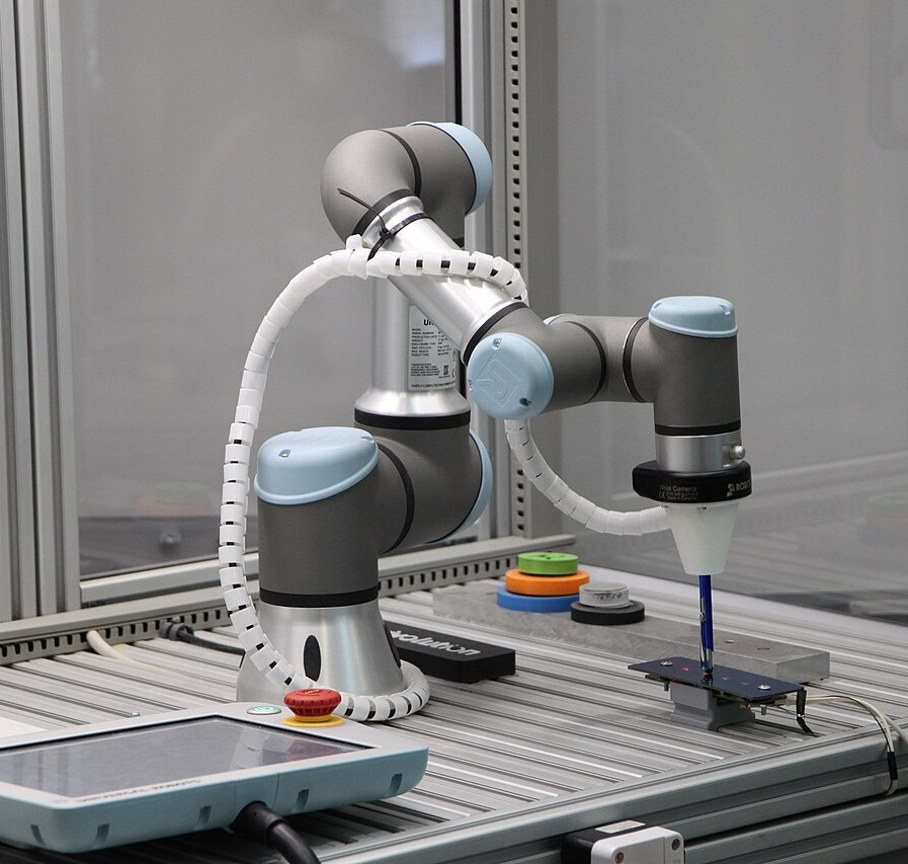
| Robot type | Where it works | What experts do |
|---|---|---|
| Arms and cobots | Cells, machine tending, palletizing | Program, integrate, maintain, safeguard |
| Mobile robots (AMRs, AGVs) | Warehouses, plants, campuses | Map routes, manage the fleet, clear faults |
| Legged robots | Plants, tunnels, data center halls | Plan inspection missions, review findings |
| Humanoids | Pilots in plants and warehouses | Supervise, set up tasks, collect data |
| Specialty robots | Layout, drilling, rebar tying, cleaning | Set up, direct, finish and service |
Photo: Caio.st.oliveira, CC BY-SA 4.0
Whatever the robot, a trained person sets it up and owns the outcome.
OEMs, drones and VTOL
Makers of robots and aircraft need field teams and pilots.
What makers need
30
Drone work in the U.S.
31
Robot and aircraft makers need field teams.
Makers build the machine; experts help customers put it to work.
Diagnose and repair on site Replace parts, update software
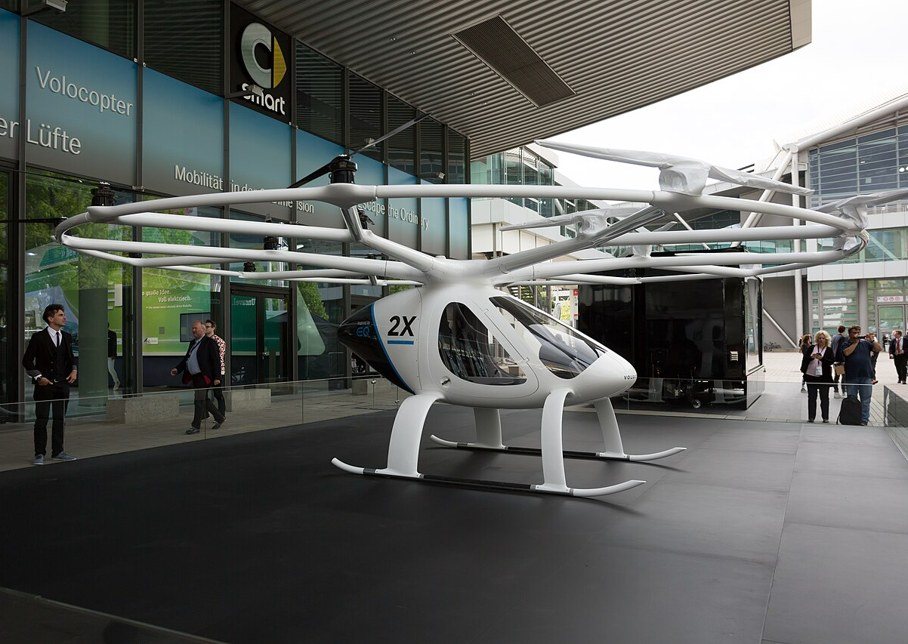
- Teach operators and technicians
- Run OEM-approved courses
- Fly test and demonstration missions
- Collect data and report
Photo: Matti Blume, CC BY-SA 4.0
Makers sell machines. Experts make them productive.
Go deeper: Primer 02 OEMs, Drones and VTOL
Certificated drone pilots are in demand.
The entry ticket today, and the rule change that will help the work scale.
FAA-certificated remote pilots in the U.S.
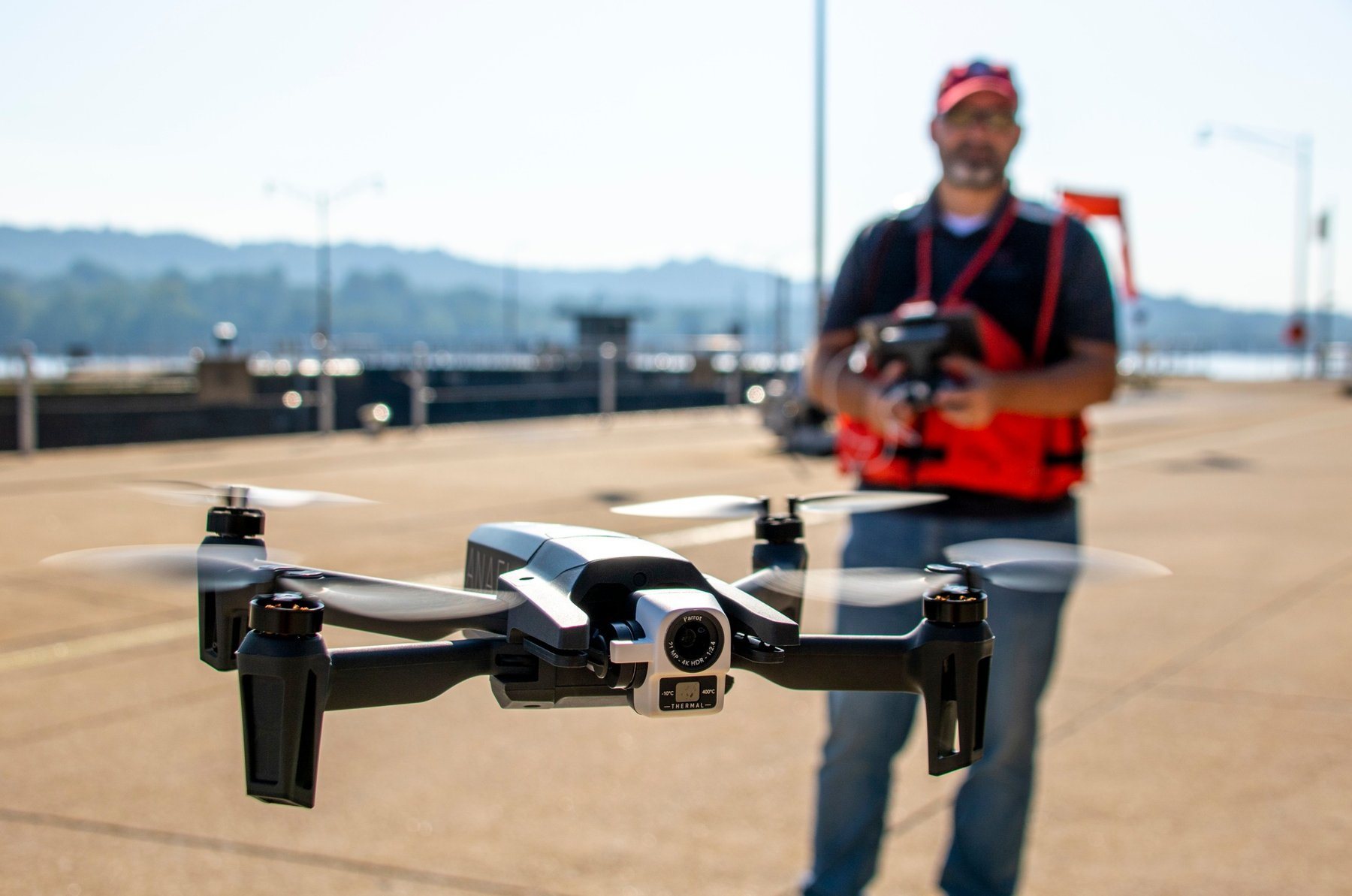
~493,000
Part 107
400 ft
Part 108
- Inspection of roofs, towers, lines and sites
- Progress capture and mapping
- Plant and data center site monitoring
- Long-range flight is moving to a rule
- Companies carry accountability
- New roles: supervisor, flight coordinator
Photo: U.S. Army Corps of Engineers (public domain)
Part 107 is the entry ticket. Part 108 is expected to make the work scale.
Data centers
The build-out of AI infrastructure, from construction to operations.
The numbers
33
Hybrid model
35
Roles on a campus
34
Data centers need builders and operators.
Demand for people on both sides of the fence.
~2 in 3
of operators report trouble hiring or keeping staff
- Electrical work is the largest share of labor
- 12 to 18 months typical construction
- Electricians, pipefitters, controls, commissioning
Build phase
- 500+ permanent jobs on the same campus
- 20+ years of facility life
- Critical-facility technicians, NOC, controls
Operate phase
A campus employs thousands to build and hundreds to run.
Go deeper: Primer 07 Data Centers
Build and operate use different experts.
Where people work, and where machines help.

| Phase | Roles | Where machines help |
|---|---|---|
| Build: MEP rough-in | Electricians, pipefitters, HVAC, sheet metal | Layout, drilling, reality capture |
| Build: fit-out and test | Low-voltage, fiber, controls, commissioning | Inspection patrols, data capture |
| Operate: facilities | Critical-facility and controls technicians | Rounds, thermal checks, monitoring |
| Operate: IT hall | Data center technicians, network engineers | Remote hands, hardware swaps, cleaning |
| Safety and quality | Safety officers, QA, inspectors | Zone monitoring, automated checks |
Photo: BalticServers.com, CC BY-SA 3.0
Every phase of a data center needs hands and increasingly needs machines.
Robots join the work, task by task.
From human crews to hybrid teams to orchestrated fleets.
1 Human crews
2 Hybrid teams
3 Orchestrated fleets
- People do almost all physical work
- BIM and digital twins guide the build
- Robots scan and inspect
- Proven task robots work beside crews
- People supervise and handle exceptions
- New roles: robot operator and technician
- Mixed human and robot workforces
- Fleets coordinated through the twin
- People focus on judgment and complex work
The goal is not fewer skilled people. It is more capacity from the people available.
Manufacturing and logistics
Plants and warehouses adding robots and automation.
The numbers
37
Typical pilots
38
Plants and warehouses need robot-ready people.
The workforce gap meets rising automation.
- Machine tending and palletizing
- Material transport between stores and cells
- Inspection, kitting and line-side supply
Where machines help
- Robot and mechatronics technicians
- Controls and vision engineers
- Warehouse automation specialists
Where experts help
Open shifts raise the cost of staying manual.
Go deeper: Primer 08 Manufacturing and Logistics
Six pilot types show the work experts do.
Each pilot is one scope, one site and one metric.
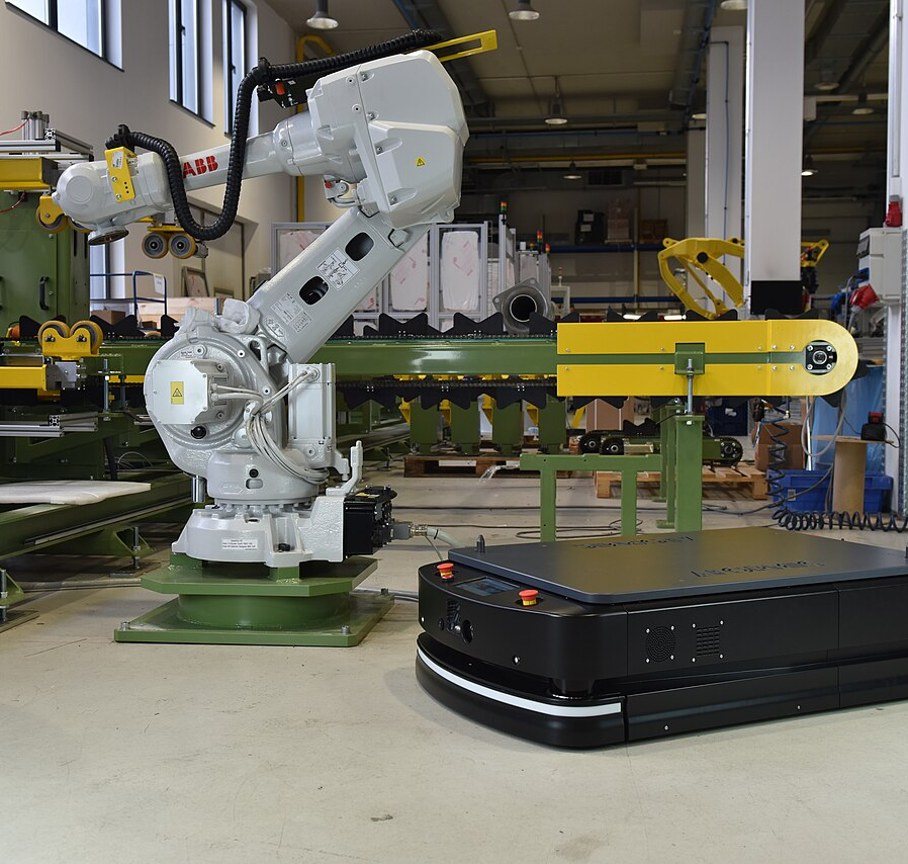
| Pilot | Scope | Weeks |
|---|---|---|
| Machine tending cell | Load and unload one CNC or press, one part family | 6 |
| Palletizing, end of line | One line, one to two pallet patterns | 4 to 6 |
| AMR material transport | One route between stores and two cells | 6 to 8 |
| Inspection and quality | One station with a defined defect list | 6 to 8 |
| Kitting, line-side supply | One line with a defined kit list | 6 to 8 |
| Humanoid tote moving | One tote flow in a marked pilot zone | 8 |
Photo: Marta Veverica, CC BY-SA 4.0
Short, defined scopes let experts and machines prove value fast.
Construction and infrastructure
Buildings, rail, roads and energy sites.
The numbers
40
Robots on site
41
Builders and owners need more skilled hands.
The construction gap in current figures.
- Commercial, industrial and data center builds
- Electrical, mechanical and low-voltage trades
- Layout, drilling and inspection robots
Buildings and campuses
- Track, tunnel and bridge inspection
- Civil layout, piling and earthmoving
- Solar, grid and plant sites
Rail, road and energy
The gap is structural, and machines alone will not close it.
Go deeper: Primer 09 Construction and Infrastructure
Construction robots take defined tasks.
Where robots work on site today, and who supervises them.
| Task | Typical robots | Expert who leads it |
|---|---|---|
| Layout and marking | Layout-printing robots | Surveyor, layout technician |
| Drilling and anchoring | Ceiling-drilling robots | Electrical and MEP trades |
| Rebar tying and finishing | Rebar tyers, drywall robots | Crew lead, finisher |
| Piling and earthmoving | Autonomous pile drivers, excavators | Equipment operator, site engineer |
| Inspection and progress | Legged robots, drones | Drone pilot, QA inspector |
Robots take the task. A trained person takes the responsibility.
Public safety and defense
Machines that keep people out of harm’s way. No weapons.
Where machines help
43
Experts we bring
44
Machines keep people out of harm’s way.
Public-safety and infrastructure work with no weapons.
Structures, lines and tunnels
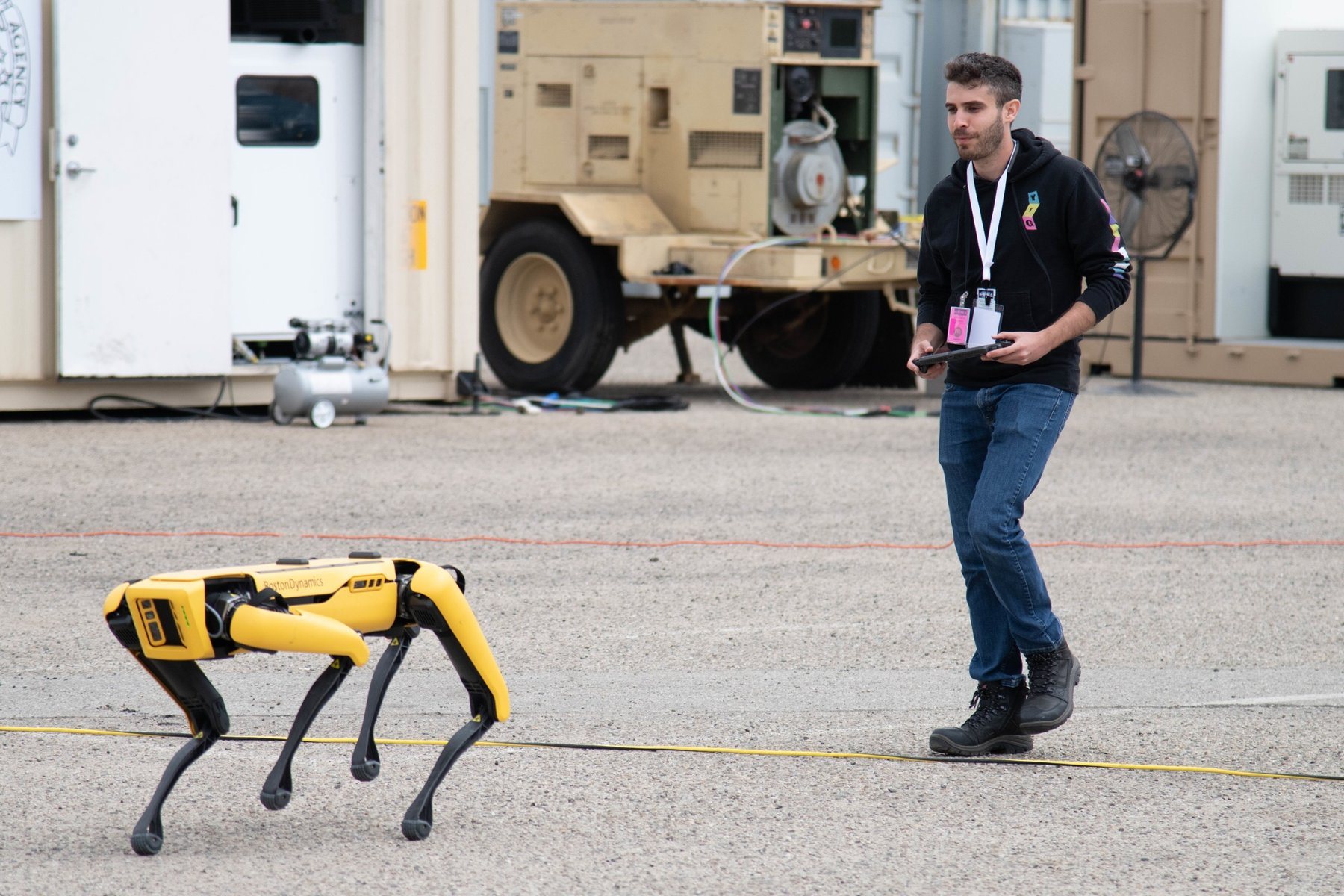
Unsafe or confined spaces
Situational awareness for responders
Exercises with trained teams
Photo: U.S. Navy (public domain)
Atomgigs does not work on weapons or weapon systems.
Go deeper: Primer 10 Public Safety and Defense
Public-safety experts bring discipline and judgment.
Described generically, never by name.
- Public-safety and emergency services
- Military and security operations
Backgrounds
- Incident command and communication
- Risk assessment and checklists
- Calm under pressure
Skills that transfer
- Incident command training (ICS)
- Drone pilot certificate where flying
- Background checks as the work requires
Credentials
People used to high-stakes work make strong supervisors of machines.
Commercial services
Cleaning, security, delivery, healthcare, farms and hospitality.
Where machines help
46
Experts we bring
47
Service robots are moving into daily life.
About 250,000 professional service robots shipped in 2025.
Floor scrubbers in warehouses and campuses
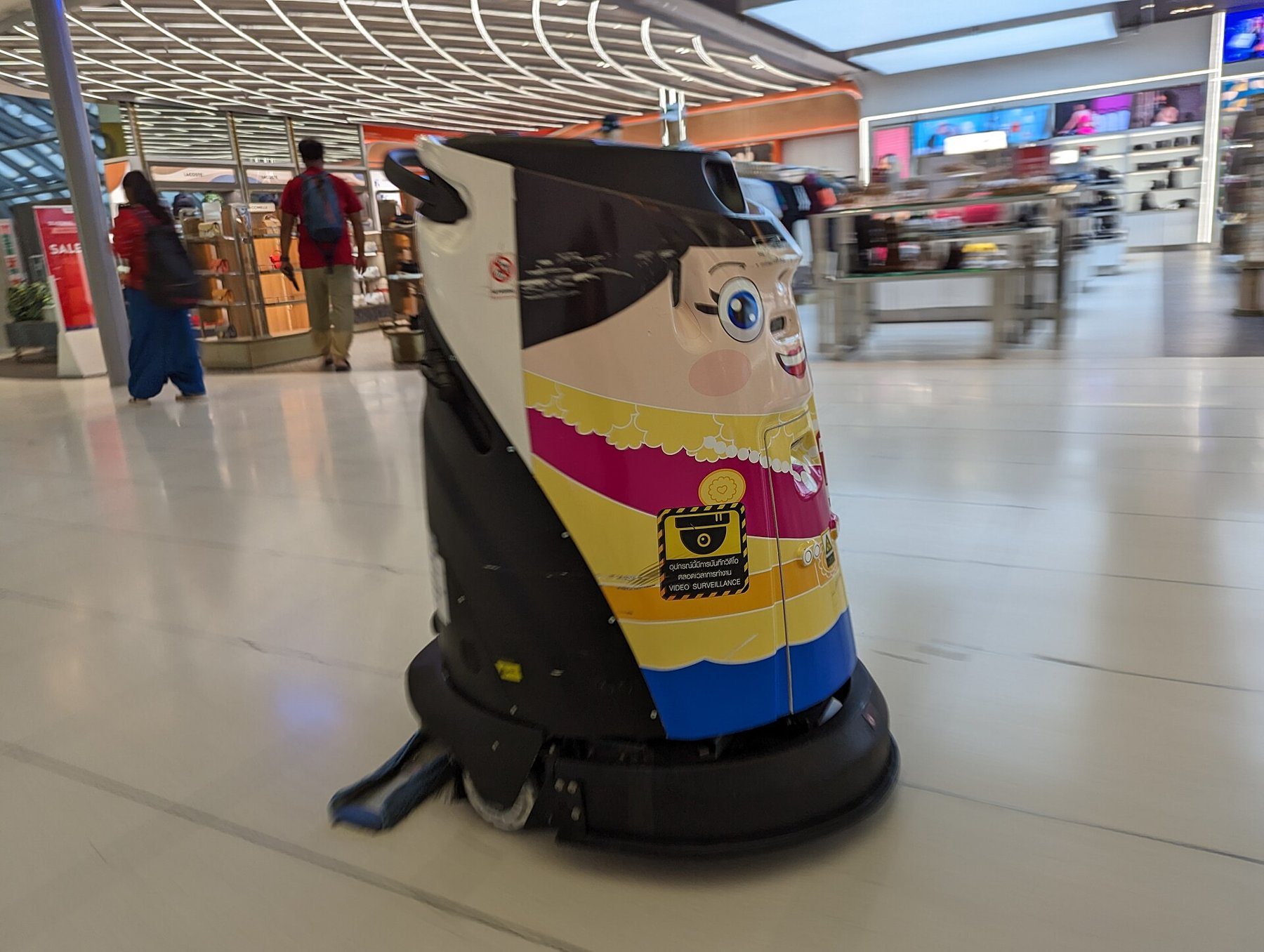
Supply and disinfection robots
Drones and field robots
Kitchen and service robots
Photo: Syced, CC0
Service robots need setup, supervision and servicing by trained people.
Go deeper: Primer 11 Commercial Services
Service work rewards practical, customer-ready experts.
Roles for people who like working with customers and machines.
| Expert | Typical work | Background |
|---|---|---|
| Service technician | Install, service and train staff | Electronics, HVAC, biomedical |
| Fleet supervisor | Watch robots across several sites | Facilities, logistics, security |
| Deployment specialist | Map a site, set routes and rules | Operations, field service |
| Trainer | Teach customer staff to work with robots | Teaching, OEM training |
Customer-facing skills matter as much as technical skills here.
The experts we bring
Role families at a glance, build and install, machines and controls, operate, safety and quality, lead and specialize.
Role families at a glance
Nineteen families, mapped to focus areas and to the site pod.
Nineteen families
50
Role by focus area, 2 of 2
52
Role by focus area, 1 of 2
51
Who sits in a site pod
53
Nineteen role families, five groups.
Every family has its own profile page.
- Electricians and mechanical trades
- Commissioning agents
- BIM, VDC and digital twin
- IoT and network engineers
Build and install
- Robot technicians and integrators
- Controls and robotics engineers
- AI and perception engineers
- OEM-certified field technicians
Machines and controls
- Remote operators and teleoperators
- Drone pilots and visual observers
- Logistics automation specialists
- Critical-facility technicians
Operate
- Safety officers
- QA and inspectors
Safety and quality
- Site pod leads and project managers
- Public-safety and cleared experts
- Service experts: health, farm, hospitality
- Trainers and curriculum experts
- Technical diligence experts
Lead and specialize
Nineteen role families in five groups. Find yours in the pages that follow.
Each role family fits particular focus areas.
Part 1 of 2. Core or regular involvement by focus area.
| Role family | Robotics | OEMs, drones | Data centers | Mfg, logistics | Construction | Public safety | Services |
|---|---|---|---|---|---|---|---|
| Electricians and mechanical trades | ○ | ● | ○ | ● | |||
| Commissioning agents | ● | ○ | ● | ||||
| BIM, VDC and digital twin | ● | ○ | ● | ||||
| IoT and network engineers | ○ | ● | ● | ○ | ○ | ||
| Robot technicians and integrators | ● | ○ | ○ | ● | ○ | ||
| Controls and robotics engineers | ● | ○ | ○ | ● | ○ | ||
| AI and perception engineers | ● | ● | ○ | ○ | ○ | ○ | |
| OEM-certified field technicians | ○ | ● | ○ | ○ | ○ | ||
| Remote operators and teleoperators | ● | ○ | ○ | ○ | ○ | ○ | |
| Drone pilots and visual observers | ○ | ● | ○ | ● | ● | ○ |
● core to the focus area ○ regularly involved
Most roles travel across focus areas.
Part 2 of 2. Core or regular involvement by focus area.
| Role family | Robotics | OEMs, drones | Data centers | Mfg, logistics | Construction | Public safety | Services |
|---|---|---|---|---|---|---|---|
| Logistics automation specialists | ○ | ● | ○ | ||||
| Critical-facility technicians | ● | ||||||
| Safety officers | ○ | ○ | ● | ● | ● | ○ | ○ |
| QA and inspectors | ○ | ○ | ● | ● | |||
| Site pod leads and project managers | ○ | ○ | ● | ○ | ● | ○ | ○ |
| Public-safety and cleared experts | ○ | ● | |||||
| Service experts: health, farm, hospitality | ○ | ● | |||||
| Trainers and curriculum experts | ○ | ○ | ○ | ○ | ○ | ○ | ○ |
| Technical diligence experts | ○ | ○ | ○ |
● core to the focus area ○ regularly involved
Who sits in a site pod.
A pod, not a pyramid. Roles are drawn from the families in this chapter.
- 1Robotics lead
Robot and automation technicians Controls engineers
- 2Skilled crew
Electricians and trades OEM-certified technicians Drone pilots
- 3Safety and compliance
Safety officers QA and inspectors
- 4Remote ops and data
Remote operators IoT and network engineers BIM and twin specialists
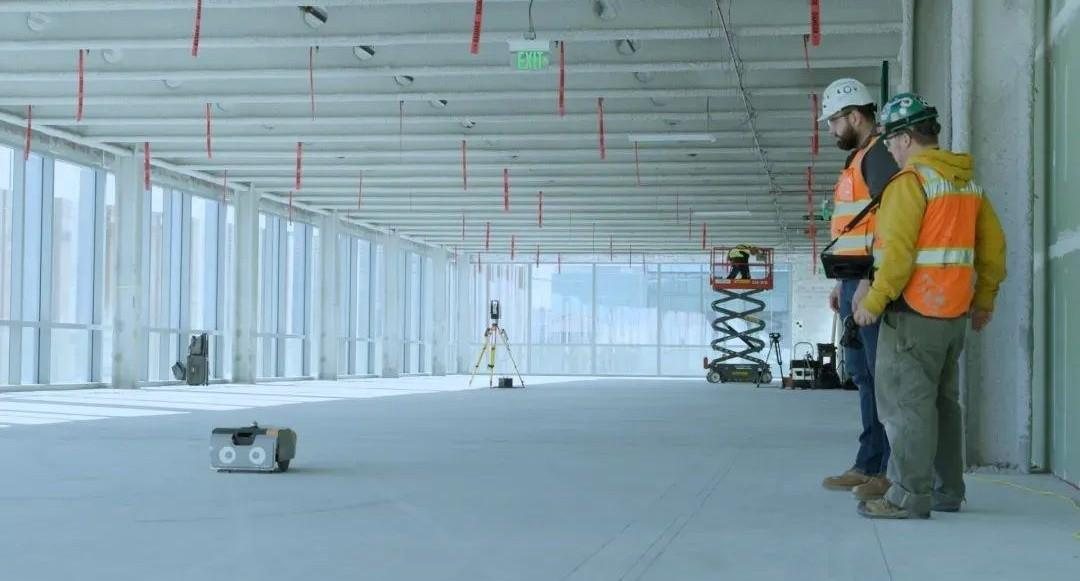
SITE POD LEAD · single point of contact, owns schedule and outcome
ROBOTS · DRONES · IoT DEVICES · AUTOMATION (one designated human manager per robot)
Image: Dusty Robotics
A small senior pod, right-sized to scope and scaled up or down as the work changes.
Build and install
Trades and engineers who put infrastructure and systems in place.
Electricians and mechanical trades
55
BIM and VDC
57
Commissioning agents
56
IoT and network engineers
58
Electricians power the sites that run AI.
Electricians and mechanical trades: electricians, pipefitters and HVAC technicians.
- Power distribution, switchgear and UPS work
- Conduit, cable and terminations
- Chilled-water and liquid-cooling piping
- Reading drawings and one-line diagrams
- Apprenticeship plus field years
- Data center, industrial or utility work
- Layout and drilling robots
- Cable-pulling and scanning tools
- Inspection drones and legged robots
Machines you work with
- Journeyman or equivalent trade credential
- OSHA 10 or 30 hour training
- NFPA 70E electrical safety training
- NCCER and apprenticeship credentials
- Refrigerant handling certification for HVAC
Certifications and training
- Controls technicians
- Commissioning agents
- Site pod lead and safety officer
Works alongside
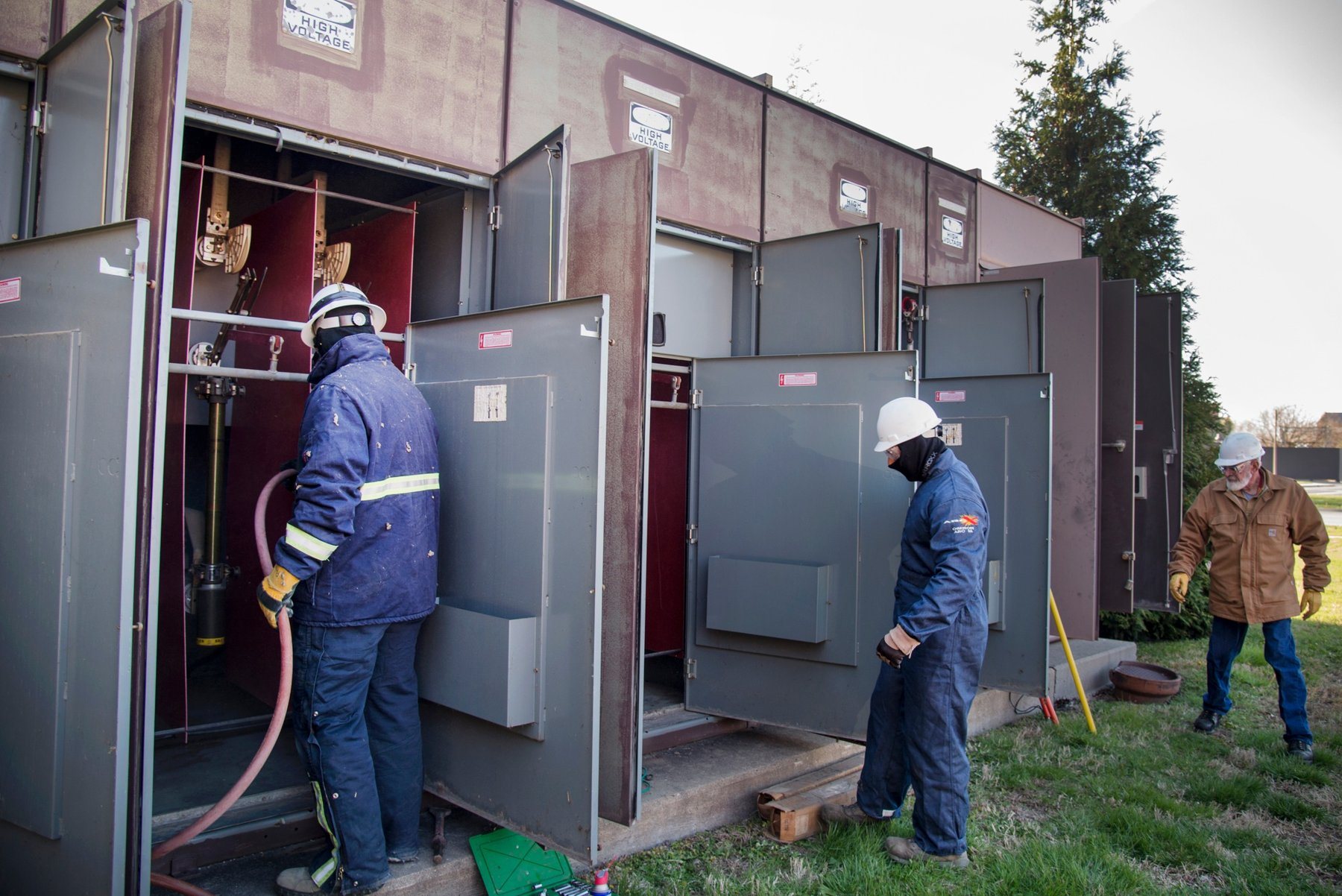
Photo: U.S. Air Force (public domain)
What you are seeing
Electricians service medium-voltage switchgear during a planned power outage.
The trades are the scarcest skill, and the first to be amplified by machines.
Commissioning agents prove systems work.
Commissioning agents test each system from factory to integrated test.
- Test plans and scripts
- Witnessing factory and site tests
- Issue logs and close-out
- Power, cooling and controls knowledge
- Engineering or technician background
- Mission-critical commissioning years
- Load banks and test gear
- Power and thermal monitors
- Robots that log inspection data
Machines you work with
- Certified Commissioning Professional (AEE, BCxA)
- Certified Commissioning Authority (ACG)
- OSHA 30 hour
- NETA testing training for electrical systems
Certifications and training
- Controls and electrical engineers
- OEM field technicians
- Owner’s representative
Works alongside
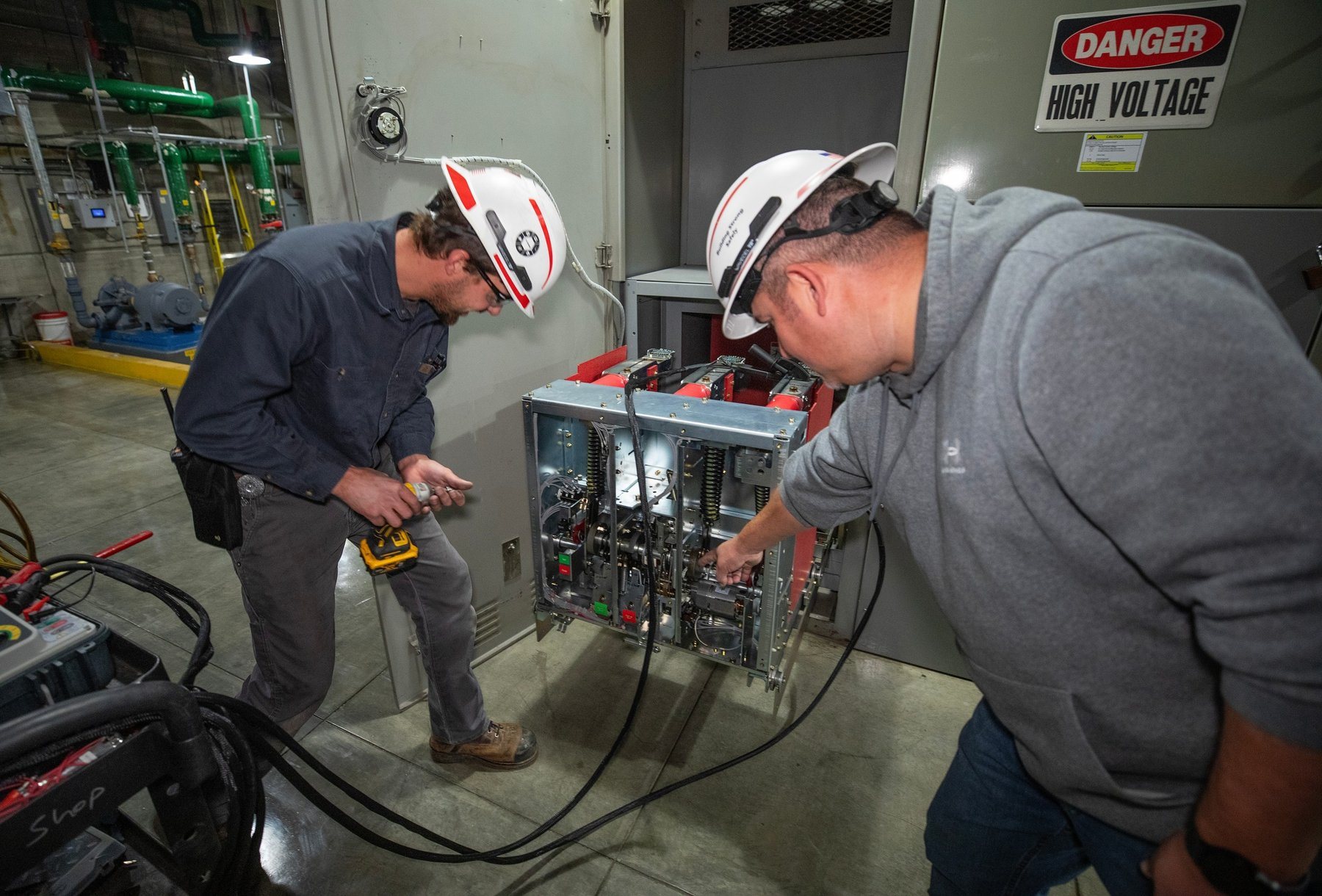
Photo: U.S. Army Corps of Engineers (public domain)
What you are seeing
Electricians test a 15,000-volt breaker with test equipment before it goes back in service.
Commissioning is where machines and people prove a site is ready.
BIM and digital twin specialists keep the model true.
BIM, VDC and digital twin specialists link the design to the site.
- 3D models, clash detection and quantities
- Reality capture and as-built updates
- Feeding robots from the model
- Coordinating trades in the model
Skills
- Architecture, engineering or VDC background
- Model coordination on large projects
Typical experience
- Laser scanners and 360 cameras
- Layout and drilling robots
- Inspection drones
Machines you work with
- Autodesk Certified Professional
- buildingSMART professional certification
- Reality capture and scanning training
- Vendor digital twin platform training
Certifications and training
- Project managers and superintendents
- Trades and robotics leads
- Commissioning agents
Works alongside
The twin turns scans and robots into one picture of the site.
IoT and network engineers connect the machines.
IoT and network engineers design the links between sensors, robots and the cloud.
- Wi-Fi, private 5G and wired networks
- Sensors, gateways and edge devices
- Device security and segmentation
- Data flows to the twin and dashboards
Skills
- Network or controls background
- Industrial site networks
Typical experience
- Gateways, switches and access points
- Sensors for power, temperature and leaks
- Robot fleets on site networks
Machines you work with
- BICSI installer and technician credentials
- Cisco CCNA or CompTIA Network+
- ISA/IEC 62443 cybersecurity training
- Cloud and IoT platform certifications
Certifications and training
- Controls engineers
- IT and security teams
- Robot and automation technicians
Works alongside
No robot works well on a weak network.
Machines and controls
Experts who install, program, tune and service the machines.
Robot technicians
60
AI and perception engineers
62
Controls and robotics engineers
61
OEM field service technicians
63
Robot technicians keep robots running.
Robot and automation technicians and integrators.
- Mounting, wiring and calibrating robots
- Teach pendant and offline programming
- Safety circuits, guarding and light curtains
- Fault finding and preventive care
- Technician or mechatronics background
- Cell commissioning years
- Arms and cobots
- Mobile robots
- Vision systems and grippers
Machines you work with
- FANUC Certified Robot Operator and Technician
- Universal Robots Academy certificates
- ABB and KUKA College courses
- A3 robot safety training
- Mechatronics credentials
Certifications and training
- Controls engineers
- Safety officers
- Plant maintenance teams
Works alongside
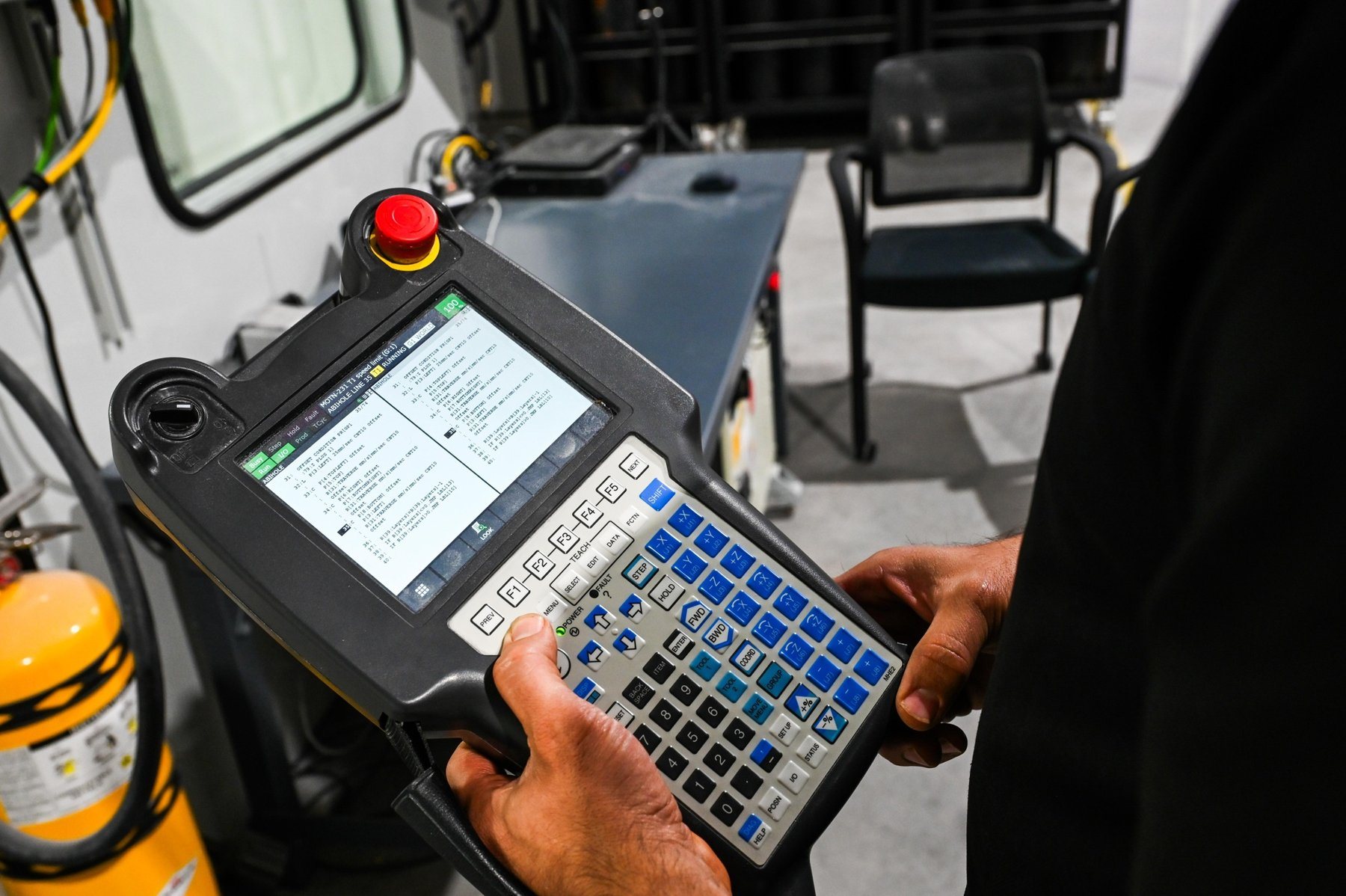
Photo: U.S. Air Force (public domain)
What you are seeing
A technician programs and moves an industrial robot with its teach pendant.
Technicians are the people who make a robot a working colleague.
Controls engineers design the logic.
Controls, PLC and robotics engineers.
- PLC, HMI and motion programming
- Robot cell design and integration
- Functional safety and risk assessment
- Commissioning and tuning
- Engineering degree or equivalent
- Integration project years
- PLCs and drives
- Robot controllers
- Safety PLCs and scanners
Machines you work with
- ISA Certified Automation Professional
- ISA Certified Control Systems Technician
- Functional safety engineer credentials
- PLC vendor training
- Professional engineer licensure where held
Certifications and training
- Robot technicians
- Process and plant engineers
- AI and perception engineers
Works alongside
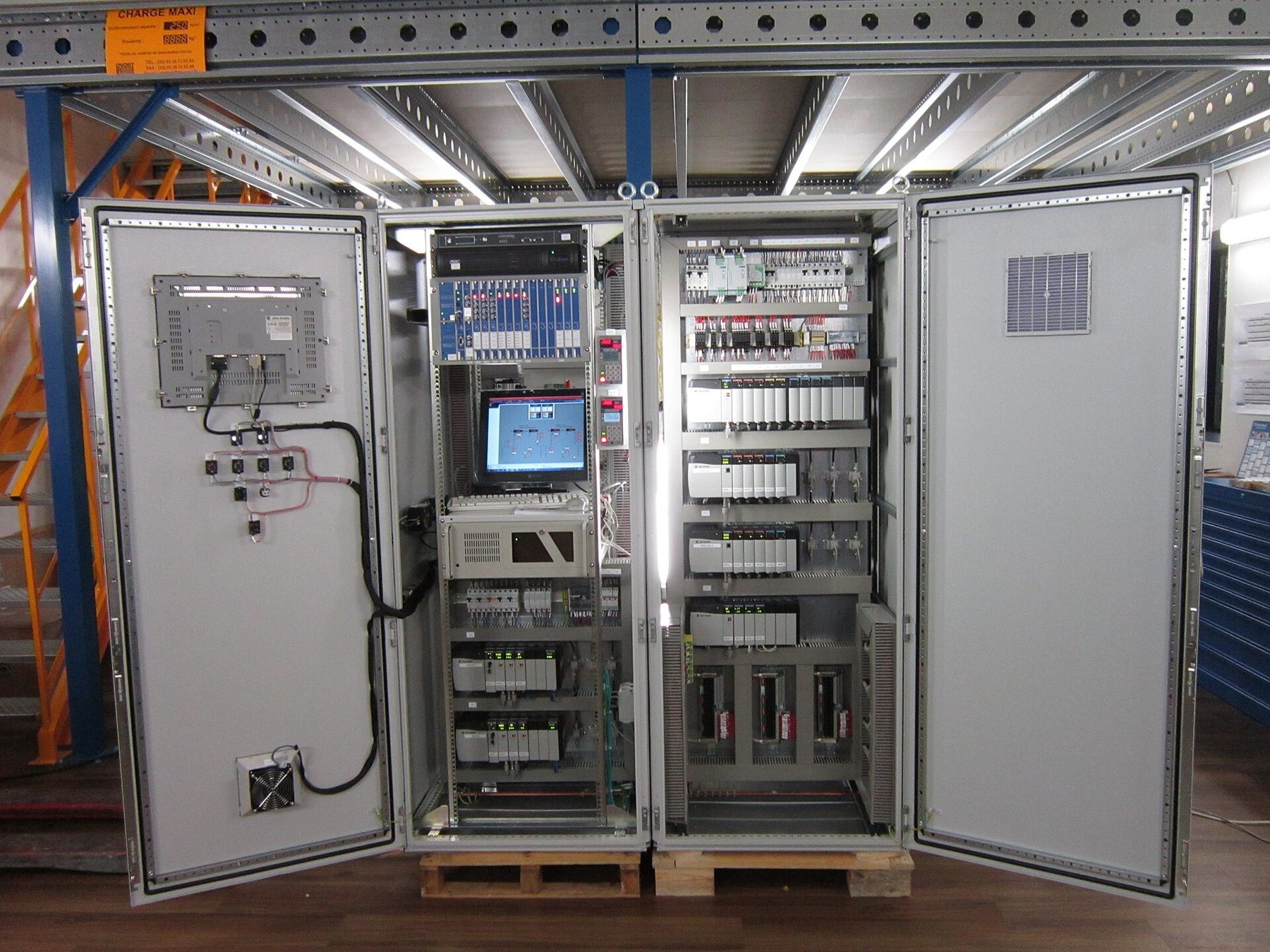
Photo: DWI, CC BY-SA 3.0
What you are seeing
A control cabinet with PLCs, drives and an operator panel: the logic controls engineers design.
Good controls design makes every robot safer and more productive.
AI and perception engineers teach machines to see.
AI, machine learning and perception engineers.
- Computer vision and sensor fusion
- Model training, testing and deployment
- Robot operating systems and simulation
- Data pipelines from fleets
Skills
- Software or robotics engineering
- Production ML or autonomy
Typical experience
- Cameras, lidar and depth sensors
- Robots running learned models
- Simulation and edge computers
Machines you work with
- ROS 2 training
- NVIDIA Deep Learning Institute courses
- Cloud machine-learning certifications
- Robotics simulation platform training
Certifications and training
- Controls engineers
- Field technicians
- Data analysts
Works alongside
Physical AI works only when the model works in the real world.
OEM-certified technicians service machines.
OEM-certified field service technicians.
- Diagnosing faults to part level
- Software, firmware and calibration
- Preventive maintenance routines
- Training customer staff
- Technician background with OEM training
- Field service years
- The OEM’s own robots, drones or equipment
- Diagnostic laptops and tools
- Spare parts kits
Machines you work with
- OEM service certifications
- OEM operator and maintenance courses
- Manufacturer safety training
- OSHA 10 or 30 hour
Certifications and training
- Customer maintenance teams
- OEM support engineers
- Site pod lead
Works alongside
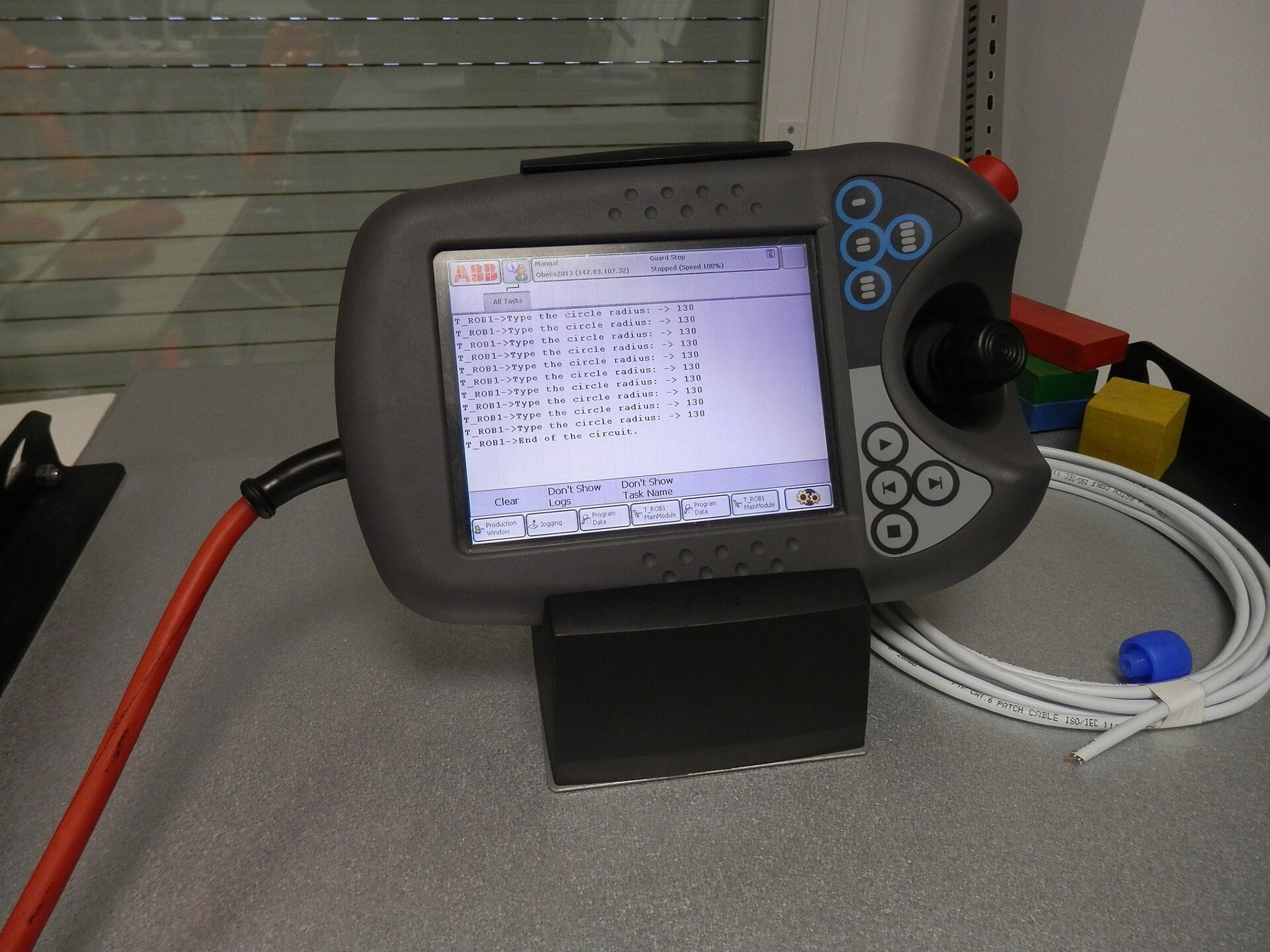
Photo: Auledas, CC BY-SA 4.0
What you are seeing
A robot maker's teach pendant. Certified technicians use the maker's tools to diagnose and update machines.
Makers rely on certified technicians to keep their machines in service.
Operate
Experts who run machines, fleets and facilities day to day.
Remote operators
65
Logistics automation specialists
67
Drone pilots
66
Critical-facility technicians
68
Remote operators supervise from anywhere.
Remote operators and teleoperators.
- Monitoring fleets from a screen
- Taking control when a robot needs help
- Reading alerts and escalating
- Clear radio and log keeping
- Operations or control-room years
- Comfort with screens and shift work
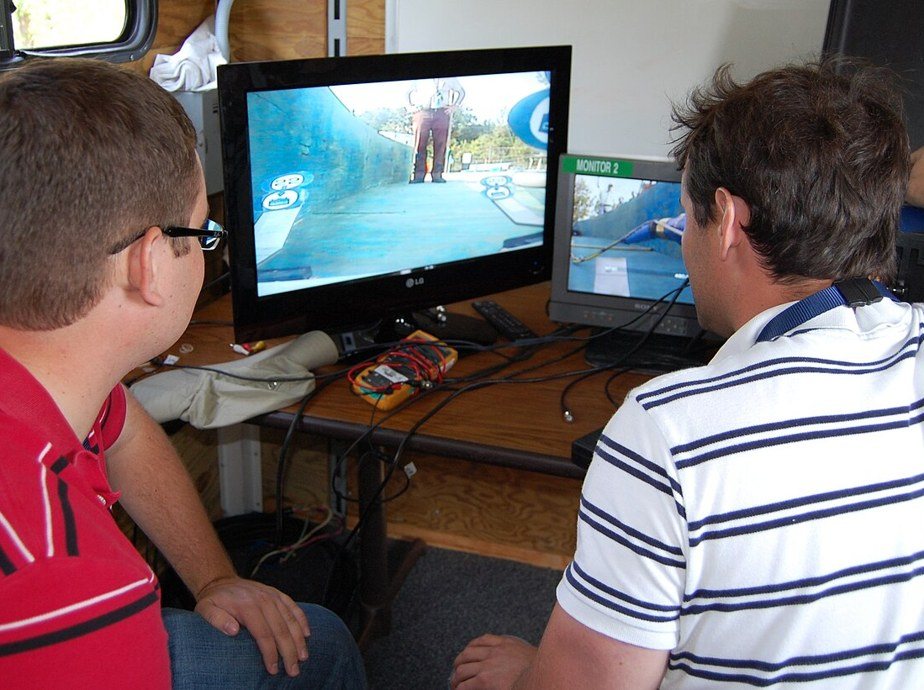
- Fleet dashboards and remote consoles
- Mobile robots and drones
- Cameras and site sensors
Machines you work with
- OEM teleoperation platform training
- Site safety orientation
- Fleet software training
- FAA Part 107 if the fleet includes drones
Certifications and training
- On-site technicians
- Site pod lead
- Safety officer
Works alongside
Photo: Savannah River Site (public domain)
What you are seeing
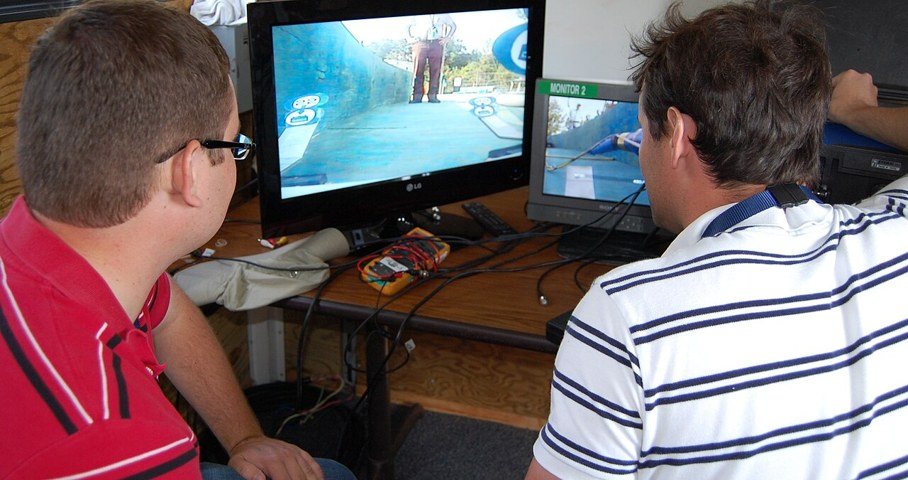
A control room: operators watch screens and supervise machines remotely.
Remote operators let one person watch many machines, in the United States or India.
Drone pilots turn the sky into a work site.
Drone pilots and visual observers.
- Mission planning and airspace awareness
- Safe flight in and around structures
- Data capture and quality checks
- Weather and risk assessment
- Commercial flying or inspection years
- Pre-flight and logging discipline
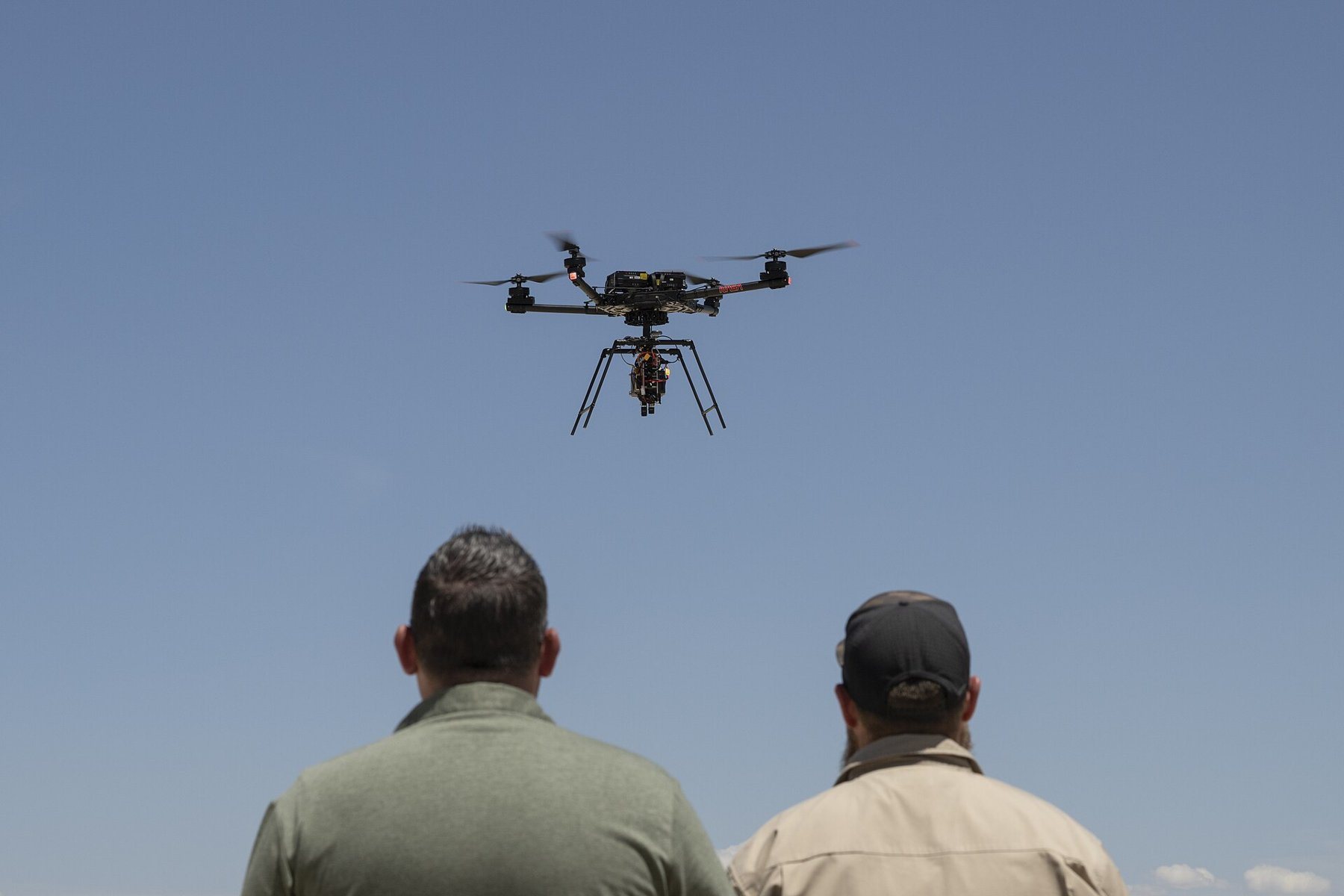
- Multirotor and fixed-wing drones
- Thermal and zoom payloads
- Docks and mapping software
Machines you work with
- FAA Part 107 remote pilot certificate
- Recurrent training every 24 months
- Thermography training for thermal work
- Public-safety drone training programs
- OEM flight training
Certifications and training
- QA inspectors and engineers
- Site pod lead
- Visual observers
Works alongside
Photo: NASA/Ryan Kline (public domain)
What you are seeing
A pilot and an observer keep a multirotor drone in sight during a test flight.
About 493,000 certificated pilots exist. Few have industrial site experience.
Logistics specialists keep goods moving.
Logistics and warehouse automation specialists.
- Mobile robot fleet set-up and routing
- Warehouse and conveyor systems
- Exception handling and recovery
- Throughput and uptime reporting
- Warehouse or distribution operations
- Automation project years
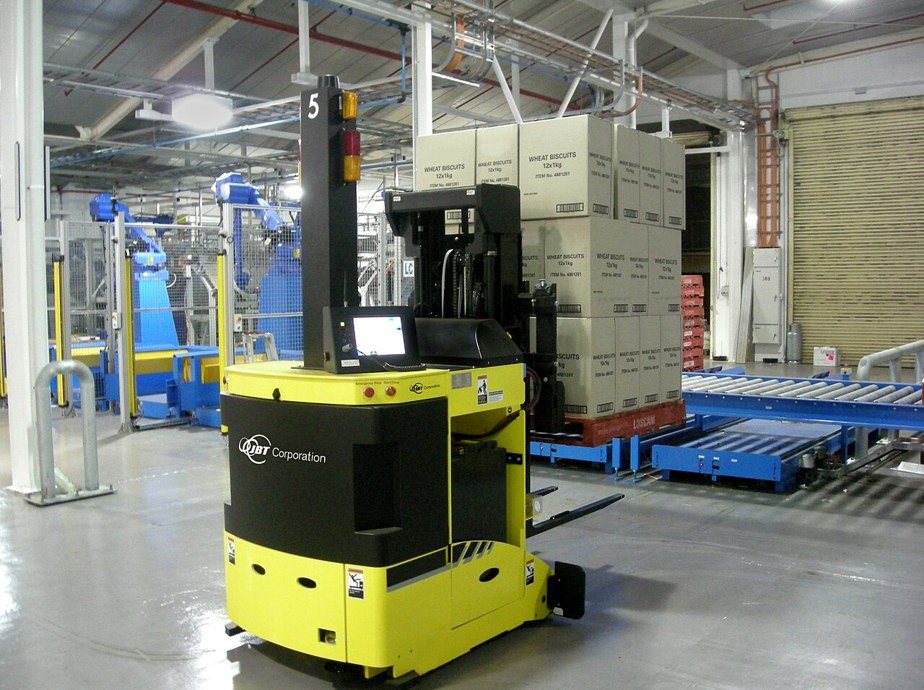
- AMRs, AGVs and sortation systems
- Pick-and-place arms
- Warehouse management software
Machines you work with
- A3 mobile robot safety training
- Supply chain credentials (CSCP)
- Powered industrial truck training
- Warehouse system vendor courses
Certifications and training
- Controls engineers
- Operations managers
- Fleet operators
Works alongside
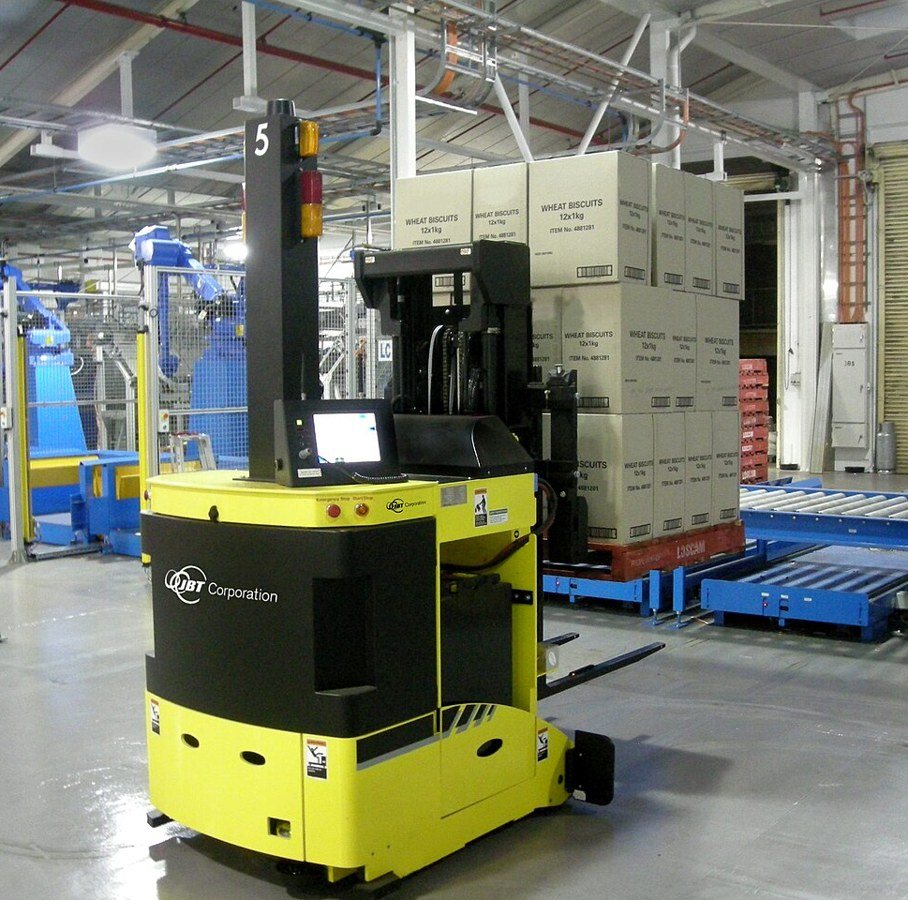
Photo: AutoGuidedVehicles (public domain)
What you are seeing
An automated forklift in a warehouse, following its route without a driver.
Warehouses add robots fastest, and need specialists to run them.
Facility technicians keep data centers alive.
Data center critical-facility technicians.
- Power and cooling rounds
- Switching and lockout procedures
- Alarm response and escalation
- Maintenance of UPS, generators, chillers
- Electrical, HVAC or military technical background
- Mission-critical operations years
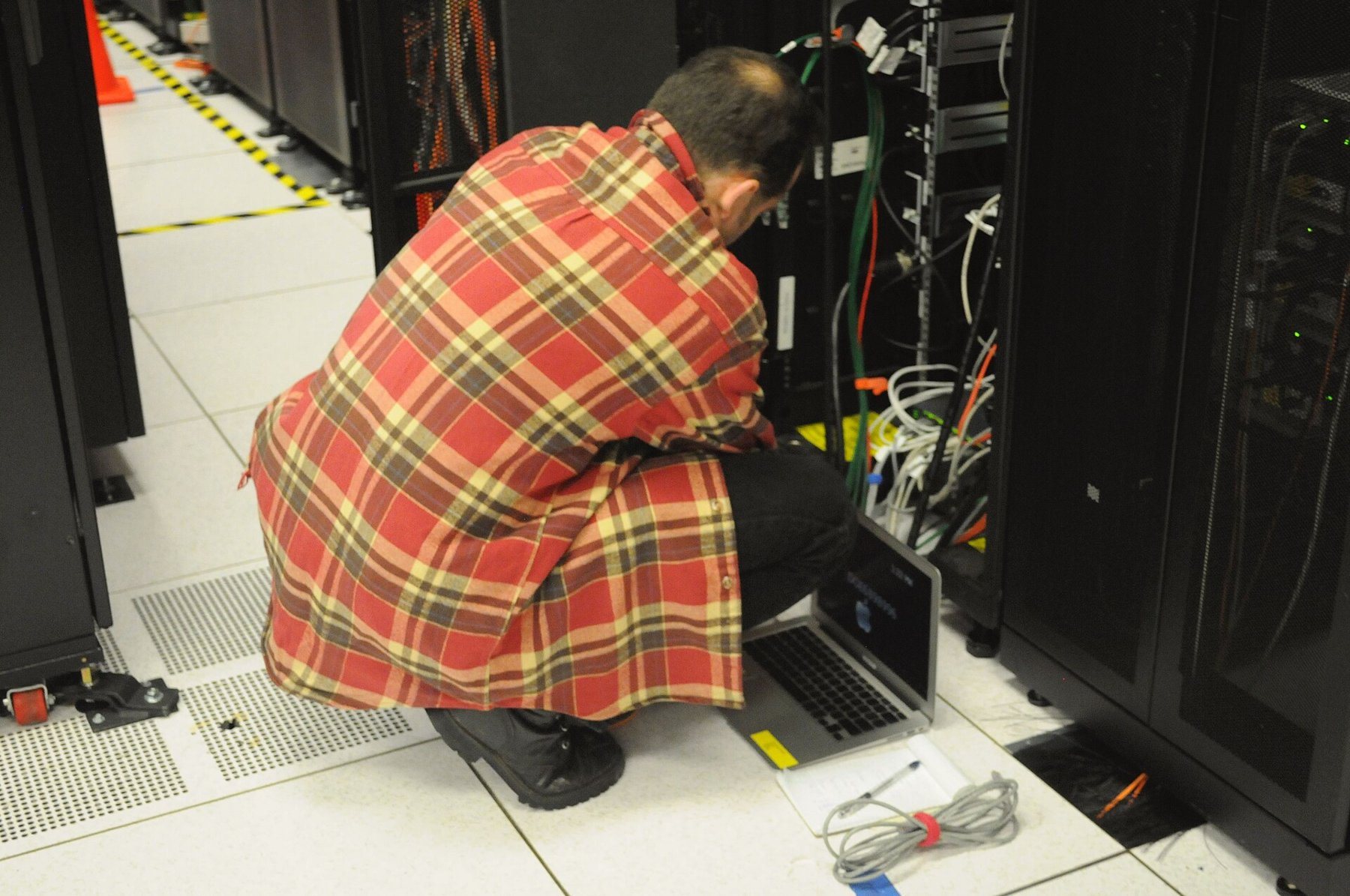
- Building management systems
- Inspection robots and drones
- Remote-hands robots
Machines you work with
- Certified Data Center Technician Professional (CDCTP)
- Uptime Institute Accredited Operations Specialist
- NFPA 70E training
- Refrigerant handling certification
- BICSI credentials
Certifications and training
- Controls technicians
- NOC operators
- Site operations manager
Works alongside
Photo: Derrick Coetzee, CC0
What you are seeing
A technician works on a server rack in a large computing center.
Rounds, thermal checks and hardware swaps are the first tasks machines share.
Safety and quality
Experts who keep people safe and work to standard.
Safety officers
70
QA and inspectors
71
Safety officers hold the authority to stop work.
Site safety officers.
- Hazard and risk assessment
- Human-robot zoning and exclusion areas
- Lockout and tagout oversight
- Incident review and reporting
Skills
- Site safety years in industry
- Familiarity with robot and AMR standards
Typical experience
- All site machines, as a safety reviewer
- Zone scanners and e-stops
- Incident reporting tools
Machines you work with
- OSHA 30 hour
- Construction Health and Safety Technician (CHST)
- Associate or Certified Safety Professional (BCSP)
- A3 robot safety training
- First aid and CPR
Certifications and training
- Site pod lead
- Controls engineers
- Crew supervisors
Works alongside
Safety is designed in, and every pod has a person who can stop work.
QA and inspectors verify the work to standard.
Quality assurance and inspection specialists.
- Inspection plans and defect lists
- Measurement and testing
- Documentation and close-out
- Using drones, scans and vision checks
Skills
- Quality or trades background
- Inspection of mechanical or electrical work
Typical experience
- Scanners and measurement tools
- Vision inspection stations
- Inspection drones and legged robots
Machines you work with
- ASQ Certified Quality Inspector
- ASQ Certified Quality Engineer
- Welding and NDT inspector credentials (AWS, ASNT)
- OSHA 10 or 30 hour
Certifications and training
- Commissioning agents
- Trades supervisors
- Project managers
Works alongside
Machines gather the data. Inspectors decide what it means.
Lead and specialize
Leaders and specialists around every site.
Site pod leads and project managers
73
Trainers
76
Public-safety and cleared experts
74
Technical diligence experts
77
Service experts
75
Site pod leads run the site as one team.
Site pod leads and project managers.
- Planning, sequencing and scheduling
- Client and contractor communication
- Weekly reporting and risk tracking
- Leading crews and machines together
Skills
- Project or operations leadership
- Multi-trade site experience
Typical experience
- Scheduling and reporting software
- Fleet dashboards
- All machines on the pod’s site
Machines you work with
- Project Management Professional (PMP)
- OSHA 30 hour
- Lean or Six Sigma belts
- Construction management credentials
Certifications and training
- Every role in the pod
- Owner’s representative
- Safety officer
Works alongside
The pod lead is the single point of contact and owns the outcome.
Public-safety experts bring discipline.
Public-safety and cleared experts, described generically.
- Incident command and communication
- Security and access control
- Risk assessment and checklists
- Working to strict procedures
- Public safety, security or military background
- Operational leadership years
- Inspection and patrol robots
- Drones and cameras
- Command dashboards
Machines you work with
- Incident command system training (ICS)
- Public-safety drone training
- Background checks as the work requires
- OSHA 10 or 30 hour
Certifications and training
- Site pod lead
- Safety officer
- Remote operators
Works alongside
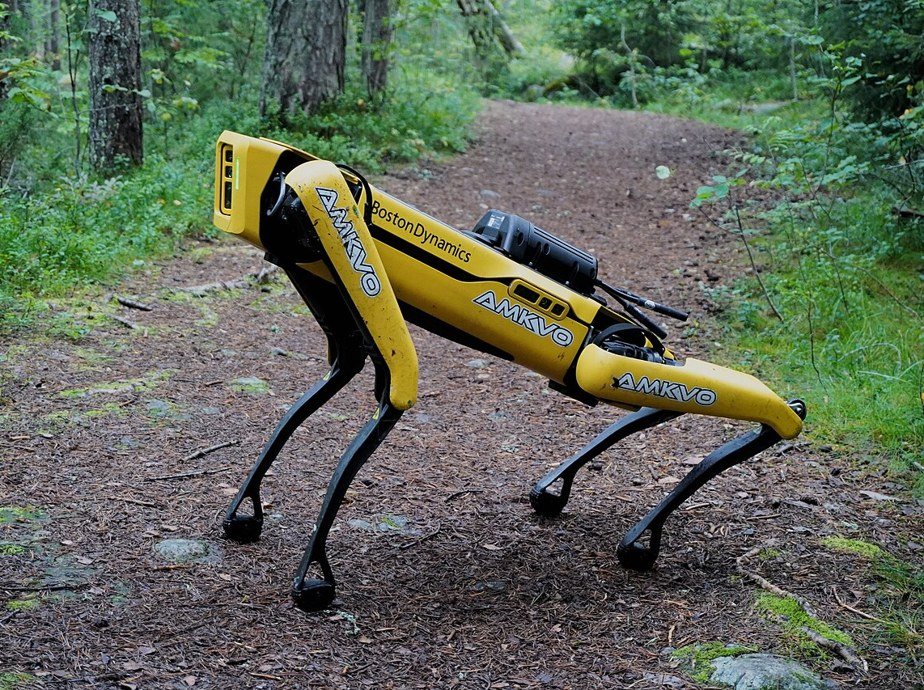
Photo: Jonte, CC BY-SA 4.0
What you are seeing
A legged inspection robot walking an outdoor route and logging what it sees.
Discipline from high-stakes fields carries over to machine supervision.
Service experts bring robots to everyday places.
Service technicians for healthcare, agriculture and hospitality.
- Installing and servicing service robots
- Customer training and hand-over
- Hygiene and food-safety awareness
- Fault reporting and escalation
Skills
- Field service or technician background
- Customer-facing work
Typical experience
- Cleaning and disinfection robots
- Delivery robots
- Kitchen and farm robots
Machines you work with
- Biomedical equipment technician (CBET)
- Food-safety training (ServSafe)
- Crop adviser credentials for agriculture
- OEM service courses
Certifications and training
- Facility managers
- Fleet supervisors
- OEM support
Works alongside
Customer-ready experts make service robots work in real buildings.
Trainers pass skills to the next crew.
Trainers and curriculum experts.
- Teaching adults on the job
- Writing procedures and job aids
- Hands-on skills assessment
- Safety and robot familiarization
Skills
- Teaching or training years
- Technical field background
Typical experience
- Training cells and simulators
- Robots from partner OEMs
- Learning platforms
Machines you work with
- OEM trainer authorization
- Talent development credentials (CPTD)
- OSHA outreach trainer authorization
- Safety instruction credentials
Certifications and training
- OEM instructors
- Site pod lead
- Crew supervisors
Works alongside
Training lets a crew start safely and ramp quickly.
Diligence experts help investors judge machines.
Technical experts for investor diligence.
- Assessing robot and drone technology
- Site and fleet performance review
- Cost, safety and reliability analysis
- Clear written findings
Skills
- Engineering and field experience
- Due diligence or advisory years
Typical experience
- Fleet data and performance logs
- Robots and drones in the field
- Financial and technical models
Machines you work with
- Professional engineer licensure where held
- Robotics or engineering degree
- Project management credentials
- OEM and standards training
Certifications and training
- Investor teams
- Atomgigs advisors
- OEM management
Works alongside
Investors get technical judgment from people who have run the machines.
How you work with machines
The teaming model, safety culture and training, remote and on-site modes, illustrative walkthroughs.
The teaming model
One manager per robot, and how people and machines share work.
One manager per robot
80
Supervising several robots
82
Six ways of working
81
Wearable robots
83
Every robot has a human manager.
Accountability is assigned before the robot moves.
Designated human manager
Owns the robot’s task, safety and outcome
Assigned machine
Does the defined task and reports status
Site pod lead
Resolves exceptions and escalates
Every robot has a named person.
One manager per robot
A trained person may supervise a small fleet.
One person, several robots
Anyone trained can stop work for safety.
Stop authority
A robot never works without a person who is accountable for it.
People and robots share work in six ways.
From cooperation to fleet supervision. Maturity rises down the list.
| Mode | Your role | Robot role | Typical work |
|---|---|---|---|
| Cooperation | Same area, sequential tasks | Does the step before or after you | Moves materials to your station |
| Shared task | Hands-on beside the robot | Responds to your motion and force | You fit; the robot carries |
| Operator-directed | Direct from a tablet; finish | Does the repetitive bulk | Finishing and drilling |
| Supervised autonomy | Set the job; resolve exceptions | Runs the mission on its own | Site rounds, layout |
| Teleoperation | Take control for exceptions | Executes your movements | Delivery, general tasks |
| Fleet supervision | Oversee many robots | Coordinate among themselves | Many robots, one supervisor |
| Most deployed systems today are operator-directed or supervised autonomy. | |||
One person can oversee several robots.
What changes when the fleet grows.
- Status of each robot and task
- Alerts and exceptions
- Battery, fault and safety states
What you watch
- Re-route, retry or stop
- Which robot takes the next task
- When to call a technician
What you decide
- Faults to field technicians
- Safety events to the officer
- Daily results to the pod lead
What you hand off
Supervisors act on exceptions. They do not watch every motion.
Wearable robots extend what workers can do.
Exoskeletons and smart wearables: the types, the makers, the evidence and how to use them safely.
- Passive shoulder support for overhead work
- Passive back support for lifting
- Powered back and lift-assist suits
- Tool-holding arms; posture-sensor wearables
- Studies: 20–45% less shoulder strain
- Long-term injury data is still limited
- Fit, training and a trial period first
- Check balance, heat and range of motion
- Part of the site risk assessment
Safety
- Ottobock (Paexo; suitX)
- Hilti EXO-O1 and Levitate AIRFRAME
- Hyundai X-ble Shoulder
- German Bionic and Verve Motion (powered)
- HeroWear; StrongArm and Kinetic sensors
Makers (examples)
- Less strain on heavy and overhead tasks
- More stamina across a full shift
- A skill to add to your profile
What it means for you
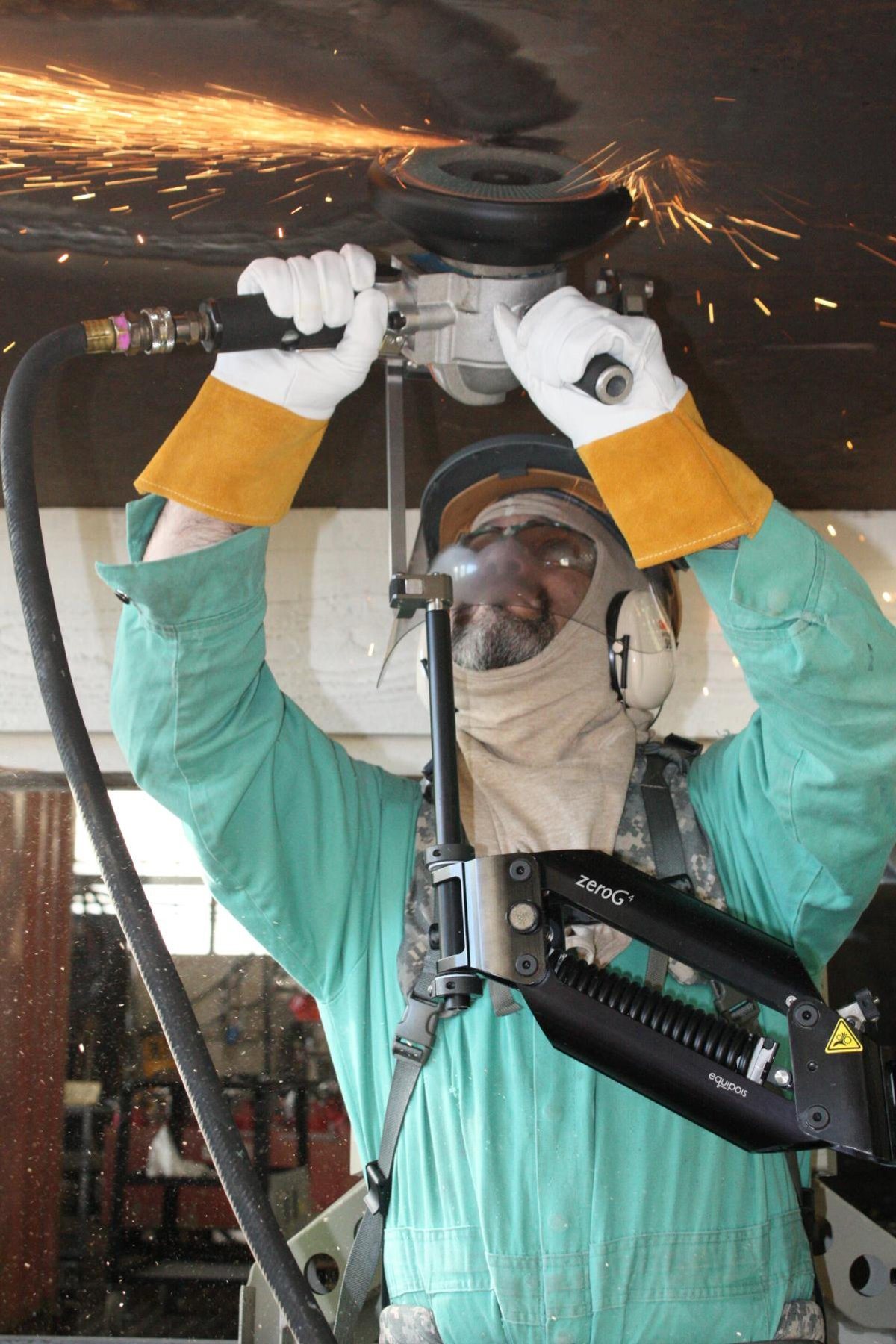
Photo: U.S. Navy (public domain)
What you are seeing
A shipyard worker grinds overhead with a vest and tool-support arm that carry the tool's weight.
Wearables extend strength and stamina. The expert still leads the work.
Safety culture and training
Standards, stop authority and the training you receive.
Standards
85
Training you receive
87
Safety habits
86
Safety is designed in, using current standards.
Standards set the baseline. The site safety case sits on top.
| Standard | What it covers | Applies to |
|---|---|---|
| ISO 10218-1:2025 and -2 | Industrial robots, and robot systems and integration | Arms and robot cells |
| ANSI/A3 R15.06-2025 | U.S. adoption of the ISO 10218 series | Arms and robot cells |
| ISO/TS 15066 | Collaborative operation and contact force limits | Cobots |
| ANSI/A3 R15.08, Parts 1 to 3 | Mobile robots; Part 3 (2026) covers daily use | AMRs and mobile robots |
| ISO 3691-4 | Driverless industrial trucks | AGVs and AMRs |
| OSHA requirements | General duty, lockout and tagout, electrical safety | All U.S. sites |
| Humanoid and legged robot standards are still emerging, so pilots use marked zones. | ||
Safe habits are the same on every site.
Six habits every expert practices.
Before any robot moves
Risk assessment
Marked areas for people and robots
Zoning
Energy isolated before work
Lockout and tagout
Anyone trained can stop work
Stop authority
Near misses are reported and reviewed
Incident reporting
Hazards and plan at shift start
Daily briefing
Safety comes before speed, on every shift.
Training starts before the first shift.
Layers of training build from site to machine.
1 Site
Site orientation and rules.
2 Safety
Hazards, zoning, stop authority.
3 Machine
OEM-approved training on the machine.
4 Role
Duties, handoffs and reporting.
5 Refresh
Updates as robots and rules change.
You learn the machine from its maker, not from a slide deck.
Remote and on-site modes
Where each kind of work happens.
Where work happens
89
A remote shift
90
Work happens on site, remotely or both.
United States for on-site work; India for remote monitoring and remote work.
- Installation and commissioning
- Maintenance and field service
- Flying and inspection
On site (United States)
- Fleet monitoring and alerts
- Teleoperation and remote assist
- Data review and reporting
Remote (United States or India)
- On-site crew plus a remote supervisor
- Shift hand-offs between sites
- Training with remote coaching
Hybrid
On-site work is U.S. only. Remote work can be done from the U.S. or India.
A remote shift follows a simple rhythm.
What a remote operator does from start to hand-off.
1 Hand-over
Read the previous shift’s notes.
2 Monitor
Watch the fleet and alerts.
3 Respond
Clear faults or call on site.
4 Report
Log events and results.
5 Hand-off
Brief the next shift.
Photo: Savannah River Site (public domain)
Clear hand-overs keep a fleet safe around the clock.
Illustrative walkthroughs
Four composite examples of a day on the job.
Data center day
92
Construction site day
94
Warehouse day
93
Drone inspection day
95
A day in a data center.
Illustrative: critical-facility technician with inspection robots.

06:30
| Brief | Shift hand-over, alarms review, and the day’s work permits. |
|---|---|
| Rounds | A legged robot walks the power hall and logs readings; you check flagged items. |
| Maintenance | Swap a failed component under lockout and tagout procedures. |
| Remote hands | A remote operator handles a hardware swap request at a rack. |
| Review | Look at thermal data, decide on follow-up work. |
| Hand-off | Log events and brief the evening shift. |
07:30
09:30
12:00
14:00
15:30
Photo: BalticServers.com, CC BY-SA 3.0
The robot walks the rounds. The technician decides what to do.
A day in a warehouse.
Illustrative: logistics automation specialist with a mobile-robot fleet.
06:00
| Start-up | Check chargers, routes, and zones; confirm the safe state. |
|---|---|
| Launch | Release the day’s orders; watch the first flows. |
| Exceptions | Clear a blocked aisle and a stuck robot from the console. |
| Tuning | Adjust a route to ease congestion near a dock. |
| Maintenance | Swap a wheel module with the robot’s technician. |
| Report | Send throughput, faults and safety notes to the pod lead. |
07:00
09:00
11:30
14:00
15:30
Photo: AutoGuidedVehicles (public domain)
One specialist keeps dozens of robots productive.
A day on a construction site.
Illustrative: layout and drilling robots on a commercial build.
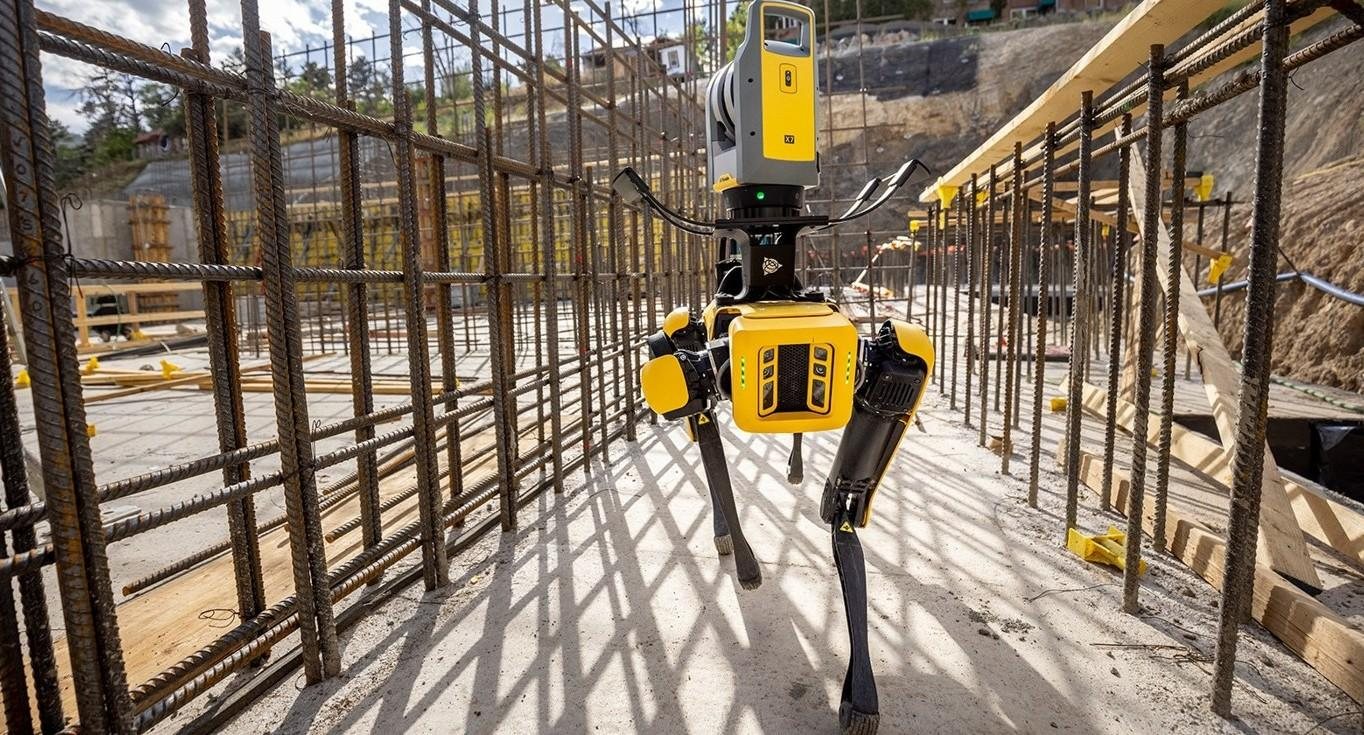
06:30
| Toolbox talk | Safety plan, robot zones, and the day’s tasks. |
|---|---|
| Set-up | Load the model; set up the layout robot; check control points. |
| Layout | The robot prints layout; a crew checks and marks exceptions. |
| Drilling | A drilling robot works ceiling anchors; an electrician finishes. |
| Inspect | A drone or legged robot captures progress for the model. |
| Close-out | Charge, clean, update the model, brief the pod lead. |
07:30
08:30
11:00
13:30
15:00
Image: Trimble
Robots handle the repeated work. Trades finish and verify.
A drone inspection day.
Illustrative: certificated pilot and visual observer at a large site.
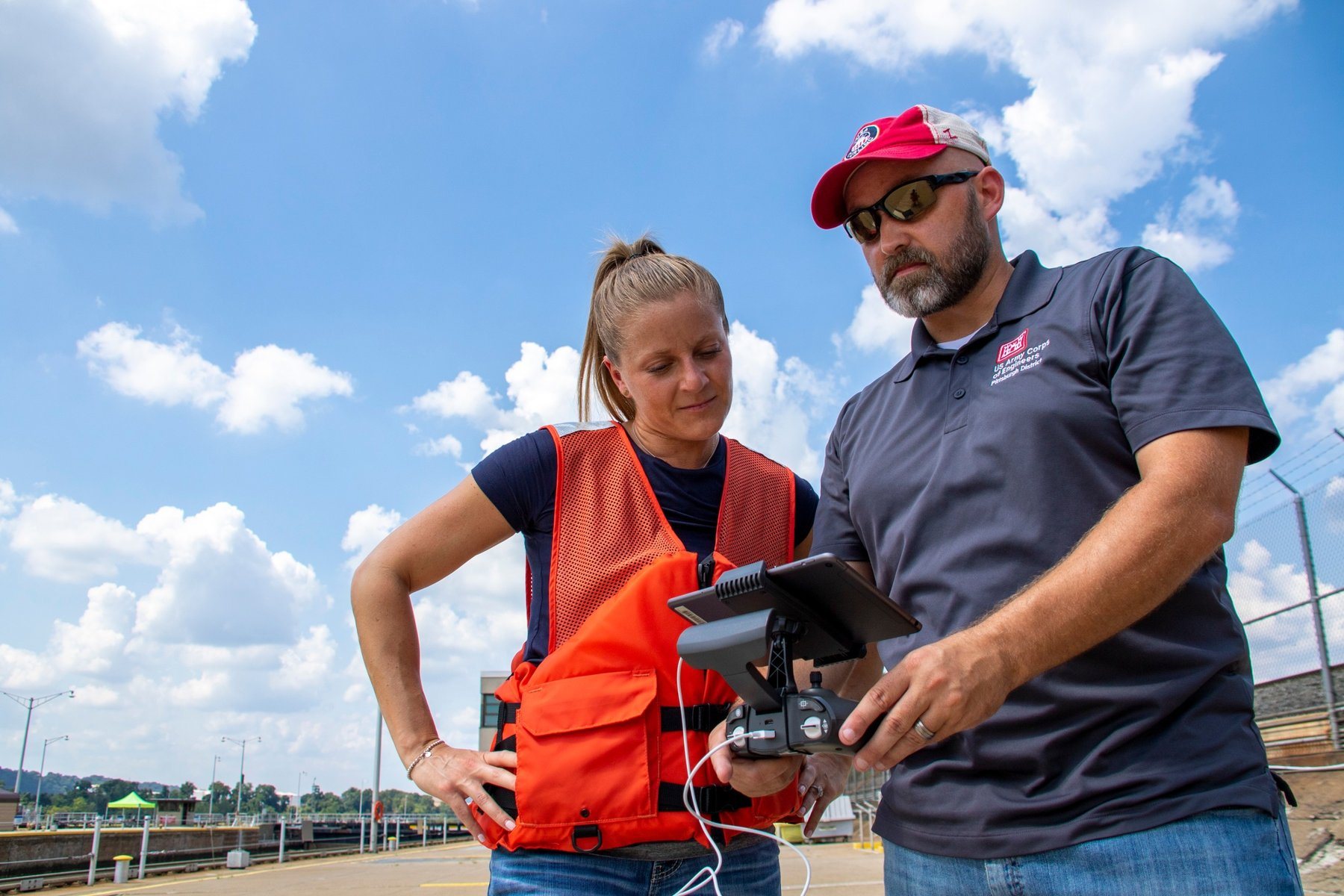
07:00
| Plan | Review airspace, weather and the mission with the site lead. |
|---|---|
| Pre-flight | Check the aircraft, batteries and site hazards; brief the observer. |
| Fly | Capture roof and structure imagery within line-of-sight rules. |
| Check | Review images for coverage and quality; reflight gaps. |
| Deliver | Upload data to the model; flag defects to QA. |
| Log | Complete the flight log and equipment checks. |
08:00
08:30
10:30
13:00
15:00
Photo: U.S. Army Corps of Engineers (public domain)
The pilot owns the flight. The data serves the whole team.
Why experts choose Atomgigs
Work that matters, learn and certify, work your way, how you join.
Work that matters
Real projects, real machines, and a place at the leading edge.
Leading edge
98
A place on a senior pod
99
You work at the leading edge of physical AI.
Four reasons the work is worth doing.
Robots, drones and automation from leading makers
Real machines
Data centers, plants, warehouses and construction
Real sites
Finish projects the industry is short of people for
Real impact
Skills that stay in demand as machines spread
Real skills
The industry needs people who can lead machines. You can be one of them.
You join a small senior pod, not a pyramid.
You work with experienced leaders, not just alongside machines.
designated human manager for each robot
pod lead as your point of contact
- A clear role and clear scope
- Safety authority and support
- A lead who removes obstacles
What the pod gives you
A small senior team means you are heard and your work is seen.
Learn and certify
Training from the makers and a clear certification path.
Training with the makers
101
Paths
103
Certification ladder
102
Learn the machine from its maker.
Robot makers run large training programs; you can use them.
sq ft in one maker’s new training academy in Michigan
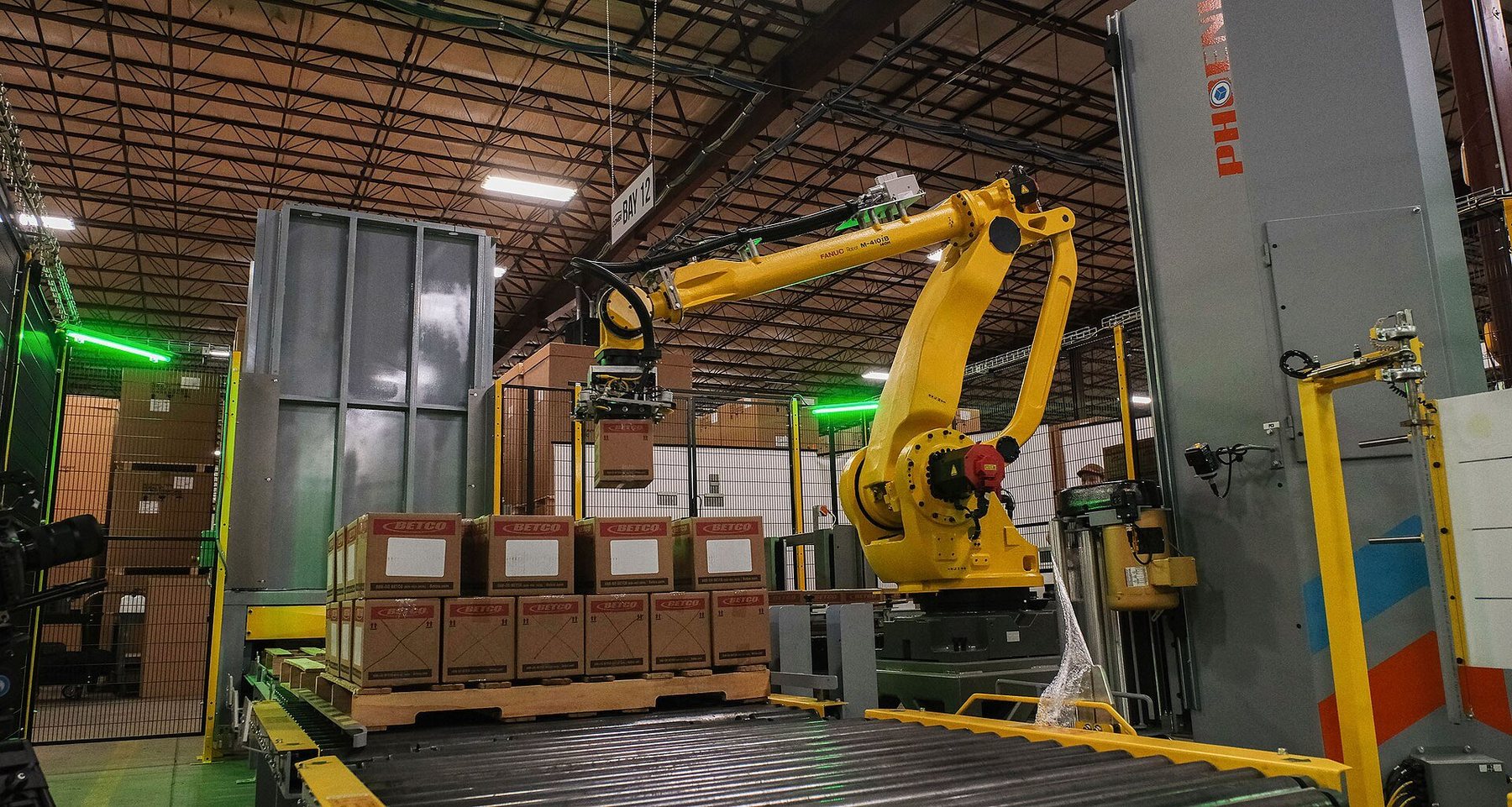
132,000
17,500
1,700
60,000
- FANUC Certified Education Robot Training
- Universal Robots Academy certificates
- ABB and KUKA College courses
- NVIDIA Deep Learning Institute courses
- The largest makers train tens of thousands of people a year
- Maker-approved skills are recognized across sites
- Training is how roles grow into leadership
Photo: Killgore1138, CC0
Training programs of the robot makers are the fastest route to new gigs.
A certification path from first gig to lead.
Typical credentials by level; each expert’s path differs.
Level
Typical credentials
Typical role
Foundation
OSHA 10 or 30; site safety; basic OEM operator course
Technician, operator, pilot
| Specialist | OEM technician or programming certificate; FAA Part 107; ISA or BICSI credential | Field service, controls, remote operations |
|---|---|---|
| Lead | Safety professional, PMP, A3 robot safety training | Pod lead, safety officer, trainer |
| Expert | Engineering licensure where held; functional safety | Architect, diligence expert |
Each step builds on the last and travels with you from gig to gig.
Paths open from technician to pod lead.
Illustrative career paths. Each expert chooses their own.
1 Technician
Learn the machine and the site.
2 Specialist
Add a certification and a focus.
3 Lead
Guide a small crew.
4 Pod lead
Run a site as one team.
5 Advisor
Advise on strategy and standards.
Atomgigs gigs are a path, and you decide how far to take it.
Work your way
Your own company or direct, gig by gig, in the U.S. or India.
Work your way
105
Where you work
106
Work your way, gig by gig.
Through your own company or directly. You choose the gigs.
Bring your company and your team
Through your own company
Work with Atomgigs on your own account
Directly
Choose each gig as it comes
Gig by gig
Build gigs around your schedule
Alongside other work
You choose the gigs. Atomgigs does the matching.
Where you work depends on the work.
United States for on-site work; India for remote work.
| Place | Type of work | Examples |
|---|---|---|
| United States, on site | Installation, service, flying, supervising | Data centers, plants, warehouses, construction |
| United States, remote | Monitoring, teleoperation, data review | Fleet and operations centers |
| India, remote | Monitoring positions and remote-capable work | Fleet monitoring, data review, support |
On-site work is in the United States only.
How you join
Apply by email, short vetting, then matched to gigs.
How you join
108
What to send
109
You can join in five steps.
From an email to your first gig.
1 Apply
Email us your background.
2 Vet
A short conversation and checks.
3 Profile
Skills and certifications on file.
4 Match
Matched to gigs that fit.
5 Start
Brief, then work.
Short vetting means you can start within days of a match.
Send us a short note to get started.
Email [email protected] with the items below.
Name, location and how you work (own company or direct)
Who you are
Role family, years and machines you know
What you do
Certifications and training
What you hold
Availability and where you can work
When you are free
Apply by email: [email protected]
How clients use this talent
Staffing a gig in days, talent and machines together, commercial model and engagement path, outlook, remember and go deeper.
Staffing a gig in days
Request, match, brief and start.
Staff a gig in days
112
Contract experts
114
Vetting
113
A client can staff a gig in days.
Five steps from request to first shift.
1 Request
Client states the need.
2 Scope
Roles, sites and dates agreed.
3 Match
Experts matched by skills and certifications.
4 Brief
Site, safety and machine briefing.
5 Start
Experts begin work.
Scope is defined before anyone starts.
Every expert is vetted before a gig.
Four checks keep quality high.
- 1Skills
Role experience and machine familiarity
- 2Certifications
Credentials checked and current
- 3Safety
Safety training and attitude
- 4Fit
Clear communication and reliability
Clients get experts they can put to work on day one.
Experts are contractors, not employees.
Atomgigs does not hire employees or hold a bench.
Work as an independent expert
Independent
Work through your own company
Own company
Work through a partner staffing firm
Via a staffing firm
No long-term headcount for the client, and flexibility for the expert.
Talent and machines together
One team, with robots from their makers and experts from our network.
One team
116
Site pod
118
Pilot packages
117
Talent and machines arrive together.
Atomgigs sources machines and people and puts them to work as one team.
Contract robots directly with their makers
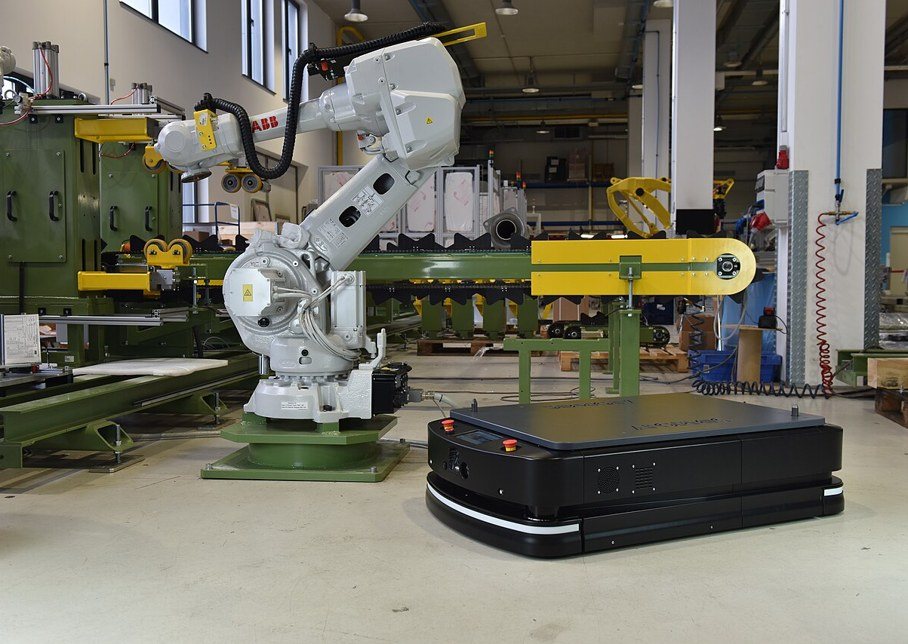
One small pod and a manager for each robot
One team, one contract, weekly reporting
Photo: Marta Veverica, CC BY-SA 4.0
One accountable team for the machines, the people and the result.
Pilot packages come with example expert mixes.
Illustrative mixes by pilot; the final mix depends on the site.
| Pilot | Weeks | Example expert mix |
|---|---|---|
| Machine tending cell | 6 | Robot technician, controls engineer, safety officer |
| Palletizing, end of line | 4 to 6 | Robot technician, QA inspector, safety officer |
| AMR material transport | 6 to 8 | Logistics automation specialist, IoT engineer, remote operator |
| Inspection and quality | 6 to 8 | AI and perception engineer, QA inspector, controls engineer |
| Kitting, line-side supply | 6 to 8 | Logistics specialist, robot technician, trainer |
| Humanoid tote moving | 8 | Remote operator, robot technician, safety officer, pod lead |
Every pilot ends with a review: scale, change or stop.
A small senior pod runs each site.
The pod is right-sized to scope.
Single point of contact; owns the outcome
Pod lead
Chooses robots; runs integration
Robotics lead
Trades and operators beside the robots
Skilled crew
Safety plan, zoning and stop authority
Safety and compliance
Fleet monitoring and weekly reports
Remote ops and data
A pod, not a pyramid.
Commercial model and engagement path
Pay for capacity and outcomes. Consulting to pilot to production.
Commercial model
120
How to start
122
Engagement path
121
Start small. Pay for capacity and outcomes.
No capital outlay for robots and no long-term headcount.
One defined scope on one site, with a low-commitment fee
Pilot
A hybrid crew on retainer, flexed up or down on notice
Managed crew
Paid for work completed, as robots earn it
Outcome-based
Scoped expertise for makers and investors
Advisory
Start with a pilot, move to a managed crew, shift to outcomes as robots prove out.
The path runs from consulting to pilot to production.
Each step is a decision the client controls.
1 Consult
- Walk the site
- Choose the first task
- Agree metrics and safety approach
2 Pilot
- Short, defined scope
- Mixed crew with a machine task
- Review against the metric
3 Production
- Managed crew on retainer
- Robot share grows with results
- Weekly reporting
Clients move at their pace. Safety sets the limit.
Start with a short conversation.
Experts apply by email. Clients ask for a walk-through.
- Email [email protected]
- Share your background and availability
Experts
- Email [email protected]
- Describe the site and the need
Clients
- Email [email protected]
- Ask about advisory support
Makers and investors
[email protected] | +1-310-694-4750 | atomgigs.com
Outlook
How the mix shifts from people to robots over time.
Roadmap
124
What it means for experts
125
The mix shifts from people to robots.
An indicative roadmap; safety sets the pace.
1 Human crews
Trades placed fast
2 Robot-assisted
Robots take repeated tasks
3 Hybrid crews
Mixed crews by design
4 Robot-led
Robots at scale; people supervise
We never move faster than safety permits.
Experts become supervisors and specialists.
The roles that grow as robots spread.
- Robot and fleet supervision
- Controls and perception work
- Safety and training roles
Grows
- Routine tasks move to machines
- Trades gain digital tools
Changes
- Judgment and safety authority
- Customer relationships
Stays
Fewer repeated tasks and more skilled work for people.
Remember and go deeper
Ten things to remember, and where to read more.
Ten things to remember
127
Go deeper
128
Ten things to remember.
The talent opportunity in brief.
Demand is real
Construction, factories and data centers are short of skilled people.
Machines are scaling
603,000 robots were installed worldwide in 2025.
Humans in the lead
Every robot has a designated human manager.
Roles keep their skill
The work moves from doing to leading.
Nineteen role families
There is a profile for every expert.
Safety first
Standards and stop authority apply to every site.
Train with the makers
OEM training is the fastest route to new gigs.
Work your way
Own company or direct, gig by gig.
Where you work
U.S. on site; India for remote work.
Go deeper in the other primers.
Every primer is on atomgigs.com at its own address.
| Primer | Address | Read it for |
|---|---|---|
| 00 Value Proposition | atomgigs.com | Why Atomgigs, and how it works |
| 01 Robotics | atomgigs.com/robots | Robot types, makers and how they work |
| 02 OEMs, Drones and VTOL | atomgigs.com/oems | Drones, aircraft, IoT and field operations |
| 04 Investors | atomgigs.com/investors | Where physical AI capital is going |
| 05 Enablers | atomgigs.com/enablers | Financing, insurance, platforms and standards |
| 06 Channel Partners | atomgigs.com/channel-partners | Engineering, MEP and construction firms |
| 07 Data Centers | atomgigs.com/data-center | Building and operating AI infrastructure |
| 08 Manufacturing and Logistics | atomgigs.com/manufacturing | Plants, warehouses and automation pilots |
| 09 Construction and Infrastructure | atomgigs.com/construction | Sites, civil works and robots on site |
| 10 Public Safety and Defense | atomgigs.com/public-safety | Machines for safer work. No weapons. |
| 11 Commercial Services | atomgigs.com/commercial | Service robots in daily life |
| 12 Physical AI Labs | atomgigs.com/labs | Real-site data for training robots |
| 13 Physical AI Technology | atomgigs.com/technology | Compute, sensing, control, AI models, simulation |
About us and notes
The primers, Atomgigs, Mavengigs, Monty Pandey, notes.
The primers, one address each
Every primer is readable on atomgigs.com or in presentation mode.
| # | Primer | Address | What it promises |
|---|---|---|---|
| 00 | Value Proposition | atomgigs.com | Why Atomgigs, and how it works. |
| 01 | Robotics | atomgigs.com/robots | Every robot type, for every application. |
| 02 | OEMs, Drones and VTOL | atomgigs.com/oems | Everything that helps people work in the physical world, other than robots. |
| 03 | Talent | atomgigs.com/talent | The experts who work alongside physical AI. |
| 04 | Investors | atomgigs.com/investors | Where physical AI capital is going, and how to find and track deals. |
| 05 | Enablers | atomgigs.com/enablers | The organizations that pay for, insure, run and approve machines at work. |
| 06 | Channel Partners | atomgigs.com/channel-partners | Winning and delivering projects with physical AI. |
| 07 | Data Centers | atomgigs.com/data-center | How data centers are built, run and paid for, and who buys them. |
| 08 | Manufacturing and Logistics | atomgigs.com/manufacturing | How goods are made, stored and moved. |
| 09 | Construction and Infrastructure | atomgigs.com/construction | How we build and run the physical world. |
| 10 | Public Safety and Defense | atomgigs.com/public-safety | Extending public safety and defense teams with machines. No weapons. |
| 11 | Commercial Services | atomgigs.com/commercial | Where robots, drones and automation work in service businesses. |
| 12 | Physical AI Labs | atomgigs.com/labs | Physical AI data for training robots, only with customer approval. |
| 13 | Physical AI Technology | atomgigs.com/technology | The stack behind robots, from silicon to fleet. |
Atomgigs: Physical AI Delivered as Jobs Done
Machines and people as one hybrid workforce, to scale up what you build and run. Primers hold the details.
What Atomgigs is
- Robots, drones, VTOL, IoT and automation, with people, as one hybrid workforce.
- Humans in the lead, physical AI in the loop.
- Not a machine builder: it sources from makers, then staffs, integrates, deploys and operates.
The sources
- Robots: every robot type, profiled in depth.
- Everything other than robots: drones, VTOL, IoT and automation, from many makers.
- The humans: role families across the trades, engineering and safety, every person a contractor.
Who we work with
- Investors: consulting before and after the deal.
- Enablers: financiers, insurers, platforms and regulators behind every deal.
- Channel partners: engineering, design, MEP and construction firms.
Buyer groups
- Data centers
- Manufacturing and logistics
- Construction and infrastructure
- Public safety and defense (no weapons)
- Commercial services
- Physical AI labs
How it works
- Consulting engagement, then a short pilot, then production.
- One scope, one site, one metric in the pilot.
- A small senior pod runs every site, with a named human manager for every robot.
How we are paid
- Pilot, managed crew, outcome-based or advisory.
- No capital outlay for machines and no long-term headcount.
- Pay for capacity and outcomes; scale up as results are proven.
Atomgigs is a Mavengigs venture. Atomgigs is a division of Panvisage Inc.
Mavengigs: the Scale Up Guys
Consulting, Capital and Ventures.
Mavengigs Consulting
- Strategic M&A, transformation and optimization
- Focused on the part of M&A that begins after everyone shakes hands
- Built for PE-backed and Fortune 500 teams
Mavengigs Capital
- An independent sponsor platform
- Family office strategy and management
Mavengigs Ventures
- Funding and mentorship for founders we back
- Panmedical: digital health in India, run as CEO
- Atomgigs, Mavens Life and Mavens Health
Mavengigs is a division of Panvisage Inc.
Monty Pandey: Founder and CEO
Founder, CEO and driving force behind Atomgigs

Career and experience
- 30+ years of management consulting: managed major M&A deals totaling $20 billion; scaled 50+ companies for $100 million of impact
- Deep expertise in M&A consulting, including integrations and divestitures
- 2018 to present: Mavengigs: Consulting, Capital and Ventures
- 2004 to present: Founded Panvisage, CEO for 22 years
- 2024 to present: Panmedical CEO (digital health)
- 1998 to 2004: Oracle, led 14 enterprise programs
- 1994 to 1996: Rolled out nationwide cell networks
- 1992 to 1994: Car and truck design (CAD, CAM, CIM)
- 1991: B.E. Electrical and Electronics Engineering
- 1989 to 1991: Designed robots, AGVs and manufacturing transfer lines
- Data centers: built one from scratch in 2000; data center migration in 2008; Equinix in 2020
- E&C companies: WSP, Jacobs, Worley, Halliburton, Fluor, Brown & Root
- Managed the buildout of a manufacturing plant and a distribution center
Monty Pandey
- Founder and CEO, Atomgigs
- Founder and CEO, Mavengigs
- Co-founder and CEO, Panmedical
| Selected transactions | Value | Role |
|---|---|---|
| GE Appliances / Haier | $5.6B | Readied for sale |
| Jacobs / CH2M / Worley | $3.3B | Integration, Divestiture |
| ITW Signode / Carlyle | $3.2B | Carve-out, then sale |
| AMLI / Morgan Stanley | $2.1B | Take-private |
| Fortune Brands / ACCO / GBC | $2B | Divestiture, Integration |
| Equinix / Packet | $335M | Integration |
Notes on use
Three things to keep in mind when reading this deck.
Not investment advice
Atomgigs provides consulting. We are not an investment advisor, so you make your own decisions on investments.
Products belong to their owners
Company, product and robot names, logos and photos are used as examples and belong to their owners. This deck is for information only and is not a contract or an offer.
About the numbers
Numbers come from publicly available sources and are the latest available at publication. Costs, prices and returns are typical ballpark values, not quotes; they will be updated for your specific engagement.
Appendix B: Visual guide and reference
Robots, drones and aircraft, sites and stations, glossary, role quick reference, standards and training bodies.
Robots
Arms, mobile robots and legged robots.
Collaborative robot
137
Automated forklift
139
Mobile manipulator
138
Legged robot
140
A collaborative arm works beside people.
Collaborative robots are built to work near people.
- A small six-axis arm on a bench cell
- A teach pendant tablet for programming
- Guarding sized to the task and a risk assessment
What you are seeing
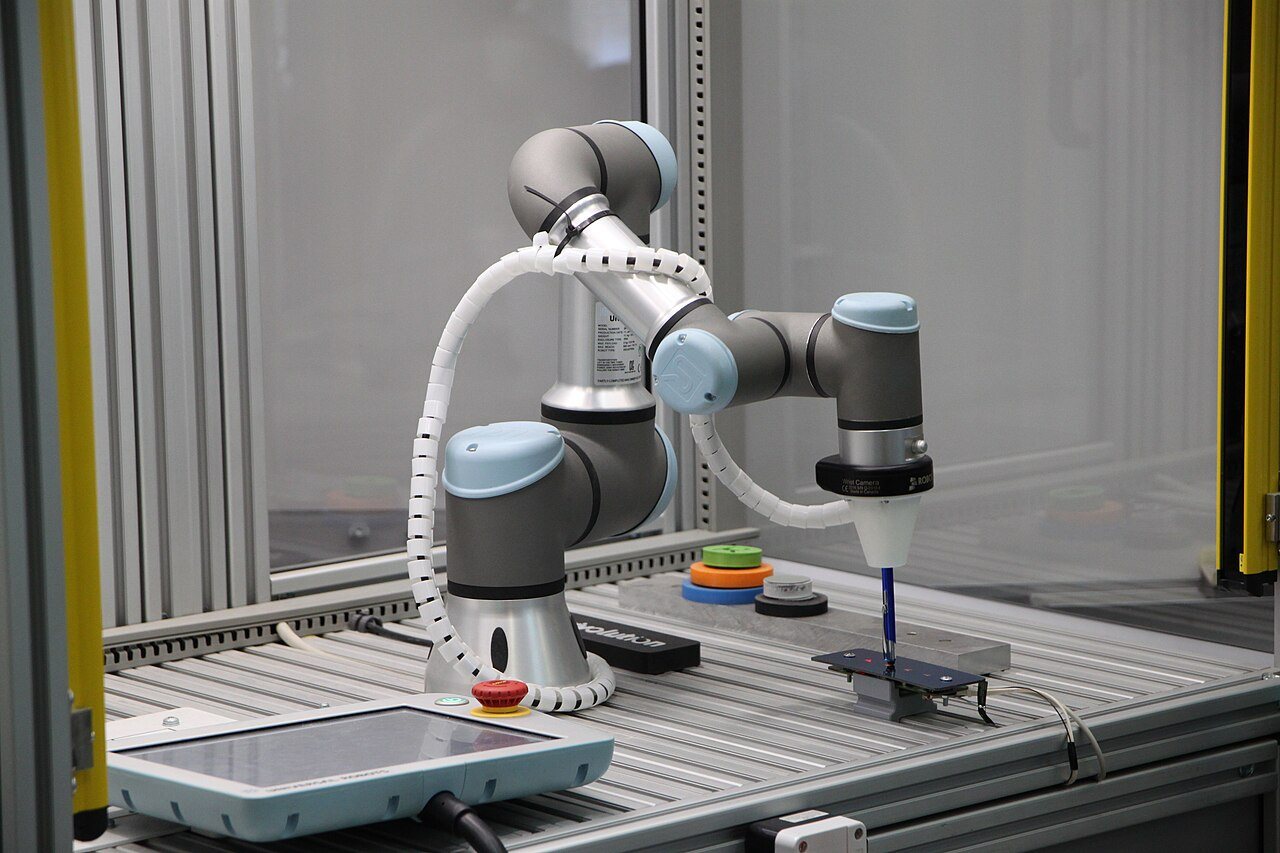
Robot technicians, controls engineers and safety officers.
Who works here
Photo: Caio.st.oliveira, CC BY-SA 4.0
An arm on a mobile base moves between stations.
A robot arm on an automated guided vehicle in a workshop.
- A large industrial arm on a mobile base
- The base carries the arm between stations
- Zones and sensors keep people at a safe distance
What you are seeing
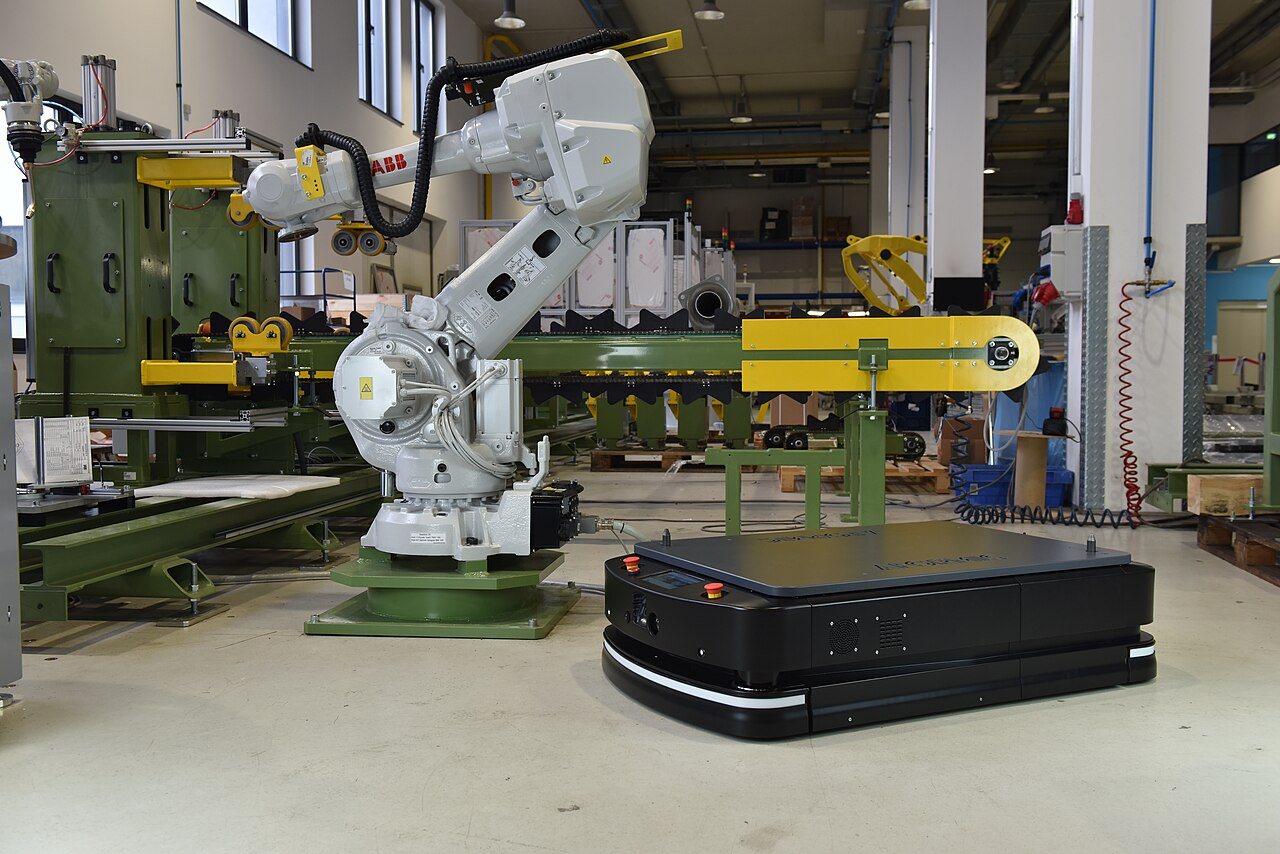
Robot technicians, logistics automation specialists and safety officers.
Who works here
Photo: Marta Veverica, CC BY-SA 4.0
An automated forklift moves pallets.
Driverless industrial trucks follow ISO 3691-4.
- A driverless pallet truck in a plant
- Sensors and a screen on the mast
- Loads move on defined routes
What you are seeing
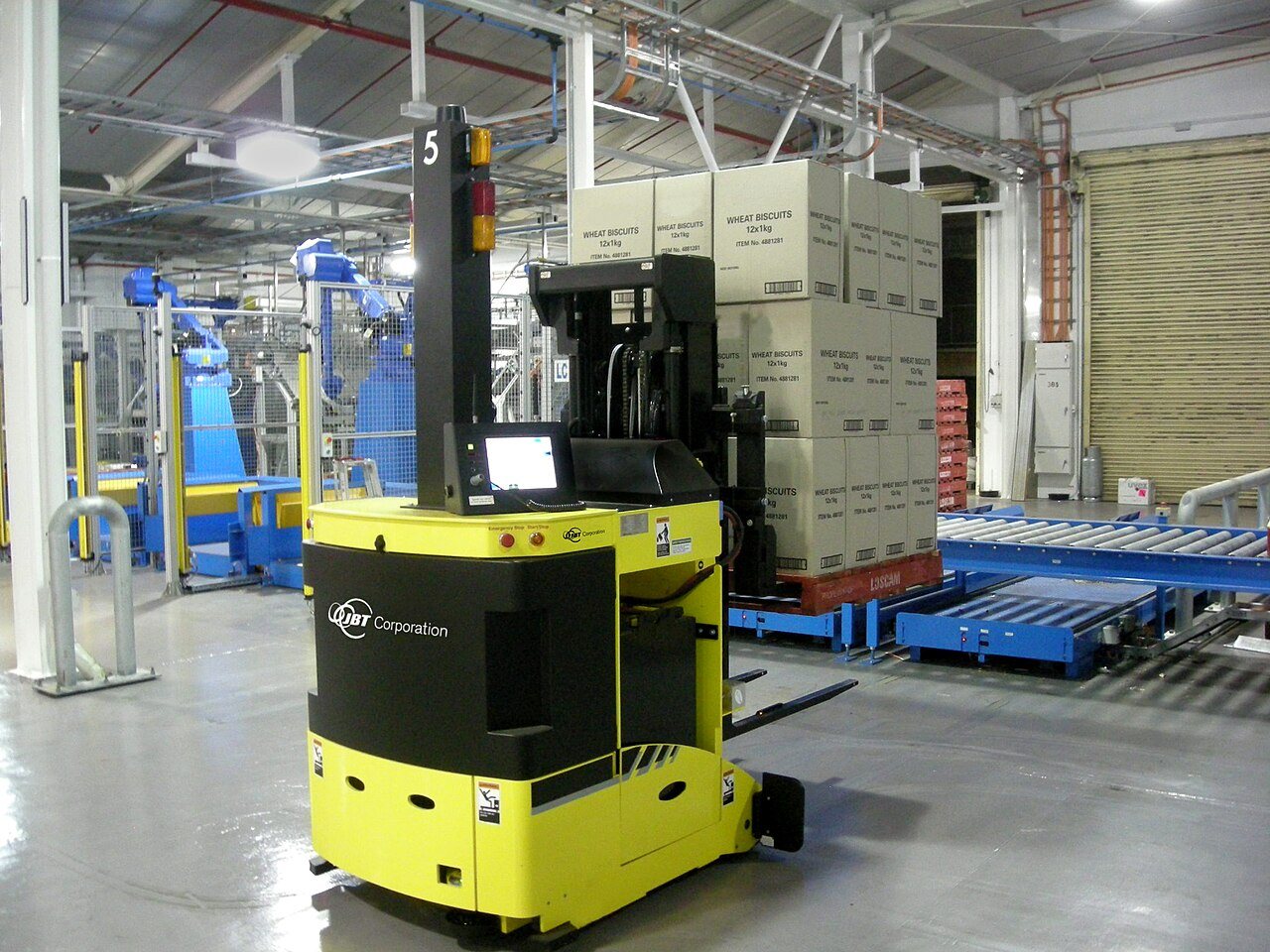
Logistics automation specialists, fleet operators and maintenance technicians.
Who works here
Photo: AutoGuidedVehicles (public domain)
A legged robot walks inspection rounds.
Legged robots reach places that wheels cannot.
- A four-legged robot on uneven ground
- Cameras and sensors on the body
- Used for site rounds, inspection and mapping
What you are seeing
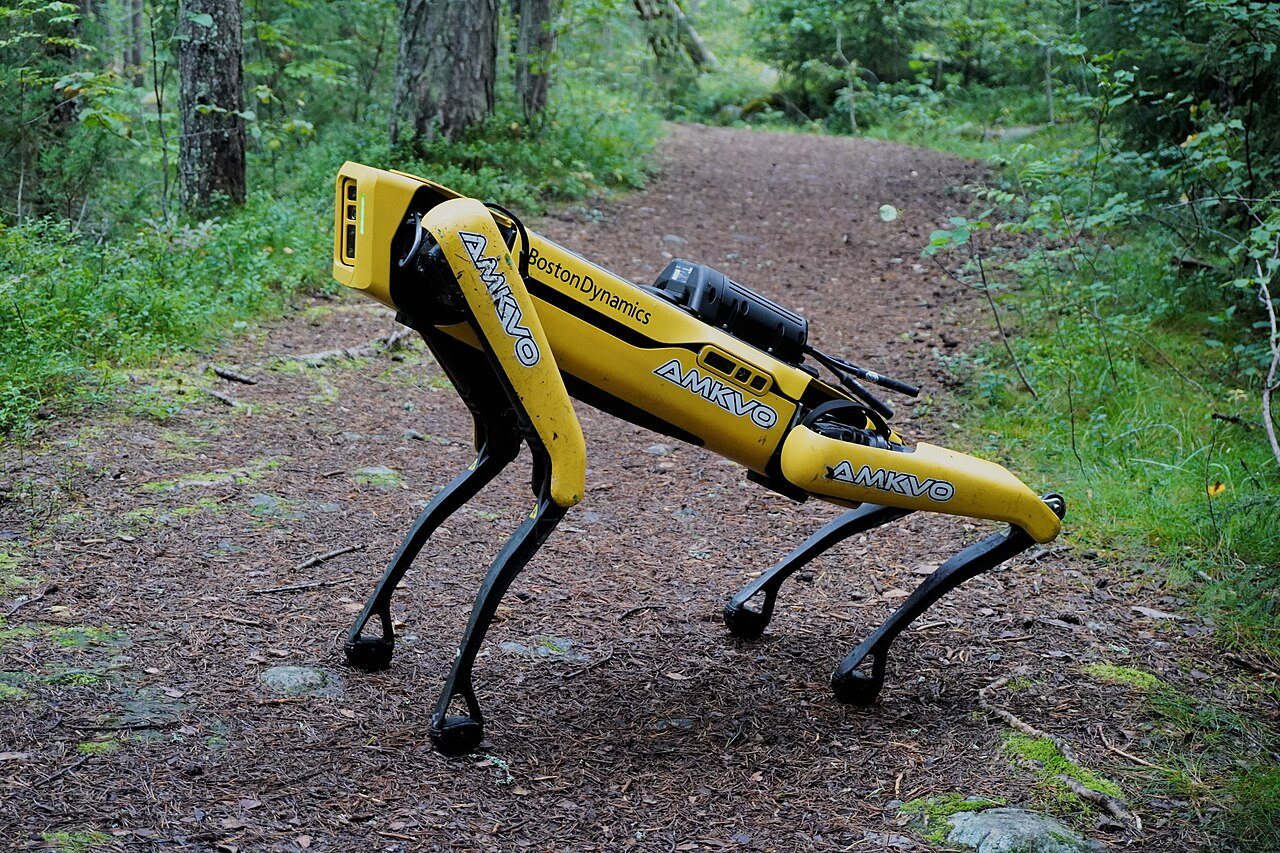
Remote operators, inspectors and OEM-certified technicians.
Who works here
Photo: Jonte, CC BY-SA 4.0
Drones and aircraft
Small drones and passenger-size VTOL aircraft.
Small drone
142
VTOL aircraft
143
A small drone captures images from the air.
A multirotor drone in flight.
- A small multirotor aircraft in flight
- Used for inspection, mapping and progress capture
- Flown by a certificated pilot within the rules
What you are seeing
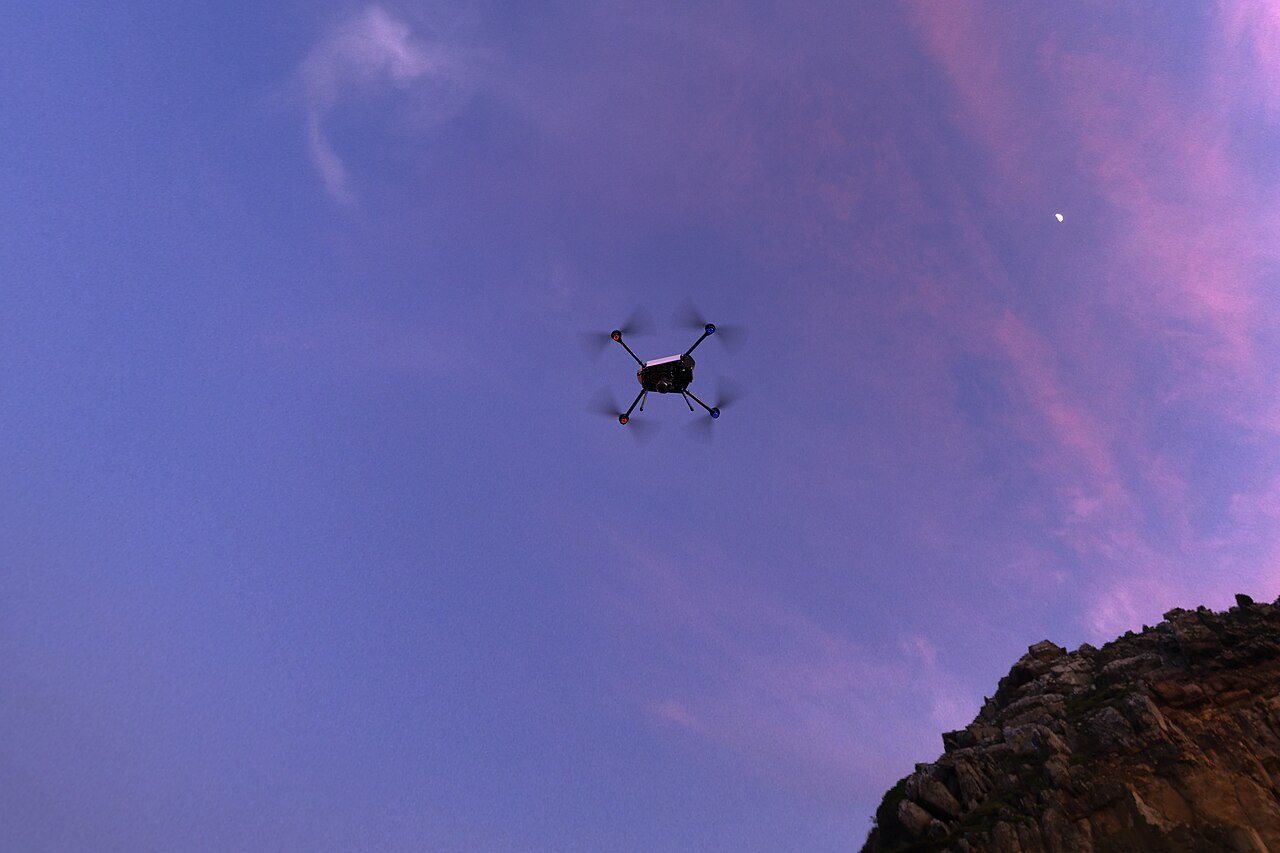
Drone pilots, visual observers and QA inspectors.
Who works here
Photo: Medusasami, CC BY-SA 4.0
A VTOL aircraft takes off and lands vertically.
A piloted multirotor-style aircraft on display.
- A two-seat aircraft with many rotors
- Vertical takeoff and landing, no runway
- Makers need test, service and flight teams
What you are seeing
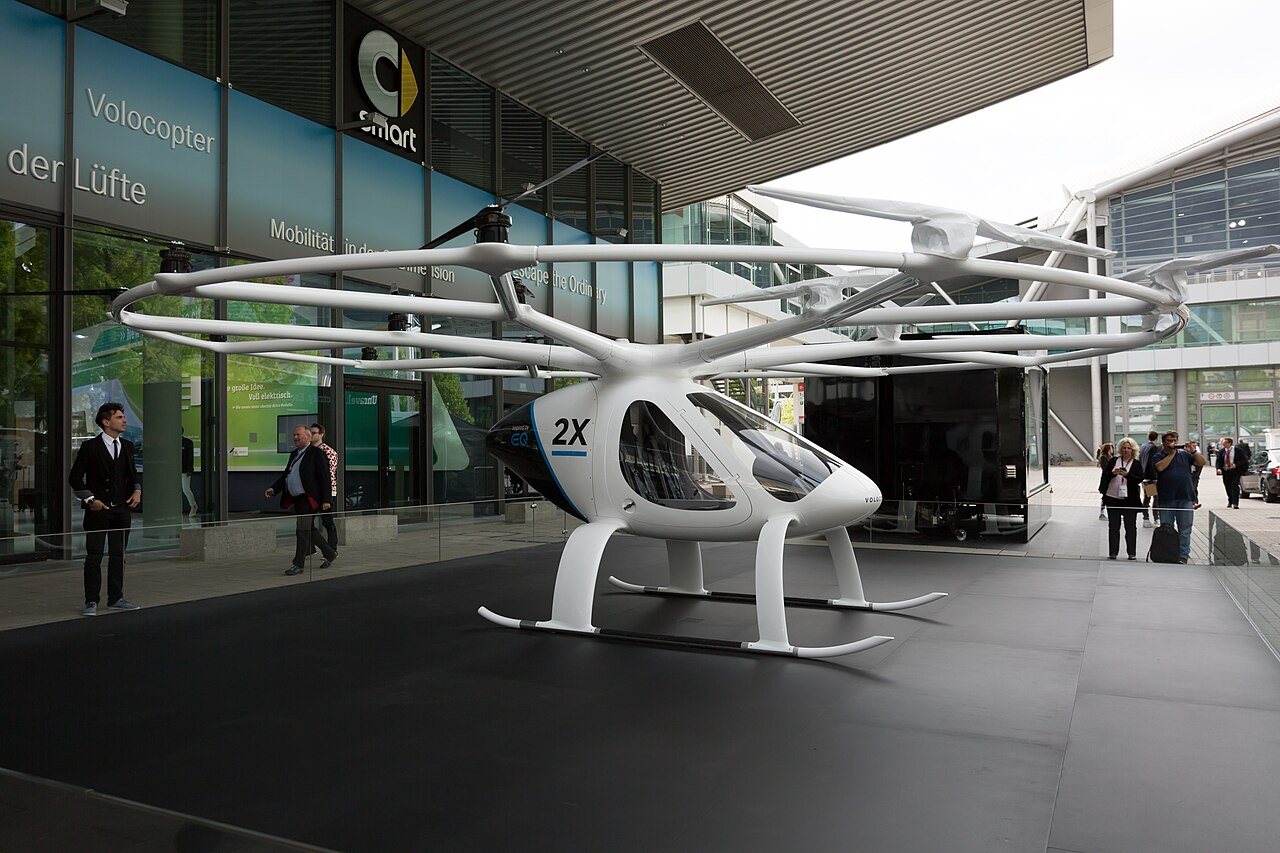
OEM field technicians, flight and test operations experts.
Who works here
Photo: Matti Blume, CC BY-SA 4.0
Sites and stations
Data center racks and a monitoring station.
Data center racks
145
Monitoring station
146
Server racks line a data center hall.
Racks, cabling and cooling define a data center hall.
- Rows of server racks with indicator lights
- Power, cooling and network cabling behind them
- Rounds, thermal checks and hardware swaps happen here
What you are seeing

Critical-facility technicians, network engineers and electricians.
Who works here
Photo: BalticServers.com, CC BY-SA 3.0
Operators watch a live feed at a station.
Remote monitoring of machines and sites.
- Two people watching a live video feed
- A screen shows the view from a machine
- Remote operators work like this from any location
What you are seeing
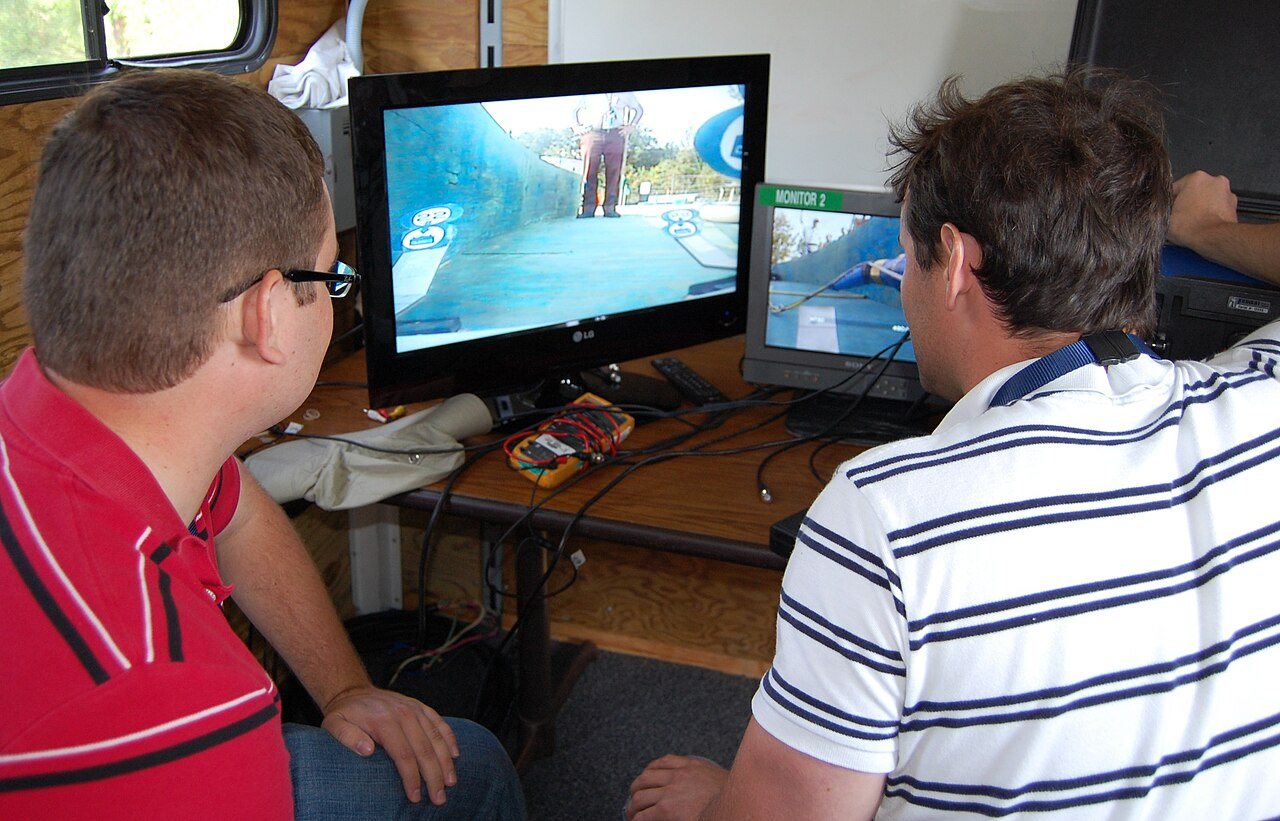
Remote operators, fleet supervisors and pod leads.
Who works here
Photo: Savannah River Site (public domain)
Glossary
Twenty-four terms used in this primer.
Terms 1 to 8
148
Terms 17 to 24
150
Terms 9 to 16
149
Terms used in this primer, part one.
Physical AI, robots and mobile machines.
| Term | Meaning |
|---|---|
| Physical AI | AI that senses and acts in the physical world through machines. |
| OEM | Original equipment manufacturer: the maker of a machine. |
| AMR | Autonomous mobile robot that navigates around obstacles. |
| AGV | Automated guided vehicle that follows fixed paths. |
| Cobot | Collaborative robot designed to work near people. |
| End effector | The gripper or tool at the end of a robot arm. |
| Robot cell | A robot with its guarding, tooling and controls. |
| Humanoid | A robot with a human-like body, built for general tasks. |
Terms used in this primer, part two.
Operating, safety and aviation terms.
| Term | Meaning |
|---|---|
| Teleoperation | A person controls a robot remotely. |
| Supervised autonomy | The robot runs the task; a person monitors and handles exceptions. |
| Fleet | A group of robots managed together. |
| Designated human manager | The named person accountable for a robot. |
| Site pod | The small senior team that runs a site. |
| VLOS and BVLOS | Flying within, or beyond, visual line of sight. |
| Part 107 | FAA rule and certificate for small commercial drones. |
| Part 108 | FAA rule for routine beyond-line-of-sight flights; final rule at White House review since Jul 2026. |
Terms used in this primer, part three.
Aircraft, building and site terms.
| Term | Meaning |
|---|---|
| VTOL | Vertical takeoff and landing aircraft. |
| BIM | Building information modeling: a 3D model with data. |
| Digital twin | A live digital copy of a site and its equipment. |
| Commissioning | Testing that systems work as designed before handover. |
| PLC | Programmable logic controller that runs machine logic. |
| Lockout and tagout | Isolating energy before servicing equipment. |
| E-stop | Emergency stop that halts a machine. |
| Risk assessment | A review of hazards before work starts. |
Role quick reference
Key skills and example credentials for each role family.
Roles 1 to 7
152
Roles 15 to 19
154
Roles 8 to 14
153
Role quick reference, part one.
Build, install and machines.
| Role family | Key skills | Example credentials |
|---|---|---|
| Electricians and mechanical trades | Power distribution, switchgear and UPS work; Conduit, cable and terminations | Journeyman or equivalent trade credential; OSHA 10 or 30 hour training |
| Commissioning agents | Test plans and scripts; Witnessing factory and site tests | Certified Commissioning Professional (AEE, BCxA); Certified Commissioning Authority (ACG) |
| BIM, VDC and digital twin | 3D models, clash detection and quantities; Reality capture and as-built updates | Autodesk Certified Professional; buildingSMART professional certification |
| IoT and network engineers | Wi-Fi, private 5G and wired networks; Sensors, gateways and edge devices | BICSI installer and technician credentials; Cisco CCNA or CompTIA Network+ |
| Robot technicians and integrators | Mounting, wiring and calibrating robots; Teach pendant and offline programming | FANUC Certified Robot Operator and Technician; Universal Robots Academy certificates |
| Controls and robotics engineers | PLC, HMI and motion programming; Robot cell design and integration | ISA Certified Automation Professional; ISA Certified Control Systems Technician |
| AI and perception engineers | Computer vision and sensor fusion; Model training, testing and deployment | ROS 2 training; NVIDIA Deep Learning Institute courses |
Role quick reference, part two.
Service, operate and quality.
| Role family | Key skills | Example credentials |
|---|---|---|
| OEM-certified field technicians | Diagnosing faults to part level; Software, firmware and calibration | OEM service certifications; OEM operator and maintenance courses |
| Remote operators and teleoperators | Monitoring fleets from a screen; Taking control when a robot needs help | OEM teleoperation platform training; Site safety orientation |
| Drone pilots and visual observers | Mission planning and airspace awareness; Safe flight in and around structures | FAA Part 107 remote pilot certificate; Recurrent training every 24 months |
| Logistics automation specialists | Mobile robot fleet set-up and routing; Warehouse and conveyor systems | A3 mobile robot safety training; Supply chain credentials (CSCP) |
| Critical-facility technicians | Power and cooling rounds; Switching and lockout procedures | Certified Data Center Technician Professional (CDCTP); Uptime Institute Accredited Operations Specialist |
| Safety officers | Hazard and risk assessment; Human-robot zoning and exclusion areas | OSHA 30 hour; Construction Health and Safety Technician (CHST) |
| QA and inspectors | Inspection plans and defect lists; Measurement and testing | ASQ Certified Quality Inspector; ASQ Certified Quality Engineer |
Role quick reference, part three.
Lead and specialize.
| Role family | Key skills | Example credentials |
|---|---|---|
| Site pod leads and project managers | Planning, sequencing and scheduling; Client and contractor communication | Project Management Professional (PMP); OSHA 30 hour |
| Public-safety and cleared experts | Incident command and communication; Security and access control | Incident command system training (ICS); Public-safety drone training |
| Service experts: health, farm, hospitality | Installing and servicing service robots; Customer training and hand-over | Biomedical equipment technician (CBET); Food-safety training (ServSafe) |
| Trainers and curriculum experts | Teaching adults on the job; Writing procedures and job aids | OEM trainer authorization; Talent development credentials (CPTD) |
| Technical diligence experts | Assessing robot and drone technology; Site and fleet performance review | Professional engineer licensure where held; Robotics or engineering degree |
Standards and training bodies
Who sets standards and who trains the experts.
Standards and safety
156
Training and certification
157
Bodies that set standards and rules.
Standards, safety and aviation.
| Organization | What it offers |
|---|---|
| ISO | International standards, including ISO 10218 and ISO/TS 15066 for robot safety. |
| ANSI | Accredits U.S. standards, including the R15 series. |
| A3 | Association for Advancing Automation: R15.06 and R15.08, robot safety training, integrator certification. |
| OSHA | U.S. workplace safety rules and training. |
| NFPA | Electrical safety, including NFPA 70E. |
| FAA | Drone rules: Part 107, Remote ID and the coming Part 108 for long-range flight. |
| IFR | International Federation of Robotics: global robot statistics. |
| ISA | Automation standards and credentials, including IEC 62443 cybersecurity. |
Bodies that train and certify experts.
Makers, associations and providers.
| Organization | What it offers |
|---|---|
| FANUC | Certified Education Robot Training and a large training academy. |
| Universal Robots | UR Academy training and certificates. |
| ABB Robotics | Robot programming, operation and maintenance courses. |
| KUKA | KUKA College robot courses. |
| NVIDIA | Deep Learning Institute courses for robotics and simulation. |
| Uptime Institute | Accredited Operations Specialist and other data center programs. |
| BICSI | Credentials for cabling and network infrastructure. |
| Other bodies | NCCER, BCSP, PMI, ASQ and commissioning associations. |
Key numbers
The headline figures in one place.
Key numbers
159
Key numbers in one place.
Headline figures from this primer.
- 38,400 industrial robots installed in the U.S. in 2025, up 12%
- ~250,000 professional service robots shipped in 2025, up 24%
- ~493,000 FAA-certificated remote pilots in the U.S. (end-2025)
- 307 robots per 10,000 factory workers in the U.S.; South Korea has 1,220
- Over half of data center operators struggle to find qualified candidates
More numbers
Have a project that needs hands and machines?
Tell us about the site, the scope and the schedule. We will come back with a pilot proposal.