
Overview
How Atomgigs works: sources, catalysts and buyers
Atomgigs does not build machines. It helps makers go to market, advises buyers and delivers work done and data.
- Go-to-market: where, how and to whom
- Gigs: jobs for their machines and talent
Paid by Makers: GTM fees; buyers: per gig
- Advice and investor diligence
- Project bidding and execution
Paid by Catalysts: advice, projects
- Hyperscalers
- Colocation providers
- Neoclouds
- AI labs
- Enterprise and edge
- Automakers
- Other manufacturers
- 3PLs (logistics firms)
- Carriers
- Warehouse operators
- Builders and owners
- Program managers
- Energy and power
- Mining, oil and gas
- Transit and telecom
- Public works
- Police, fire and rescue
- EMS
- Security operators
- Corrections and border
- Military installations
- Defense primes
- Healthcare
- Hospitality
- Real estate, facilities
- Food service
- Retail and agriculture
- Waste and recycling
- Data to train robots
- Real-site task data
- Video and sensor data
- Labs pay for the data
- Buyers get a discount
We offer Advice and work done for buyers; data for physical AI labs. Paid by Buyers: advice, capacity; labs: data
Numbers 01 to 12 are primer numbers: each box has its own detailed primer.
Physical AI data at a glance.
Ten facts that frame the field.
$27B+ raised in 2026
Robotics venture funding, Jan–Sep 2026: above any prior full year (Crunchbase).
About $15B in 2025
The previous full-year record for robotics venture funding (Crunchbase).
No internet of robot data
Robots need captured video, motion and force; none exists online.
Labs mix their sources
Physical Intelligence, Skild AI, NEURA and Generalist use outside vendors and in-house data.
$70M for one supplier
XDOF raised it in June 2026; about 20 customers, including AI labs.
150,000+ hours in 2025
Physical AI data hours that Scale AI reports delivering.
Strategic investors back suppliers
Mecka AI’s $60M round included Nvidia, Microsoft’s M12, Qualcomm and Samsung.
Workplaces get paid
Cortex AI’s marketplace pays workplaces to host data sessions.
The owner decides
Opt in or opt out; not the default, not a condition of other work.
Owner owns, never linked
Approved for a set period; revocation goes forward; data not linked to the site.
The data problem
Why robots need real data, what data labs want, how data is collected today, vocabulary, what Atomgigs does and does not do.
Why robots need real data
Robots do not learn from the internet, so data must be captured.
Robots learn from real tasks, not the internet.
9
Money is flowing in; data is the bottleneck.
11
The machines that need real-world data.
10
Four sources of training data, each with limits.
12
Robots learn from real tasks, not the internet.
Why the data problem differs from chatbots.
- Learn from text, images and code already online.
- The internet is a ready-made training set.
- More data means more scraping and storage.
Language models
- Need video, motion, touch and force from real tasks.
- No such record exists online.
- Each new task, tool and site adds new cases.
Robots
Physical data has to be captured in the real world, one task at a time.
The machines that need real-world data.
Humanoids and arms learn from captured tasks.
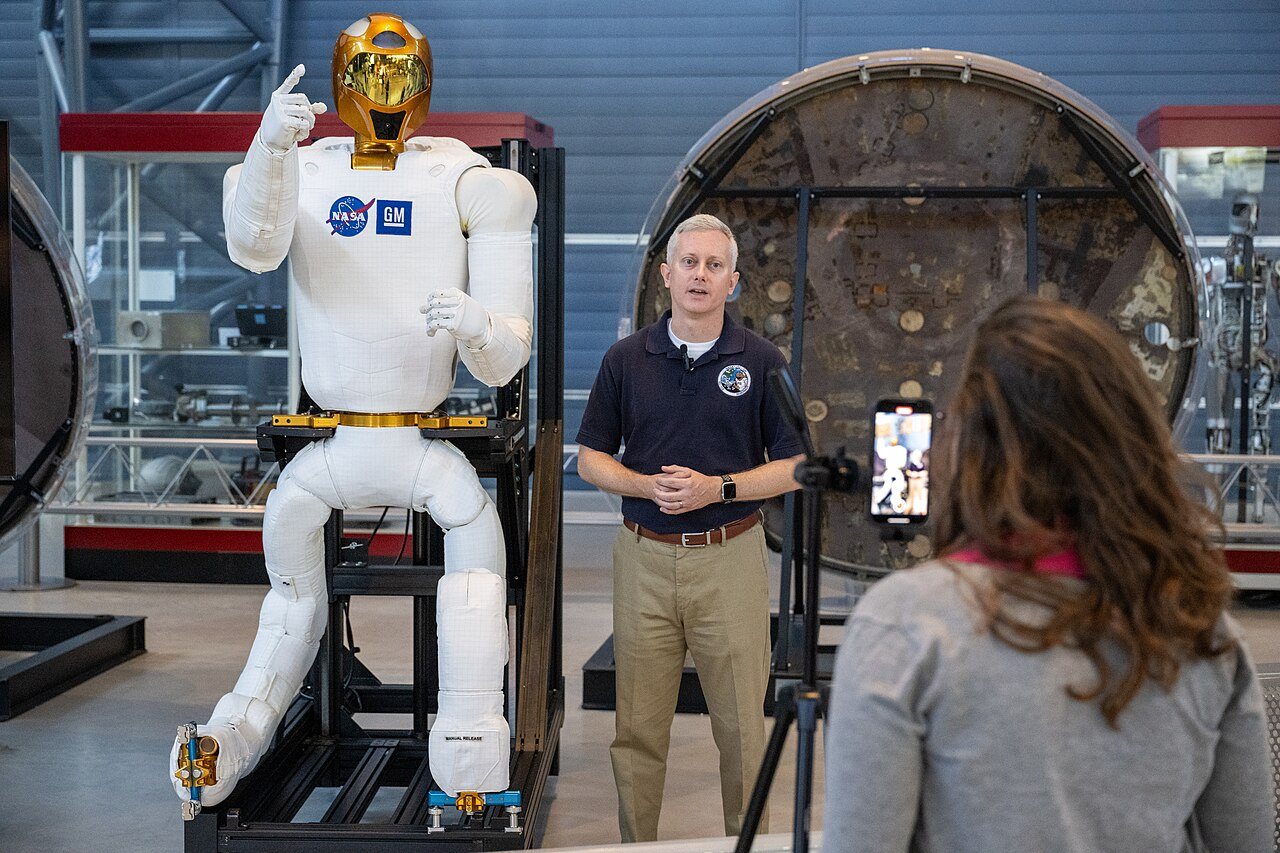
Robonaut 2, an early humanoid built for dexterous work.
Photo: NASA/Keegan Barber (public domain)
Every one of these machines needs data from real tasks.
Money is flowing in; data is the bottleneck.
Funding is at a record, and the scarce input is data.
~$15B
Robotics venture funding in 2025, the prior record
- Compute, robots and engineers.
- Labs’ own data halls.
- Outside data suppliers.
What the money buys
- “There is no internet of robot data,” says Skild AI’s co-founder.
- Real tasks in real sites, in volume.
- Variety of sites, tools, light and people.
What it cannot buy
Labs have the capital; the scarce input is data from real places.
Four sources of training data, each with limits.
Where labs get data today.
- 1Simulation
Cheap and fast. Misses real-world mess.
- 2Human video
Scales with people. Must be mapped to robot motion.
- 3Teleoperation
A person drives a robot. Costly per hour.
- 4Real-site work
Robots or people at live sites. Rare and varied.
Labs blend all four; real-site data is the hardest to get and fills the gaps in the others.
What data labs want
Six kinds of data, and what makes it valuable.
Six kinds of data labs ask for.
14
Quality beats volume.
15
Six kinds of data labs ask for.
Most labs want several kinds together, labeled by task.
| Data | What it is | Used for |
|---|---|---|
| Task video | Cameras on a task from start to end | Steps, success and failure |
| First-person video | Head or chest camera on a person at work | How hands handle objects |
| Sensor and motion data | Depth, force, joint and hand poses | Precise grasp and motion |
| Teleoperation logs | Operator commands and robot response | Copying expert control |
| Robot operating logs | Faults, retries, recoveries, uptime | Reliability and recovery |
| Evaluation runs | Models tested on live tasks, with scores | Checking a model works on site |
Task labels and outcomes turn raw recordings into training data.
Quality beats volume.
What makes site data valuable to a lab.
- Variety of sites, tools and conditions.
- Clear task labels and outcomes.
- Calibrated cameras and sensors.
- Failures and recoveries, not only successes.
What raises value
- One site or one kind of task only.
- Gaps, poor calibration, missing context.
- Unclear rights to use the data.
- Faces, names or site details left in.
What lowers value
Clear rights and clean capture matter as much as volume.
How data is collected today
Gyms, teleoperation, worn cameras, home and gig capture, hosted sites.
Labs collect data in five ways.
17
Labs are building their own data halls.
19
How capture looks in practice.
18
Specialist suppliers have appeared.
20
Labs collect data in five ways.
The main capture methods and their limits.
| Method | How it works | Limit |
|---|---|---|
| Robot gyms, data factories | Robot fleets on staged tasks in dedicated halls | Staged, narrow variety |
| Teleoperation | Trained operators drive robots through tasks | Slow and costly per hour |
| Worn cameras | People film tasks with head or chest cameras | No robot actions captured |
| Home and gig capture | Paid contributors record chores and tasks | Privacy and quality vary |
| Hosted real sites | Workplaces host sessions or robots at work | Needs the site’s approval |
Hosted real sites add what staged halls lack: genuine workplaces.
How capture looks in practice.
Teleoperation, motion capture and lab rigs.
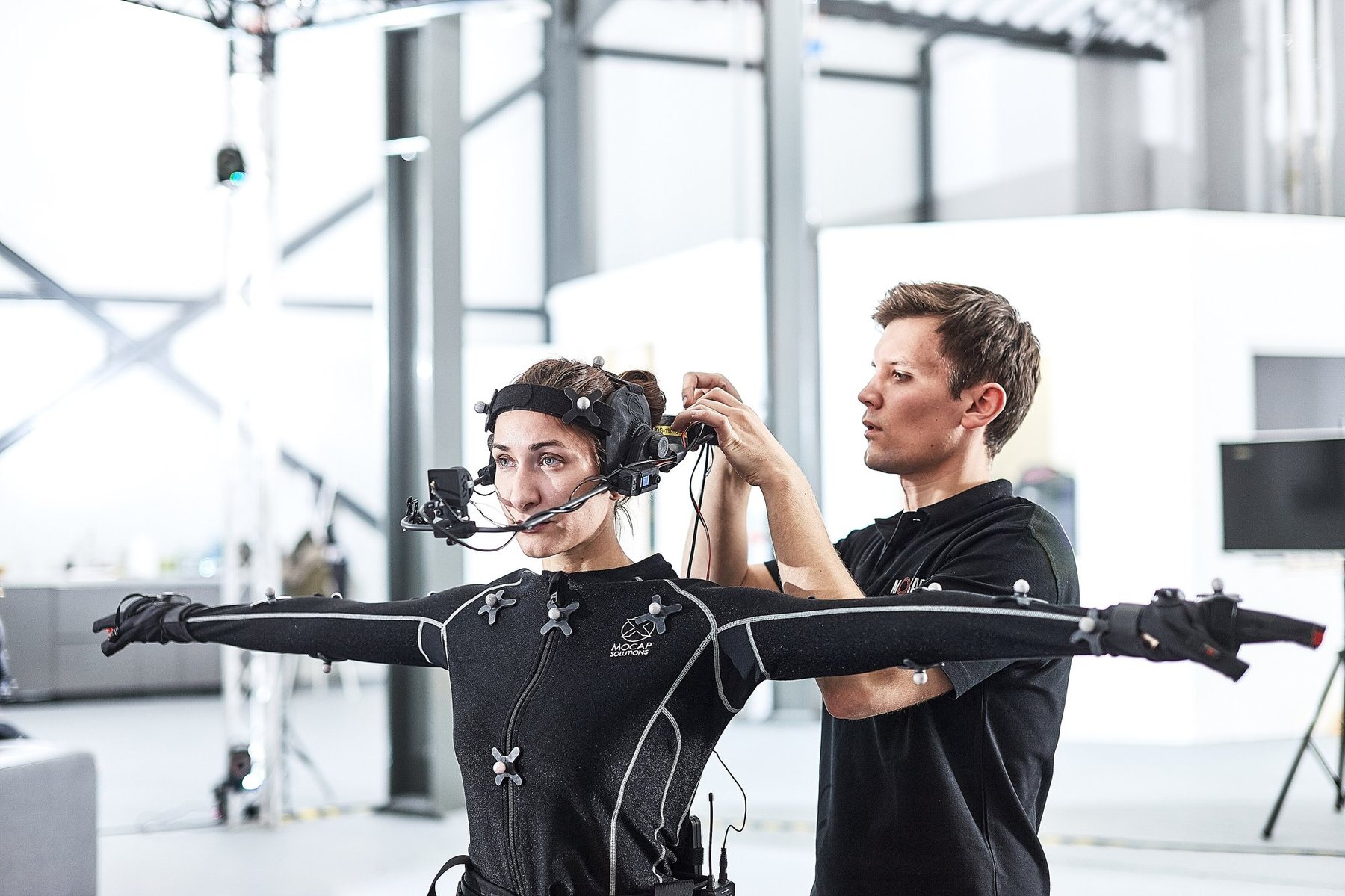
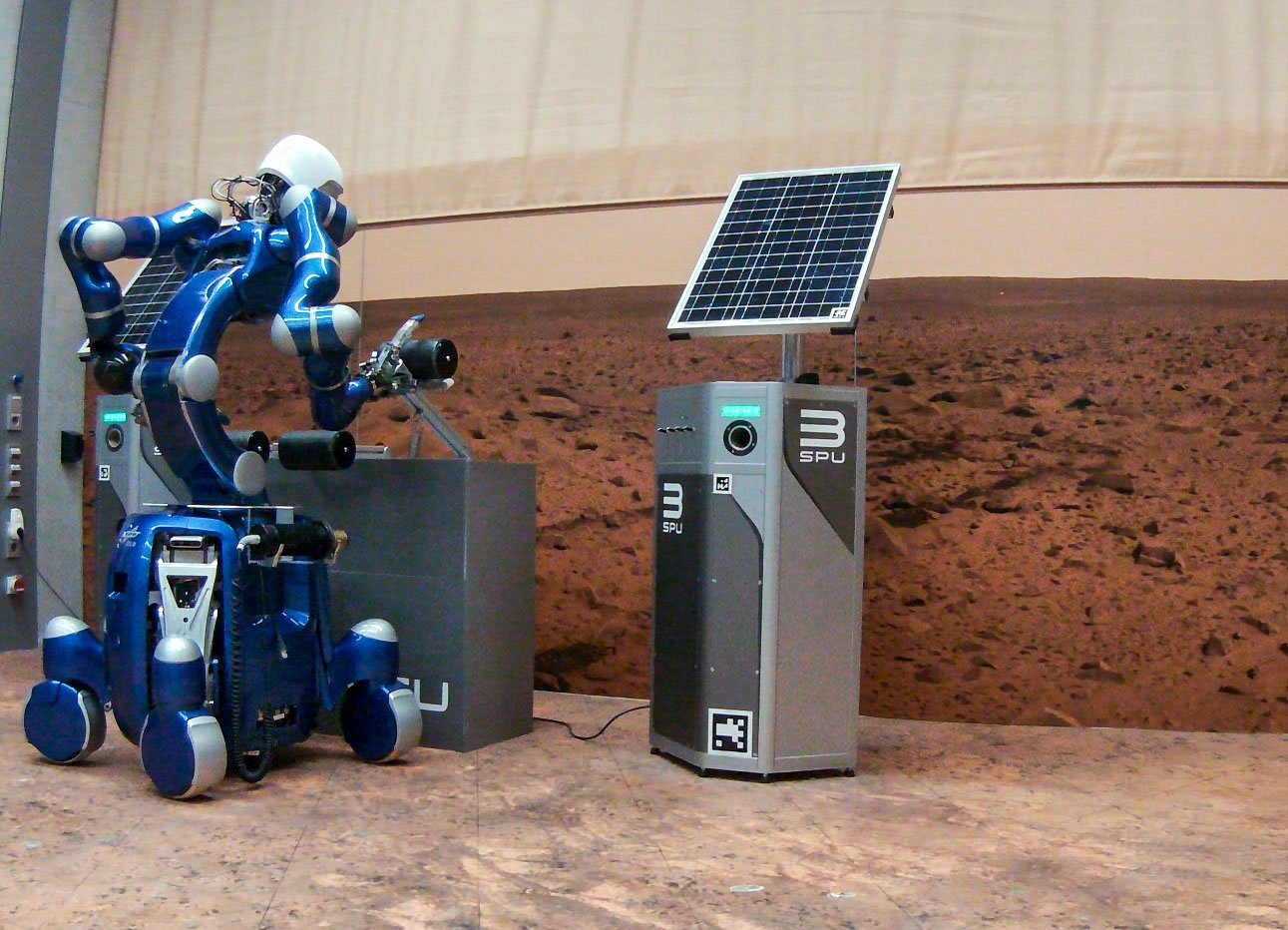
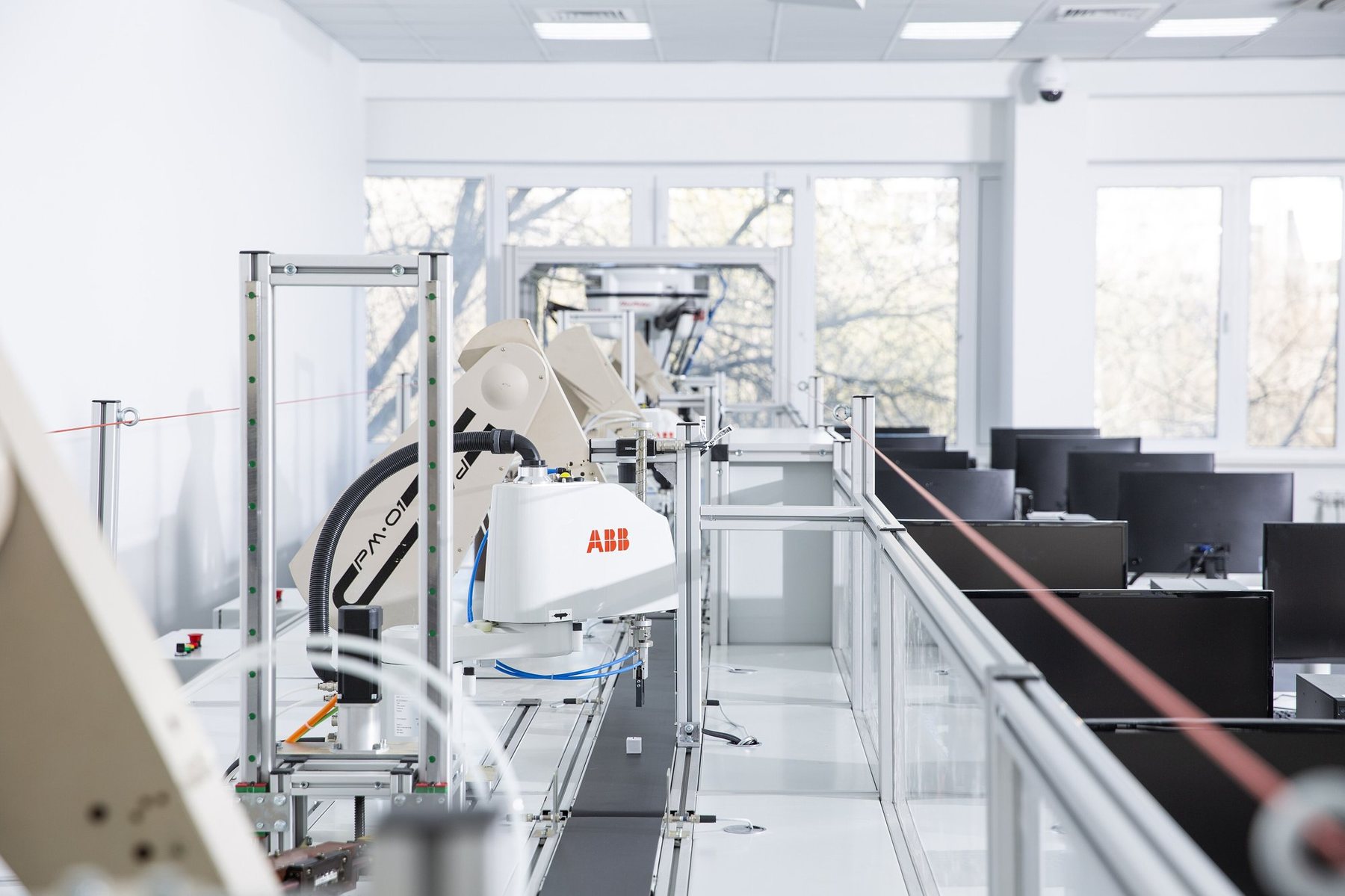
People and machines both produce the recordings labs use.
Labs are building their own data halls.
Examples announced or opened in 2026.
- NEURA Robotics: a network of robot gyms announced.
- Apptronik: a 90,000 sq ft Robot Park, with Google DeepMind.
- Tutor Intelligence: a 35,000 sq ft robot data factory.
Examples
- Labs value data enough to build sites for it.
- A staged hall cannot copy a live workplace.
- Outside real sites stay open to supply.
What this shows
Staged data and real-site data complement each other.
Specialist suppliers have appeared.
Companies that collect and prepare robot data.
| Supplier | What it does | Signal |
|---|---|---|
| XDOF | Teleoperation and wearable data pipelines | $70M raised, Jun 2026 |
| Scale AI | Data engine: factories, collectors, labels | 150,000+ hours delivered in 2025 |
| Encord | Platform to manage and label robot data | $60M raised, Feb 2026 |
| Mecka AI | Human-motion data and deployment tools | $60M raised, Oct 2026 |
| Cortex AI | Worn-camera and robot data; pays hosts | Y Combinator company |
| Shaip | Collection and labels in one pipeline | 10,000-hour program reported |
| Micro1 | Gig workers record tasks on video | Gig capture reported in 2026 |
Each supplier needs access to real sites; that is where Atomgigs can help.
Vocabulary
Terms used throughout this primer.
Terms in plain words, part 1 of 2.
22
Terms in plain words, part 2 of 2.
23
Terms in plain words, part 1 of 2.
Capture and training vocabulary.
| Term | Plain meaning |
|---|---|
| Egocentric video | First-person video from a camera worn by a person doing a task |
| Teleoperation | A person remotely drives a robot through a task |
| Trajectory | One recorded run of a robot or person doing a task |
| Demonstration | A trajectory shown to a model as an example to copy |
| Robot foundation model | A general model trained on many robots and tasks |
| Policy | The model part that decides what a robot does next |
These six terms cover most lab requests.
Terms in plain words, part 2 of 2.
Handling and deal vocabulary.
| Term | Plain meaning |
|---|---|
| Sim-to-real | Moving what a model learned in simulation onto a real robot |
| Annotation | Labels added to data, such as task steps and outcomes |
| De-identification | Removing or blurring anything that points to a person or site |
| Site owner | The business that owns or runs the place where data is captured |
| Lab | A company that trains or validates physical AI models or robots |
| Consideration | What the site owner receives in return for approving data sharing |
| Revocation | The owner ending sharing going forward |
Consideration and revocation are the two terms owners ask about most.
What Atomgigs does and does not do
The arranger role, and the lines it keeps.
Atomgigs arranges; it does not own.
25
Three parties, one clear role each.
26
Atomgigs arranges; it does not own.
Atomgigs’ role between site owners and labs.
- Matches approved sites with labs that need data.
- Gets the owner’s approval and sets the terms.
- Arranges capture, checks and delivery.
- Is paid for the arranging.
What Atomgigs does
- Own the robots, the sites or the labs.
- Share any data without the owner’s approval.
- Support weapons of any kind.
- Link data back to the site owner.
What it does not do
Humans in the lead: the site owner decides, every time.
Three parties, one clear role each.
Who is who in a data deal.
- Owns the data.
- Approves sharing and its period.
- Receives consideration.
Site owner
- Needs data to train robots.
- Pays for data to a specification.
- Uses it for generic task training.
Lab
- Arranges the match.
- Runs capture and delivery.
- Is paid for arranging.
Atomgigs
Only the owner can say yes to sharing; a robot maker is sometimes a fourth party (7.1).
Who wants the data
The groups that buy, big players by group, what each group needs, data suppliers as partners.
The groups that buy
Five groups, and why demand is rising.
Five groups want real-site data.
29
Demand is rising across all five groups.
30
Five groups want real-site data.
Anyone training or validating physical AI is a potential buyer.
| Group | Examples | Why they want it |
|---|---|---|
| Frontier AI labs | OpenAI (rebuilding robotics since 2025), Google DeepMind | Train general robot models |
| Robot foundation-model firms | Physical Intelligence, Skild AI, Generalist | Train models for any robot |
| Humanoid and robot makers | Figure AI, Apptronik, Agility Robotics, NEURA | Teach robots real jobs |
| Industrial robot makers | Makers of arms, mobile robots and cobots | Tune robots to customer sites |
| Researchers and validators | Universities, test bodies, safety assessors | Study, benchmark and validate |
Each group has a different need, so the data and the pitch differ.
Demand is rising across all five groups.
Signals from the past year.
- Every lab needs more tasks and more sites.
- Labs both buy data and build their own.
What it means for supply
- Your workplace holds data labs cannot easily get.
- You choose whether, when and to whom.
What it means for site owners
Demand is strong; supply of approved real-site data is the gap.
Big players by group
Who they are and how they source data.
Foundation-model firms and frontier labs.
32
Humanoid and robot makers.
33
Foundation-model firms and frontier labs.
Big players and how they source data.
| Company | What it builds | Data posture |
|---|---|---|
| Physical Intelligence | General robot models | Outside vendors plus in-house data |
| Skild AI | A general robot brain for many bodies | Outside vendors plus in-house data |
| Generalist | Robot foundation models | Outside vendors plus in-house data |
| NEURA Robotics | Cognitive robots and humanoids | Builds gyms; also uses vendors |
| OpenAI | Rebuilding robotics since 2025 | Not disclosed |
| Google DeepMind | Robot models and research | Partner on Apptronik’s Robot Park |
These firms already buy outside data, so they understand the offer.
Humanoid and robot makers.
Big players and where site data helps.
| Company | What it builds | Where site data helps |
|---|---|---|
| Figure AI | Humanoid robots | Homes, warehouses and factories |
| Apptronik | Humanoid robots | Industrial and logistics tasks |
| Agility Robotics | Humanoid robots for logistics | Warehouse and tote handling |
| Boston Dynamics | Legged and humanoid robots | Inspection and facility tasks |
| NEURA Robotics | Cognitive robots and humanoids | Factory and household tasks |
Site data helps each maker teach its robot the jobs its customers have.
What each group needs
Requests, pilots and the Atomgigs pitch.
What each group asks for and where to start.
35
The Atomgigs pitch to a lab.
36
What each group asks for and where to start.
Requests and starting pilots.
| Group | What they ask for | Starting pilot |
|---|---|---|
| Frontier AI labs | Variety, clear rights, labeled tasks | One site type, one task family |
| Foundation-model firms | Many sites, many tasks, edge cases | A sample across two buyer groups |
| Humanoid and robot makers | Their robot on real tasks | Their robot at one approved site |
| Industrial robot makers | Data from sites like their customers’ | One cell, one shift, one task |
| Researchers and validators | Open, well-documented samples | A small labeled set, clear terms |
Start with the smallest sample that proves the process.
The Atomgigs pitch to a lab.
Three promises.
- Real sites across buyer groups.
- Tasks labs cannot stage.
- Variety in one relationship.
Access
- Every share approved by the owner.
- Clear terms and a set period.
- Data not linked to the site.
Approval
- Specified, labeled and checked.
- In the lab’s format.
- One contact, one contract.
Delivery
Labs get real sites with clean rights, through one arranger.
Data suppliers as partners
How suppliers and Atomgigs can work together.
Data suppliers are potential partners.
38
Four ways to work with a supplier.
39
Data suppliers are potential partners.
Atomgigs supplies approved sites; suppliers supply capture and labels.
- Run capture teams and tools.
- Label and prepare data for labs.
- Already sell to labs.
Where suppliers fit
- Approved access to real sites.
- Owner consent and terms settled first.
- Site owners suppliers cannot reach alone.
What Atomgigs adds
Working together lets each side do what it does best.
Four ways to work with a supplier.
Each starts with the owner’s approval.
| Model | How it works | Best when |
|---|---|---|
| Supply sites | Atomgigs brings approved sites; the supplier captures | The supplier has crews and tools |
| Co-deliver | Atomgigs runs approvals; the supplier labels and delivers | The lab wants one finished set |
| Refer | Atomgigs points owners to a supplier’s marketplace | The owner prefers a marketplace |
| Direct to lab | Atomgigs delivers straight to the lab | The lab wants a direct line |
Which model fits depends on the lab and the owner.
Where the data comes from
Sites in the buyer groups, what can be captured, any site, any robot, boundaries.
Sites in the buyer groups
Five groups of workplaces and the tasks they hold.
Atomgigs works inside real sites.
42
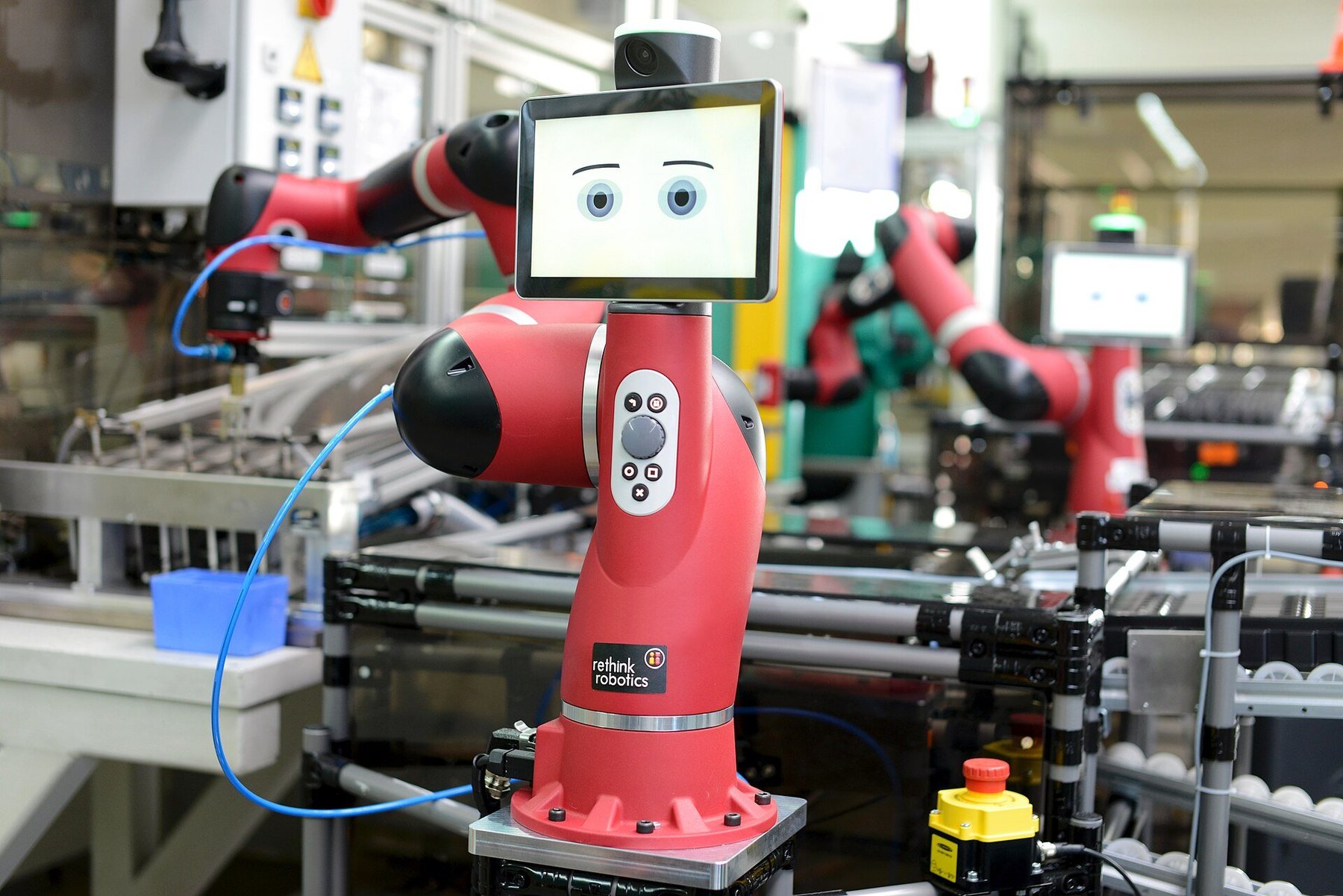
A cobot working beside people on a live line.
44
Real sites where robots already work.
43
Why real sites matter.
45
Atomgigs works inside real sites.
Buyer groups 07 to 11 are the source.
| Buyer group | Tasks that produce data | Read more |
|---|---|---|
| Data centers | Inspection, cabling, equipment swaps, patrol | Primer 07 |
| Manufacturing and logistics | Picking, packing, palletizing, assembly, loading | Primer 08 |
| Construction and infrastructure | Site inspection, material handling, layout | Primer 09 |
| Public safety and defense | Facility patrol and inspection; written approval only, never weapons | Primer 10 |
| Commercial services | Housekeeping, kitchens, shelves, sorting; hospital logistics | Primer 11 |
Five kinds of workplace give variety; sensitive sites only with written approval (3.4).
Real sites where robots already work.
A fulfillment center and a hospital.
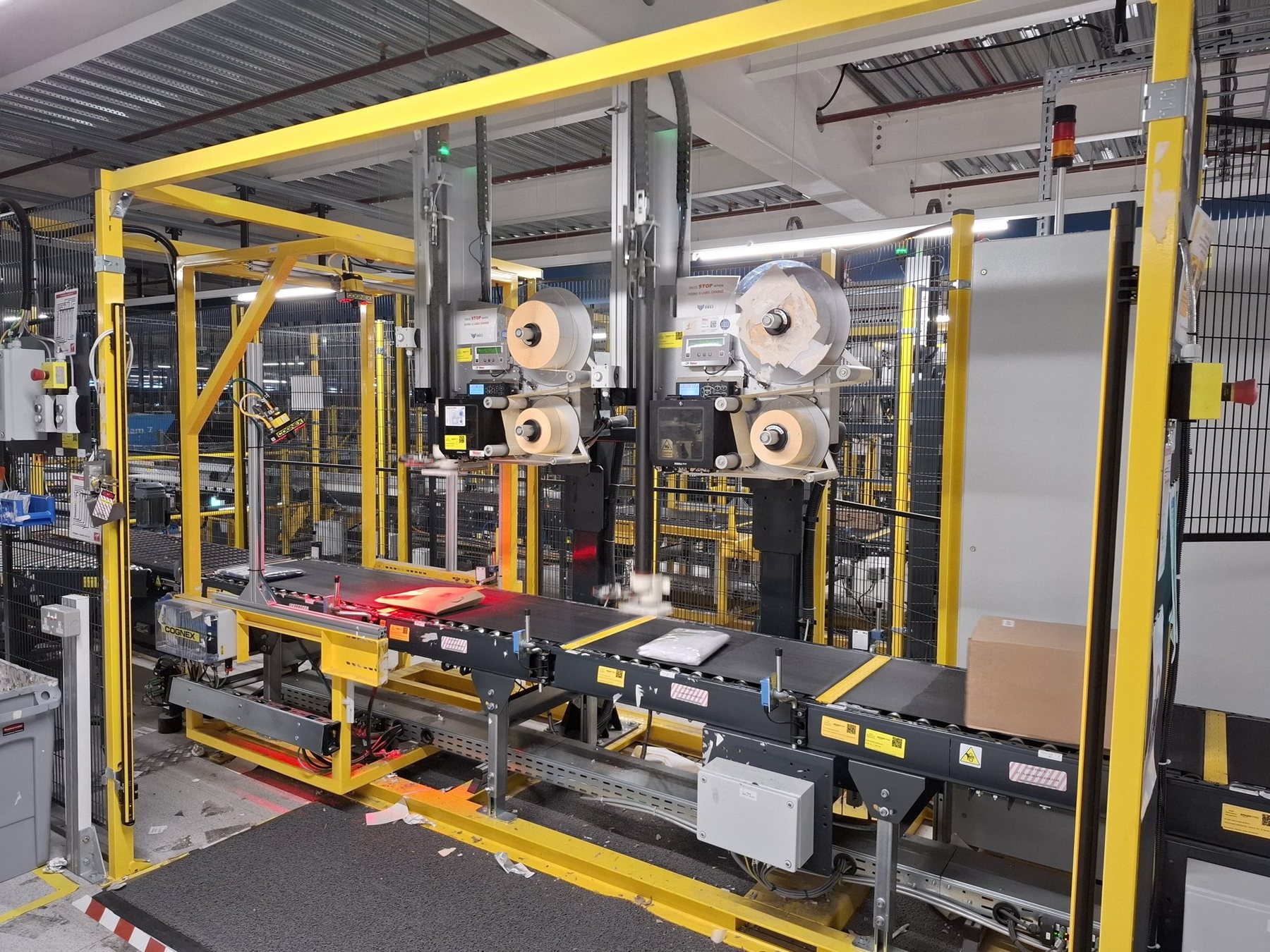
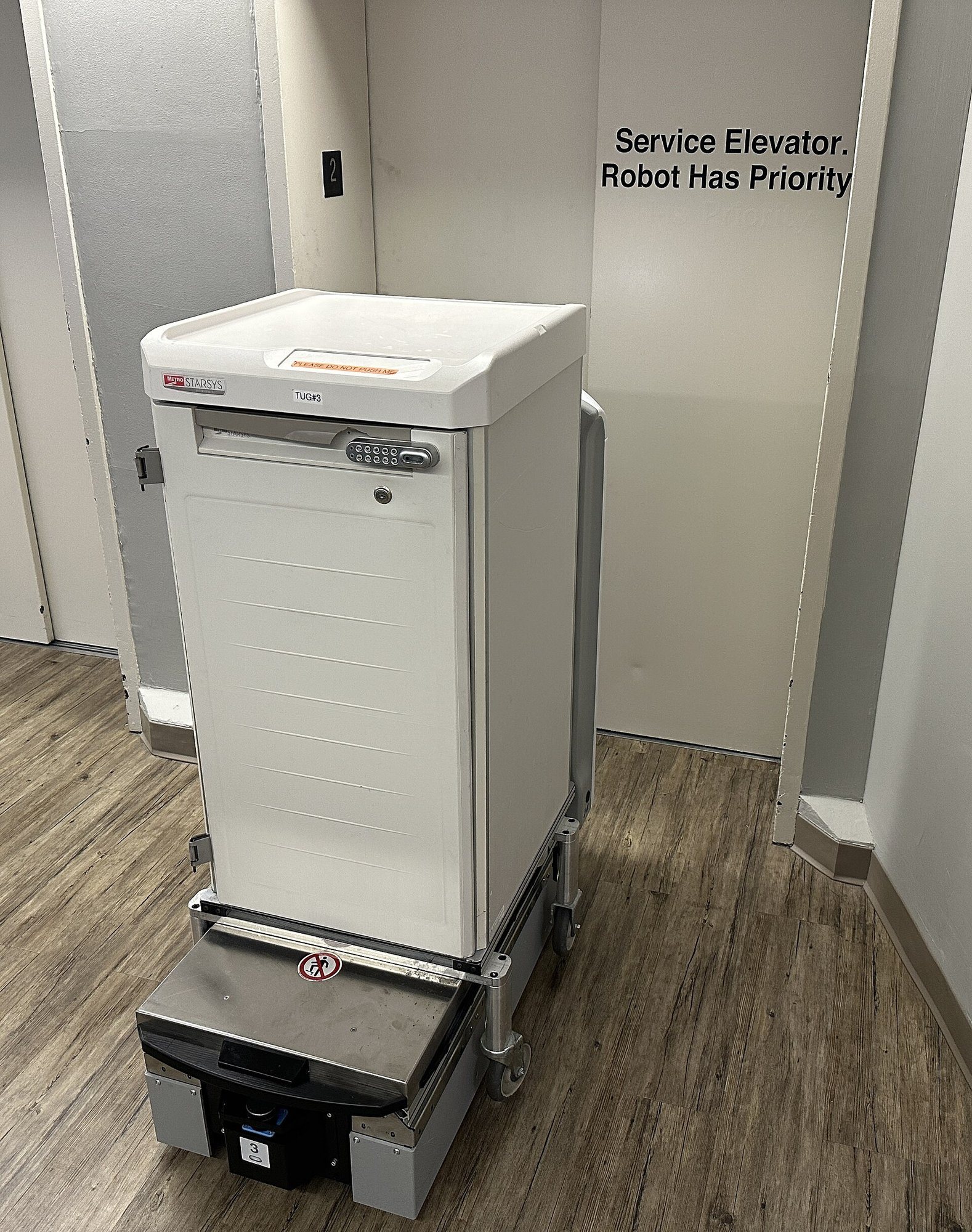
Working sites hold the tasks that labs cannot stage.
A cobot working beside people on a live line.
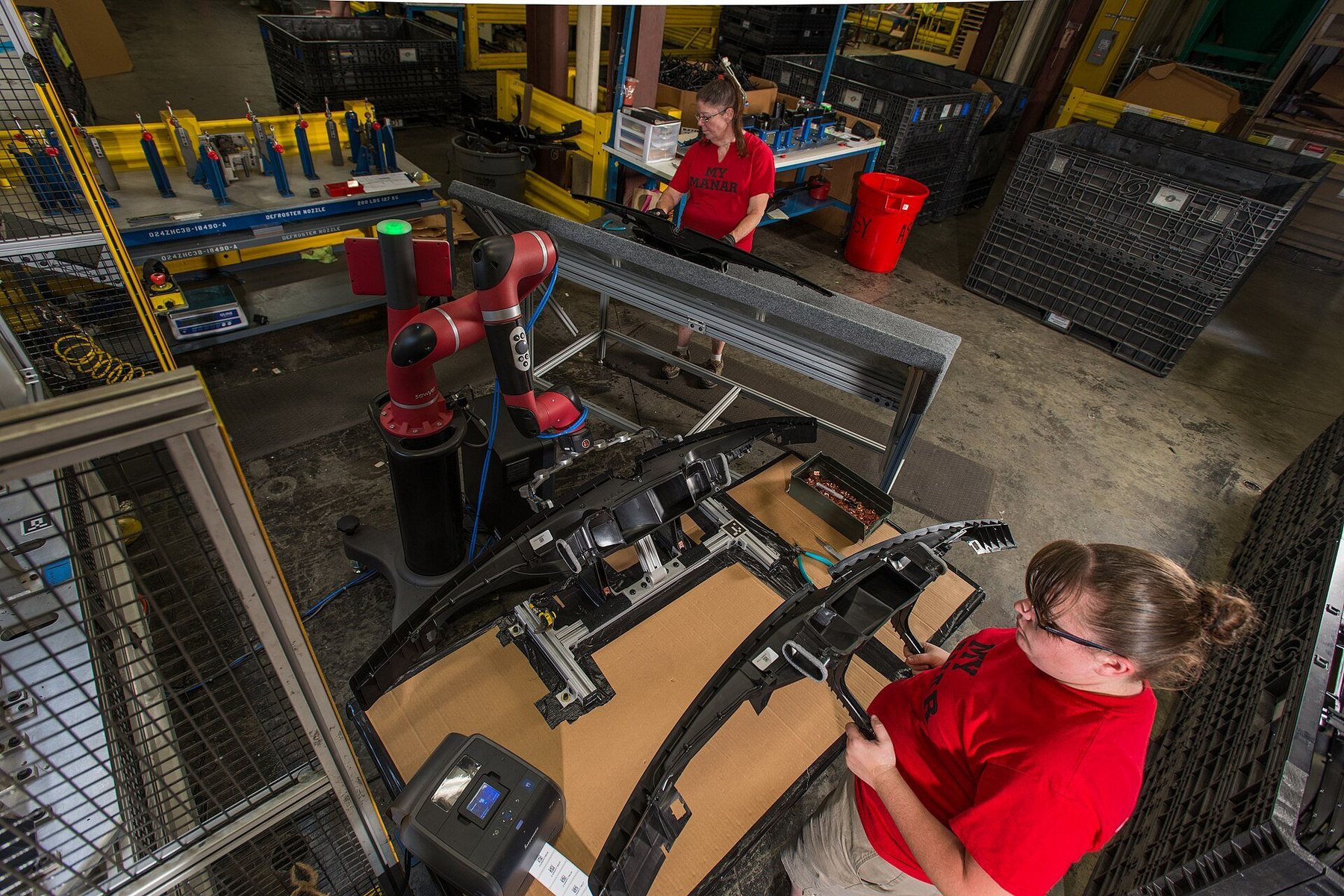
- A collaborative robot arm loading parts at a plastics plant in Tennessee.
- Real clutter, real parts and real people: what staged halls lack.
- With the owner’s approval, task video and robot logs from a line like this become training data.
Photo: Jeff Green/Rethink Robotics, CC BY 4.0
Why real sites matter.
What each side holds.
- Genuine clutter, light and noise.
- People, tools and schedules as they are.
- Tasks as real work, not staged ones.
What labs get that halls cannot give
- Years of routine tasks done every day.
- Equipment and layouts labs cannot copy.
- Control over who may capture them.
What site owners hold
The data is valuable because the site is real, and the site owner is in control.
What can be captured
Cameras, sensors, teleoperation and evaluation.
Five kinds of capture.
47
Robot sensors on a working machine.
49
Capture is scheduled and scoped.
48
Five kinds of capture.
What is recorded, and where.
| Capture | What is recorded | Typical task |
|---|---|---|
| Fixed cameras | Task video from set positions | Packing station, kitchen line |
| Worn cameras | First-person video of people at work | Assembly, housekeeping |
| Robot sensors | Depth, force, joint data and logs | Robots already working on site |
| Teleoperation | Operator commands and robot response | Hard tasks done remotely |
| Evaluation runs | A lab’s model tested on a live task | Pilot cells |
The mix depends on the site and on what the owner approves.
Capture is scheduled and scoped.
The owner sets the limits first.
- Which areas, tasks and hours.
- Which cameras and sensors.
- The approved period.
What is agreed first
- Areas the owner marks off limits.
- Screens, documents and names.
- Anything outside the approved scope.
What is kept out
The owner sets the scope; capture stays inside it.
Robot sensors on a working machine.
- A cobot tending a machine on a factory floor.
- Its camera, joint and gripper data can be logged as it works.
- Capture covers only the areas, tasks and hours the owner approves.
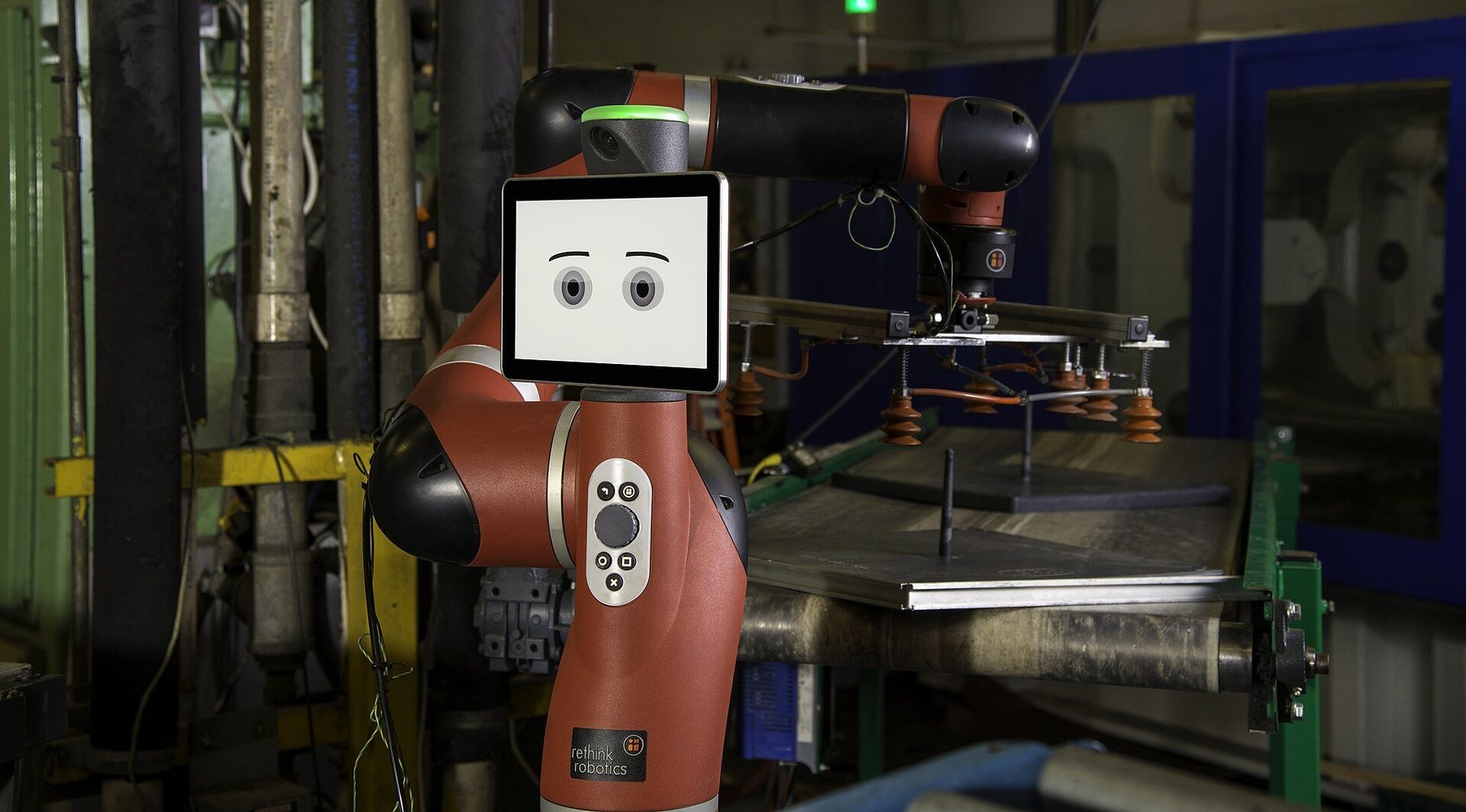
Photo: Jeff Green/Rethink Robotics, CC BY 4.0
Any site, any robot
Atomgigs robots, other makers’ robots, or people alone.
Not limited to Atomgigs sites.
51
Not limited to Atomgigs sites.
Atomgigs checks with the owner first, wherever data comes from.
- Robots Atomgigs deploys.
- Logs and video of the work.
- Owner approves sharing.
Atomgigs robots
- Any maker’s robots at a site.
- Review the maker’s data terms.
- Owner approves sharing.
Other robots
- Fixed or worn cameras.
- Shows how people do the task.
- Owner approves sharing.
People only
Wherever the data comes from, the owner’s yes comes first.
Boundaries
Sensitive sites are limited; written approval always first.
Sensitive sites are limited and need written approval.
53
Sensitive sites are limited and need written approval.
Defense installations, public safety and hospitals: only on the owner’s written terms.
- Capture only with the owner’s written approval.
- Under the owner’s security and privacy rules.
- Hospitals: HIPAA applies; no patient data.
Sensitive sites
- Never anything weapons-related.
- No sharing without approval.
- No data linked back to the owner.
The line Atomgigs keeps
Sensitive sites set the rules; Atomgigs never touches weapons work.
Your choice
Opt in or opt out, how approval works, changing your mind.
Opt in or opt out
Both answers are fine.
Opt in or opt out: both answers are fine.
56
Three promises about the choice.
57
Opt in or opt out: both answers are fine.
Sharing is a choice.
- Approved data can go to labs.
- You receive consideration.
- You set the period and scope.
If you opt in
- Nothing is shared.
- Your work with Atomgigs is unchanged.
- You can change your mind later.
If you opt out
Some owners will say yes and some no; either is respected.
Three promises about the choice.
What owners can count on.
- Nothing is shared unless you say yes.
- Silence means no.
Not the default
- Advice, capacity and outcomes do not depend on it.
- Core work is priced separately.
Not a condition
- Ask any time; decline any time.
- No penalty for no.
Not pressured
The choice belongs to the site owner.
How approval works
From request to capture.
Six steps from request to capture.
59
The owner can approve in parts.
60
Six steps from request to capture.
Who decides at each step.
| Step | What happens | Who decides |
|---|---|---|
| 1 Request | A lab asks for a kind of data | Lab |
| 2 Match | Atomgigs finds sites that fit the request | Atomgigs |
| 3 Offer | Atomgigs explains scope, period and consideration | Atomgigs |
| 4 Decision | The owner says yes, no or yes with limits | Site owner |
| 5 Agreement | Owner signs terms with Atomgigs for the period | Owner and Atomgigs |
| 6 Capture | Data is captured within the agreed scope | Atomgigs |
The owner approves at step 4 and signs at step 5; nothing is captured before then.
The owner can approve in parts.
Scope and limits are the owner’s to set.
- By area: one hall, one line, one floor.
- By task: only the named tasks.
- By data type: video only, or video and sensors.
- By lab or group of labs.
What can be approved
- The approved period.
- The number of labs that receive it.
- The use: generic task training only.
What can be limited
Partial yes is a normal answer.
Changing your mind
Revocation goes forward, not back.
Revocation applies going forward.
62
Renewing and ending.
63
Revocation applies going forward.
What changing your mind means.
- Stops new capture.
- Stops new deliveries to labs.
- Ends consideration for that scope.
What revoking does
- Recall data already approved and delivered.
- Change terms for a period already approved.
What it does not do
The owner stays in charge; labs can rely on what they were already given.
Renewing and ending.
What happens at the end of a period.
- Terms run for the agreed period.
- Capture stays in scope.
Approved period
- Atomgigs checks in before the end.
- The owner sees what was shared.
Review
- Renew with changes, or let it lapse.
- Lapsing needs no action.
Renew or end
The end of a period is a decision point, never an automatic renewal.
Rights, privacy and safety
Who owns the data, what labs may do with IT, people and privacy, confidentiality and security, contracts to watch.
Who owns the data
Owner rights and lab rights.
The site owner owns the data.
66
Four rights, listed apart.
67
The site owner owns the data.
Owner rights and lab rights.
- Owns the data captured at its site.
- Approves each use for a set period.
- Sets scope, areas and limits.
Owner rights
- A license for the approved period.
- Use for training on generic tasks only.
- Non-exclusive unless the owner agrees otherwise.
Lab rights
Ownership stays with the site; labs receive a license to use.
Four rights, listed apart.
Each is settled on its own.
| Right | What it covers | Default position |
|---|---|---|
| Source data | Raw video, sensor and log files | Owned by the site owner |
| Training right | Use of the data to train models | Licensed to the lab for the period |
| Derived models | Models trained on the data | Held by the lab; not traceable to the site |
| Site-specific models | Models tuned to this site | Agreed in each deal |
Separating the rights keeps any one of them from being lost by default.
What labs may do with it
Generic training only.
Generic training only.
69
Approval has a time limit.
70
Generic training only.
What a lab may and may not do.
- Train robots and machines on generic tasks.
- Evaluate models on the same tasks.
- Keep models trained on the data.
Allowed
- Linking data back to the site owner.
- Selling or sharing raw data outside the terms.
- Using it for weapons or to monitor workers.
Not allowed
The use is narrow on purpose; it is what owners agree to.
Approval has a time limit.
Data is licensed for a period, not forever.
- Owner approves scope and period.
- Lab receives a license.
Approve
- Lab trains on generic tasks.
- Terms apply throughout.
Use
- License ends unless renewed.
- Retention follows the agreement.
End of period
Time limits keep the owner in control of how long data is in use.
People and privacy
Owner consent, notice and de-identification.
The owner consents and informs its people.
72
Removing people and site detail.
74
Why clear notice matters.
73
The owner consents and informs its people.
Each side has a duty.
- Gives consent for the site.
- Informs workers under its own policies.
- Follows local law on notice and consent.
The site owner
- Reminds owners of these duties.
- Provides a plain notice owners can adapt.
- Removes personal identifiers before delivery.
Atomgigs
The owner knows its people and its law; Atomgigs helps it do the right thing.
Why clear notice matters.
Lessons from 2026 reports.
- A 2026 Guardian investigation found factory workers filmed for robot training, many unaware of the use.
- Some footage was also used to rank productivity.
What reports show
- Use limited to training robots on generic tasks.
- Not used to rank or monitor workers.
- Owners tell their people what is captured.
The Atomgigs answer
Clear purpose and clear notice protect owners, workers and labs.
Removing people and site detail.
From raw capture to a cleaned set.
- 1Raw capture
Held in a controlled store.
- 2Review
Scope and sensitive areas checked.
- 3De-identify
Faces and screens blurred; names and IDs removed.
- 4Deliver
Only the cleaned set goes to the lab.
The lab never sees the identity of the site or the people in it.
Confidentiality and security
Trade secrets, layouts and the data itself.
Trade secrets and layouts stay protected.
76
Security for the data itself.
77
Trade secrets and layouts stay protected.
What is protected, and how.
- Process details and product designs.
- Site layout and security features.
- Customer and supplier names.
What is protected
- The owner marks areas and tasks off limits.
- Review before any delivery.
- Access limited to named people.
How
Protection is built into the scope, not added afterwards.
Security for the data itself.
Store, move and delete.
- Encrypted storage.
- Named access only.
- Audit trail.
Store
- Encrypted transfer.
- Labs receive cleaned sets only.
- Delivery logged.
Move
- Retention set in each agreement.
- Raw files removed when it ends.
- Removal on request after the period.
Delete
Security follows the data from capture to deletion.
Contracts to watch
Robot makers’ terms and four rights to separate.
Robot makers’ terms may claim site data.
79
Four rights to separate in any contract.
80
Robot makers’ terms may claim site data.
Check what your robot contracts already say.
- Who owns what the robot sees on site.
- Whether the maker may keep it indefinitely.
- Whether it may train models on it.
What to look for
- At least one major maker’s sale terms treat on-site observations as its own technical data.
- They allow indefinite retention.
What a published example shows
Before approving sharing, make sure your own contracts allow it.
Four rights to separate in any contract.
Lessons for robot and data agreements.
- 1Source data
Raw files from the site. Who owns them.
- 2Training rights
Who may train on them. For how long.
- 3Site models
Models and memory tuned to the site. Who keeps them.
- 4Runtime rights
Right to keep using them after the contract ends.
Settle each right on its own so none is lost by default.
What you get
Financial consideration, how credits work, who pays and how Atomgigs is paid, precedents in the market.
Financial consideration
What it is and the forms it can take.
Owners who opt in receive consideration.
83
Why credit is the default.
85
Four forms of consideration.
84
Owners who opt in receive consideration.
Based on the deals available at that time.
- Labs pay for data they can use.
- Part of that comes back to the owner.
- Terms follow the deals available when approved.
How it works
- Not a fixed rate card.
- Not a condition of other work.
- Not promised before a real deal exists.
What it is not
No prices are published here; terms are set when a real deal exists.
Four forms of consideration.
Credit is the default.
| Form | How it works | Fit |
|---|---|---|
| Credit with Atomgigs | Offset against advice, capacity or outcome fees | Simplest; the default |
| Cash payment | Direct payment from lab revenue or a site fee | Large or long programs |
| Robot lease credit | Lower lease or price from a robot maker | Only if the maker agrees |
| In kind | A longer pilot or added services | Early deals and pilots |
Atomgigs recommends credit as the default and cash for larger programs.
Why credit is the default.
Simple, fair and low risk.
- The owner contracts only with Atomgigs, never the lab.
- Applies to work the owner already buys.
- Paid out of lab revenue, after delivery.
Why credit
- Cash: when volumes are large.
- Lease credit: when the robot maker is the data buyer.
- In kind: to start a pilot.
When to choose another form
The form can differ by deal; the principle stays the same.
How credits work
Earned on acceptance, applied to fees or paid.
How a credit is earned and used.
87
Credit grows with the value of the data.
89
What a credit can be applied to.
88
How a credit is earned and used.
From approval to applied.
- 1Approve
Owner approves scope and period.
- 2Deliver
Atomgigs captures, checks and delivers.
- 3Accept
The lab accepts the delivered data.
- 4Apply
Credit applied, or paid out.
Credit follows acceptance, so it follows real value.
What a credit can be applied to.
Mostly Atomgigs fees, other forms by agreement.
- Advice and consulting.
- Machine capacity.
- Outcome fees.
Against Atomgigs
- Cash for large programs.
- A robot lease credit, if the maker agrees.
- Extra pilot time.
Other forms
The owner chooses the form from what is on offer.
Credit grows with the value of the data.
What moves it up or down.
- Volume of approved data.
- Quality and completeness.
- Variety and rarity of tasks.
It rises with
- What labs actually buy.
- The approved scope and period.
- The deals available at the time.
It is limited by
Better, rarer data earns more; nothing is guaranteed in advance.
Who pays and how Atomgigs is paid
The money flow, in outline.
Who pays whom.
91
How Atomgigs is paid.
92
Who pays whom.
The money flow in outline.
- For data delivered to a specification.
- Per dataset or per program.
Lab pays Atomgigs
- A share goes back as consideration.
- Atomgigs keeps a fee for arranging.
Atomgigs returns a share
- As credit, cash or in kind.
- Based on deals at the time.
Owner receives
Rates are not published; they are set deal by deal.
How Atomgigs is paid.
For arranging, not for owning.
- An arranging fee on each data deal.
- Fees for capture and delivery work.
Atomgigs earns
- Own the data.
- Sell data without the owner’s approval.
Atomgigs does not
Atomgigs is paid for the arranging; rates are set deal by deal.
Precedents in the market
Who already pays for access to real sites.
The market already pays for access.
94
The market already pays for access.
Examples from 2025 and 2026.
| Example | What happens |
|---|---|
| Cortex AI marketplace | Workplaces are paid to host data collection sessions |
| Human Archive | Customers get discounted home services if they agree to recording |
| Data vendors in China | Vendors pay factories to have workers wear capture devices |
| Factory capture in India | Factories were paid; reports say workers were not told and not paid |
Paying sites is normal; what differs is how clearly and fairly it is done.
How Atomgigs arranges it
The arranger role, from request to delivery, quality and delivery, starting pilots.
The arranger role
Who does what.
Who does what.
97
What the arranger adds.
98
Who does what.
Three core parties, plus the robot maker when its robots are on site.
| Party | Does | Does not |
|---|---|---|
| Site owner | Approves, owns the data, informs its people | Run the lab relationship |
| Lab | Specifies data, pays, trains | Own the site or its data |
| Atomgigs | Matches, gets approval, captures, delivers | Own robots, sites or labs |
| Robot maker | Supplies robots; may have data terms | Share site data without consent |
Each party has one clear job.
What the arranger adds.
Three things neither side does alone.
- Needs from labs.
- Sites that fit.
- Variety across sites.
Matching
- Owner approval.
- Terms and period.
- Notice to people.
Permission
- Capture and checks.
- Cleaned data to the lab.
- Acceptance and settlement.
Delivery
The arranger removes the work and the risk for both sides.
From request to delivery
Eight steps, with people deciding.
Eight steps from request to delivery.
100
People decide; machines assist.
101
Eight steps from request to delivery.
Who leads each step.
| Step | What happens | Leads |
|---|---|---|
| 1 Specify | Lab states task, data type and volume | Lab |
| 2 Match | Atomgigs finds fitting sites | Atomgigs |
| 3 Approach | Atomgigs explains the offer to the owner | Atomgigs |
| 4 Approve | Owner decides scope and period | Site owner |
| 5 Contract | Owner signs with Atomgigs; lab signs with Atomgigs | Atomgigs |
| 6 Capture | Data recorded inside the scope | Atomgigs |
| 7 Check | Quality and de-identification checks | Atomgigs |
| 8 Deliver, settle | Lab accepts; consideration follows | Atomgigs |
The owner approves at step 4 and signs at step 5; nothing is captured before then.
People decide; machines assist.
Humans in the lead, physical AI in the loop.
- The owner approves each share.
- An Atomgigs lead runs each site.
- The lab signs off the specification.
People decide
- Capture tools and sensors.
- Automatic blurring and checks.
- Data tools for labels.
Machines assist
People make the calls; tools carry the load.
Quality and delivery
Checks before data leaves, and how it is packaged.
Four quality checks before data leaves.
103
Delivered the way the lab works.
104
Four quality checks before data leaves.
Spec, calibration, labels, review.
- 1Spec
Task and outcome defined. Volume agreed.
- 2Calibration
Cameras and sensors checked. Settings recorded.
- 3Labels
Steps and results marked. Failures included.
- 4Review
Samples checked by people. Cleaning re-checked.
Checks happen before delivery, not after.
Delivered the way the lab works.
Packaging and acceptance.
- Robotics-ready file formats.
- A dataset card: scope, tasks, cleaning.
- Secure transfer to named people.
Packaging
- The lab accepts or flags issues.
- Fixes are made within the period.
- Consideration follows acceptance.
After delivery
A clear record of what was delivered protects both sides.
Starting pilots
Three packages, and what a pilot proves.
Three pilot packages to start.
106
What a pilot proves.
107
Three pilot packages to start.
Small, then wider.
- One cell or station.
- One task family.
- A small labeled sample.
Single cell
- One site, several tasks.
- Fixed and worn cameras.
- Robot logs if present.
Single site
- Several sites, one buyer group.
- Same task, different places.
- A variety sample for a lab.
Site group
Start small, prove the process, then widen.
What a pilot proves.
For each side.
- The process is clear and respectful.
- Capture does not disturb work.
- Consideration arrives as agreed.
For the site owner
- The data meets the specification.
- The rights are clean.
- More sites can follow.
For the lab
A good pilot makes the second site easy.
Atomgigs and the outlook
What Atomgigs does, the engagement path, outlook, ten things to remember, go deeper.
What Atomgigs does
Between site owners and labs.
Atomgigs works between sites and labs.
110
Humans in the lead, physical AI in the loop.
111
Atomgigs works between sites and labs.
Advise, match, capture, deliver.
- 1Advise
Explain the choice to site owners.
- 2Match
Find labs and sites that fit.
- 3Capture
Run approved capture.
- 4Deliver
Check and deliver data.
Atomgigs does not build or own machines; it arranges.
Humans in the lead, physical AI in the loop.
Our principle.
- People approve every share.
- Machines help capture and check.
- People make the final call.
What it means
- Hidden capture.
- Sharing without approval.
- Data traced back to the owner.
What it rules out
The owner keeps control of the work, the data and the decision.
The engagement path
Consulting engagement, pilot and production.
Three steps from idea to production.
113
The commercial model follows the deal.
114
Three steps from idea to production.
The engagement path.
- Review sites, tasks and data fit.
- Explain the choice; the owner decides.
Consulting engagement
- One site or cell, one lab; usually 4 to 8 weeks.
- Prove the process end to end.
Pilot
- Repeat across sites and labs.
- Run it with the owner.
Production
Every step ends with a decision the owner makes.
The commercial model follows the deal.
Described here, not priced.
- Pay for data to a specification.
- Choose volume, variety and rights.
Labs
- Choose to share or not.
- Receive consideration if they do.
Site owners
Rates are set deal by deal; none are published.
Outlook
Trends, tailwinds and headwinds.
Six trends to watch.
116
What could change the picture.
117
Six trends to watch.
What the evidence points to.
| Trend | What to watch |
|---|---|
| More labs, more money | Funding at record levels in 2026 |
| Own halls and outside suppliers | Labs mix both |
| Human video grows | Cheaper capture from people, with privacy questions |
| Rights get sharper | Contracts separate data, training and models |
| Consent norms tighten | Reports on worker notice drive policy |
| Sites become partners | Marketplaces already pay workplaces to host |
The direction is clear; the pace is not.
What could change the picture.
Tailwinds and headwinds.
- Demand from labs is rising.
- Sites want a share of the value.
- Consent standards are emerging.
Tailwinds
- Labs may bring more capture in house.
- Simulation may cover more cases.
- Privacy rules may tighten.
Headwinds
Real-site data stays scarce; how long depends on these forces.
Ten things to remember
The takeaways of this primer.
Ten things to remember.
119
Ten things to remember.
The takeaways of this primer.
| 1 Real data is scarce | Robots need data from real tasks; none is online. |
|---|---|
| 2 Money is there | Funding is at record levels; data is the bottleneck. |
| 3 Many want it | Labs, makers and validators all need site data. |
| 4 The owner decides | Opt in or opt out; both are fine. |
| 5 Not a condition | Sharing never affects the core work. |
| 6 Owner owns the data | Licensed for a set period, not forever. |
|---|---|
| 7 Revocation goes forward | Past approvals stand; new ones stop. |
| 8 Never linked back | Generic training only; the site stays unnamed. |
| 9 Consideration follows | Credit by default, cash or in kind by deal. |
| 10 Start small | One cell or site, one lab, one process. |
Ask first, share only with approval, and start small.
Go deeper
Other primers in the Atomgigs series.
Go deeper in the Atomgigs series.
121
Go deeper in the Atomgigs series.
Related primers in the series, with their addresses.
| Primer | Address | Read it when |
|---|---|---|
| Primer 01 Robotics | atomgigs.com/robots | You want to compare robot types |
| Primer 07 Data Centers | atomgigs.com/data-center | You own or build data centers |
| Primer 08 Manufacturing and Logistics | atomgigs.com/manufacturing | You run production or distribution |
| Primer 09 Construction and Infrastructure | atomgigs.com/construction | You build or own infrastructure |
| Primer 10 Public Safety and Defense | atomgigs.com/public-safety | You run public safety or defense sites |
| Primer 11 Commercial Services | atomgigs.com/commercial | You run hospitality, care or retail |
| Primer 13 Physical AI Technology | atomgigs.com/technology | You want the technology behind robots |
Pick the primer that matches your next conversation.
About us and notes
The primers, Atomgigs, Mavengigs, Monty Pandey, notes, the owner’s terms.
The primers, one address each
Every primer is readable on atomgigs.com or in presentation mode.
| # | Primer | Address | What it promises |
|---|---|---|---|
| 00 | Value Proposition | atomgigs.com | Why Atomgigs, and how it works. |
| 01 | Robotics | atomgigs.com/robots | Every robot type, for every application. |
| 02 | OEMs, Drones and VTOL | atomgigs.com/oems | Everything that helps people work in the physical world, other than robots. |
| 03 | Talent | atomgigs.com/talent | The experts who work alongside physical AI. |
| 04 | Investors | atomgigs.com/investors | Where physical AI capital is going, and how to find and track deals. |
| 05 | Enablers | atomgigs.com/enablers | The organizations that pay for, insure, run and approve machines at work. |
| 06 | Channel Partners | atomgigs.com/channel-partners | Winning and delivering projects with physical AI. |
| 07 | Data Centers | atomgigs.com/data-center | How data centers are built, run and paid for, and who buys them. |
| 08 | Manufacturing and Logistics | atomgigs.com/manufacturing | How goods are made, stored and moved. |
| 09 | Construction and Infrastructure | atomgigs.com/construction | How we build and run the physical world. |
| 10 | Public Safety and Defense | atomgigs.com/public-safety | Extending public safety and defense teams with machines. No weapons. |
| 11 | Commercial Services | atomgigs.com/commercial | Where robots, drones and automation work in service businesses. |
| 12 | Physical AI Labs | atomgigs.com/labs | Physical AI data for training robots, only with customer approval. |
| 13 | Physical AI Technology | atomgigs.com/technology | The stack behind robots, from silicon to fleet. |
Atomgigs: Physical AI Delivered as Jobs Done
Machines and people as one hybrid workforce, to scale up what you build and run. Primers hold the details.
What Atomgigs is
- Robots, drones, VTOL, IoT and automation, with people, as one hybrid workforce.
- Humans in the lead, physical AI in the loop.
- Not a machine builder: it sources from makers, then staffs, integrates, deploys and operates.
The sources
- Robots: every robot type, profiled in depth.
- Everything other than robots: drones, VTOL, IoT and automation, from many makers.
- The humans: role families across the trades, engineering and safety, every person a contractor.
Who we work with
- Investors: consulting before and after the deal.
- Enablers: financiers, insurers, platforms and regulators behind every deal.
- Channel partners: engineering, design, MEP and construction firms.
Buyer groups
- Data centers
- Manufacturing and logistics
- Construction and infrastructure
- Public safety and defense (no weapons)
- Commercial services
- Physical AI labs
How it works
- Consulting engagement, then a short pilot, then production.
- One scope, one site, one metric in the pilot.
- A small senior pod runs every site, with a named human manager for every robot.
How we are paid
- Pilot, managed crew, outcome-based or advisory.
- No capital outlay for machines and no long-term headcount.
- Pay for capacity and outcomes; scale up as results are proven.
Atomgigs is a Mavengigs venture. Atomgigs is a division of Panvisage Inc.
Mavengigs: the Scale Up Guys
Consulting, Capital and Ventures.
Mavengigs Consulting
- Strategic M&A, transformation and optimization
- Focused on the part of M&A that begins after everyone shakes hands
- Built for PE-backed and Fortune 500 teams
Mavengigs Capital
- An independent sponsor platform
- Family office strategy and management
Mavengigs Ventures
- Funding and mentorship for founders we back
- Panmedical: digital health in India, run as CEO
- Atomgigs, Mavens Life and Mavens Health
Mavengigs is a division of Panvisage Inc.
Monty Pandey: Founder and CEO
Founder, CEO and driving force behind Atomgigs

Career and experience
- 30+ years of management consulting: managed major M&A deals totaling $20 billion; scaled 50+ companies for $100 million of impact
- Deep expertise in M&A consulting, including integrations and divestitures
- 2018 to present: Mavengigs: Consulting, Capital and Ventures
- 2004 to present: Founded Panvisage, CEO for 22 years
- 2024 to present: Panmedical CEO (digital health)
- 1998 to 2004: Oracle, led 14 enterprise programs
- 1994 to 1996: Rolled out nationwide cell networks
- 1992 to 1994: Car and truck design (CAD, CAM, CIM)
- 1991: B.E. Electrical and Electronics Engineering
- 1989 to 1991: Designed robots, AGVs and manufacturing transfer lines
- Data centers: built one from scratch in 2000; data center migration in 2008; Equinix in 2020
- E&C companies: WSP, Jacobs, Worley, Halliburton, Fluor, Brown & Root
- Managed the buildout of a manufacturing plant and a distribution center
Monty Pandey
- Founder and CEO, Atomgigs
- Founder and CEO, Mavengigs
- Co-founder and CEO, Panmedical
| Selected transactions | Value | Role |
|---|---|---|
| GE Appliances / Haier | $5.6B | Readied for sale |
| Jacobs / CH2M / Worley | $3.3B | Integration, Divestiture |
| ITW Signode / Carlyle | $3.2B | Carve-out, then sale |
| AMLI / Morgan Stanley | $2.1B | Take-private |
| Fortune Brands / ACCO / GBC | $2B | Divestiture, Integration |
| Equinix / Packet | $335M | Integration |
Notes on use
Three things to keep in mind when reading this deck.
Not investment advice
Atomgigs provides consulting. We are not an investment advisor, so you make your own decisions on investments.
Products belong to their owners
Company, product and robot names, logos and photos are used as examples and belong to their owners. This deck is for information only and is not a contract or an offer.
About the numbers
Numbers come from publicly available sources and are the latest available at publication. Costs, prices and returns are typical ballpark values, not quotes; they will be updated for your specific engagement.
REFERENCE
Reference and sources
The owner’s terms, data suppliers and sources.
The terms owners agree to on one page, the suppliers that could partner, and where the figures come from.
B.1
B.2
The owner’s terms
Data suppliers
129
130
B.3
Sources
131
The owner’s terms at a glance.
What a site owner can expect when it chooses to share.
| Term | Position |
|---|---|
| Choice | Opt in or opt out; not the default, not a condition of other work |
| Ownership | The site owner owns the data |
| Approval | For a stated period, scope and set of labs |
| Use | Training robots and machines on generic tasks only |
| Linkage | Data is not linked back to the site owner |
| Revocation | Applies going forward, not to periods already approved |
| Consideration | Based on the deals available at the time; credit by default |
| Limits | Never weapons-related; sensitive sites only with written approval |
Details are in Chapters 4 to 6; each deal sets the exact terms.
Data suppliers and how they could partner.
Potential partners; no agreements are implied.
| Supplier | Focus | How it could partner |
|---|---|---|
| XDOF | Teleoperation and wearable pipelines | Capture on approved sites |
| Scale AI | Data engine and collector network | Co-deliver finished sets to labs |
| Encord | Platform to manage and label data | Label and manage delivered sets |
| Mecka AI | Human-motion data, deployment tools | Human-task capture |
| Cortex AI | Marketplace that pays hosts | Marketplace for owners who prefer it |
| Shaip | Collection and labeling in one pipeline | End-to-end capture |
| Micro1 | Gig workers record tasks | Worker network for capture crews |
Product and company names belong to their owners.
Sources.
Where the figures and facts in this primer come from. Page 1 of 2.
AI Weekly, citing the Financial Times (Oct 2026): labs mix outside data vendors with in-house data operations.
Crunchbase News, robotics funding reports (Jun and Oct 2026): more than $27B in Jan–Sep 2026; about $15B in 2025.
The Robot Report, Skild AI raises $1.4B (15 Jan 2026); Physical Intelligence raises $600M (2025).
TechCrunch, Dealroom and SiliconANGLE (17 Jun 2026): XDOF emerges with $70M; labs pay it to collect robot data. TechCrunch (10 Jan 2025): OpenAI robotics hiring.
Scale AI, Expanding Our Data Engine for Physical AI (24 Sep 2025), and scale.com/robotics: data engine, customers and production hours.
The Robot Report, 5 Physical AI Infrastructure Platforms Shaping Robotics in 2026: Scale AI delivered over 150,000 hours of physical AI data in 2025.
SiliconANGLE (26 Feb 2026): Encord raises $60M for physical AI data infrastructure.
- Runtime Wire and American Bazaar (Oct 2026): Mecka AI raises $60M, with Nvidia, Microsoft M12, Qualcomm and Samsung among investors.
- Y Combinator, Cortex AI company page: the Cortex Marketplace pays workplaces to host data collection and evaluation sessions.
- Pulse 2.0, Human Archive raises $8.2M: discounted home services in exchange for agreeing to data collection (2026).
- Tesseract Academy, Top 5 Physical AI Training Data Providers in 2026: Scale AI and Shaip programs.
- AI2Work, The Robot Data Gold Rush (2026) and Kinetic Blocks marketplace (3 Sep 2026): gig capture; quote from Skild AI co-founder Deepak Pathak.
- eWeek, Factories Are Strapping Cameras to Workers’ Heads (2026): Apptronik Robot Park; worker-capture practices.
- Pulse, Tutor Intelligence opens Data Factory 1 (9 May 2026).
- Good Electronics, summarizing The Guardian (24 Jun 2026): Indian factory workers and egocentric data collection.
Sources.
Where the figures and facts in this primer come from. Page 2 of 2.
- Rest of World (2026): robotics data collection in China, including factories paid by data vendors.
- Automation World, Who Owns What Robots Learn? (2026): data rights in robot contracts.
- Fast Company (2026): consent, blurring and withdrawal terms in robot training data programs.
- IBM Think, The data gap that is holding back robotics (2026).
- Claru (2026): guides to egocentric and warehouse robot data collection, privacy processing and delivery formats.
- Financial Times via AI Weekly: NEURA Robotics plans a network of NEURA Gyms.
Have a project that needs hands and machines?
Tell us about the site, the scope and the schedule. We will come back with a pilot proposal.